Weather in the southeast is reliably unpredictable. Conditions can shift quickly between cold and warm temperatures, heavy rain and drought, or even sleet and snow, often within a short period. After recent snowfalls melted, many gardeners noticed patches of soil pushed upward, as though something beneath the surface had forced it skyward. This phenomenon is known as frost heave.
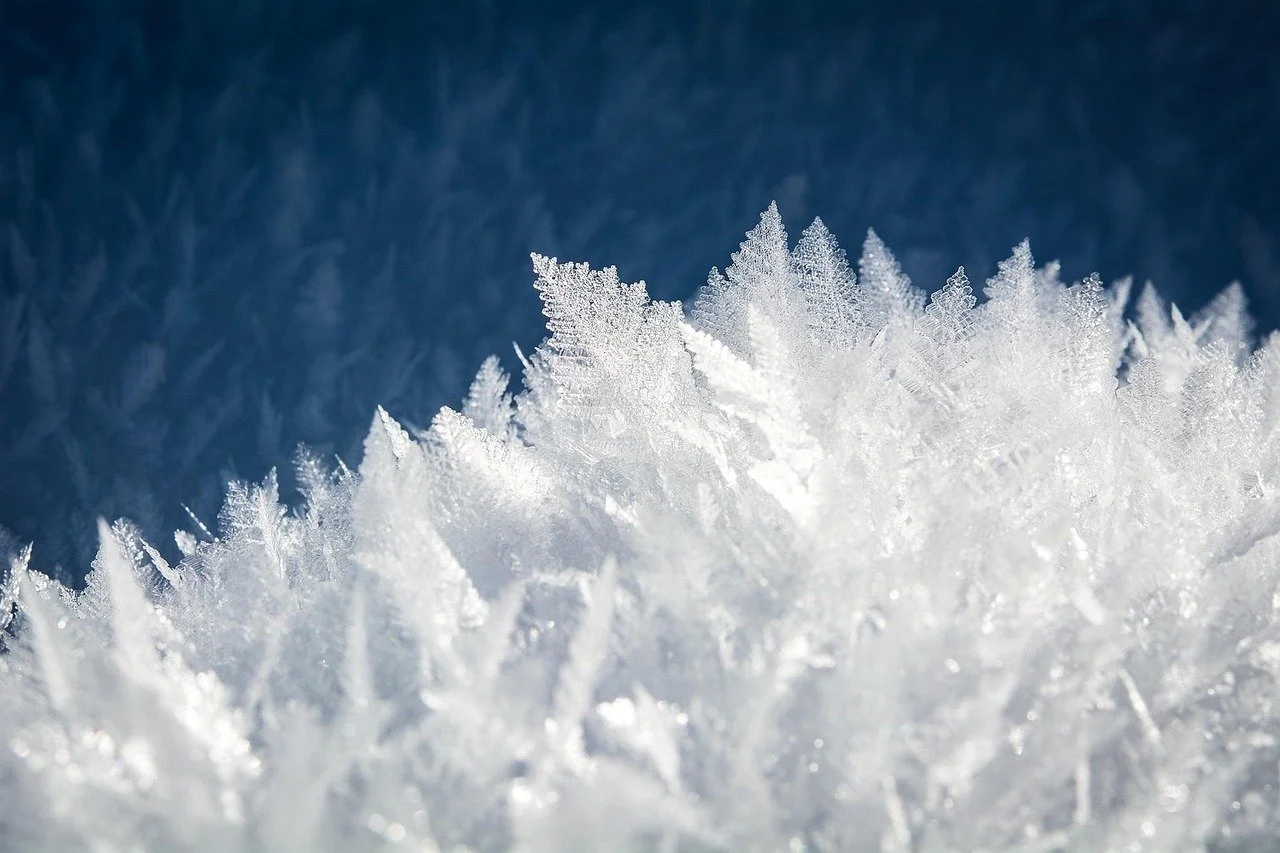
What causes it? Frost heave occurs because water expands as it freezes. A familiar example is a canned beverage left in a freezer. As the liquid solidifies and expands, it can rupture the container. A similar process takes place in the soil. Following a rainy period or in areas with poor drainage, a sudden drop below freezing causes moisture in the ground to form ice. As the ice expands, it lifts the surrounding soil. In areas of bare soil, you can sometimes see obvious evidence, commonly called ice needles or rime ice. When the ice thaws, soil is left suspended on small air pockets. The ground looks disturbed, almost fluffy. Frost heave can damage house foundations and give rise to potholes in paved streets or driveways. It can push garden bed edging out of their locations, leading to an uneven appearance. It is more common in silty soils than in clay.
The repeated freeze–thaw cycle can push plants upward, exposing tender roots to air and cold temperatures. This exposure can be fatal during subsequent freezes. To minimize damage, gently press raised soil back into place to eliminate air pockets around roots. Light foot pressure is usually sufficient.
For widespread frost heave in sodded lawns, a weighted roller can help restore firm contact between grass roots and soil. Use caution: excessive compaction may damage dormant turf. Likewise, avoid driving over frost-heaved lawns, as vehicle weight can kill dormant sod.
While it is difficult to prevent frost heave, mulch serves as an effective soil insulator, moderating temperature extremes and reducing its likelihood. Well-aerated, well-drained soils are also less susceptible.
If you are unsure whether frost heave has occurred, walk through the affected area. Heaved soil typically feels soft or spongy underfoot, an early indicator that corrective action may be needed.
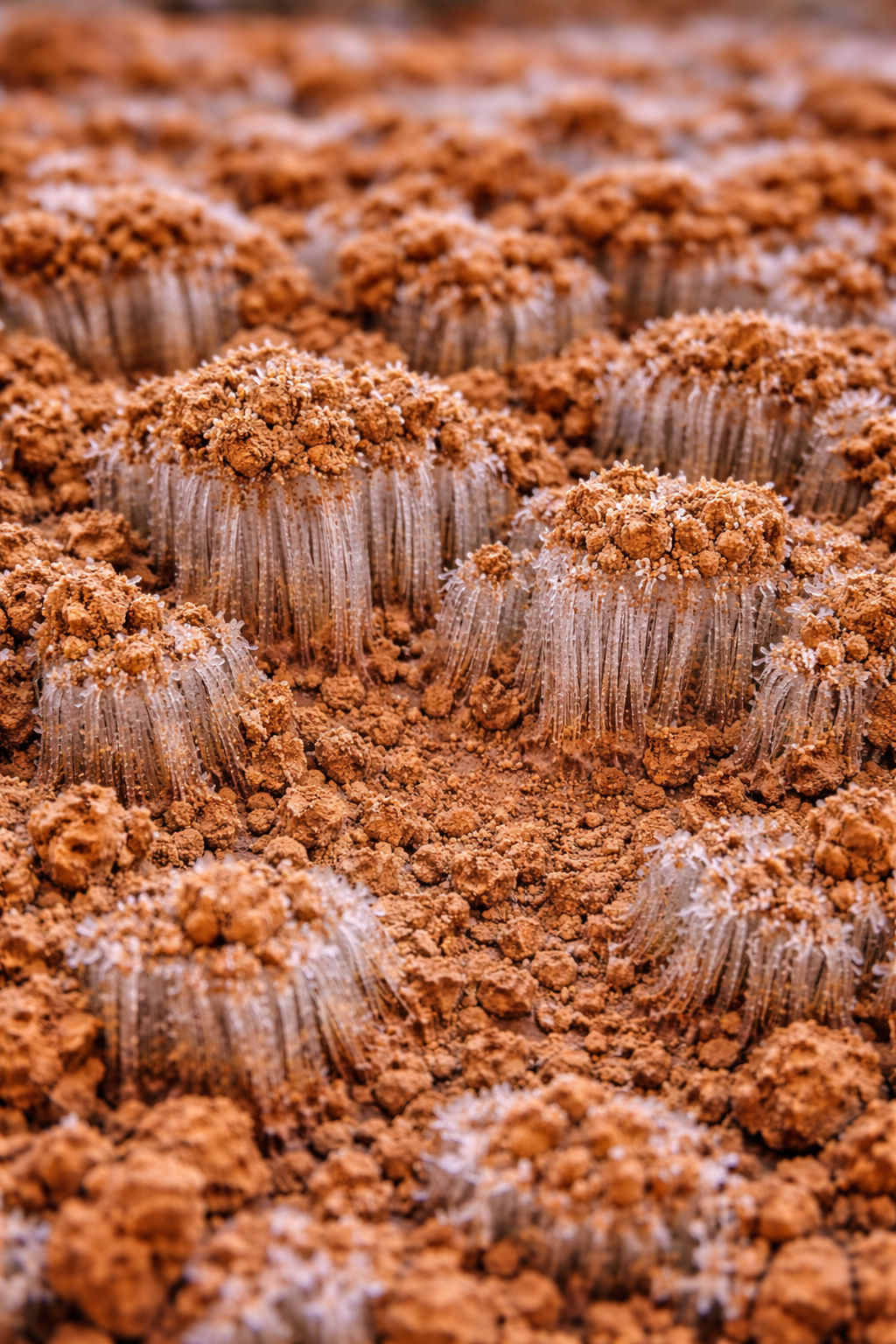
“Rime ice” or “ice needles” has pushed areas of soil above the surface.