I wonder how to distinguish when a plant crosses the threshold from ornamental to annoying or even invasive. While the term “invasive” is often used to indicate plants that self-sow freely, the accurate meaning, succinctly put by the University of Florida, is a plant that is “nonnative to a specific area, was introduced by humans, spreads so much that it displaces native plants. All invasive species start out as nonnative species, meaning that they don’t occur naturally in a geographic area. Once they are introduced, it may take some time for a nonnative species to become invasive, if they ever do. This is called a lag phase.” It is important to note that many nonnatives grow agreeably in our gardens without ever becoming invasive pests. A few examples: Azaleas, Camellias, Hydrangeas.
Cardoon has been gaining popularity among gardeners who enjoy unusual or out-of-the-ordinary plants. Cardoon, Cynara cardunculus (pronounced SIN-ah-rah kar-DUNK-yoo-lus) has a large number of common names. According to NC State University, these include Artichoke Thistle, Cardoon, Desert Artichoke, European Cardoon, Globe Artichoke, Scotch Thistle, Scottish Thistle, Spanish Artichoke, Wild Artichoke, and Wild Cardoon. I grew up in upstate SC, where farmers regarded thistle as a terrible weed in livestock pastures. My mother would swoop in and excavate any thistle-like intruder that attempted to make its home in her lawn. Cardoon is perennial in zones 7-10, and has a deep tap root that makes it difficult to eradicate. It tolerates most soil types, moisture levels, and acidity levels, and thrives in full sun.
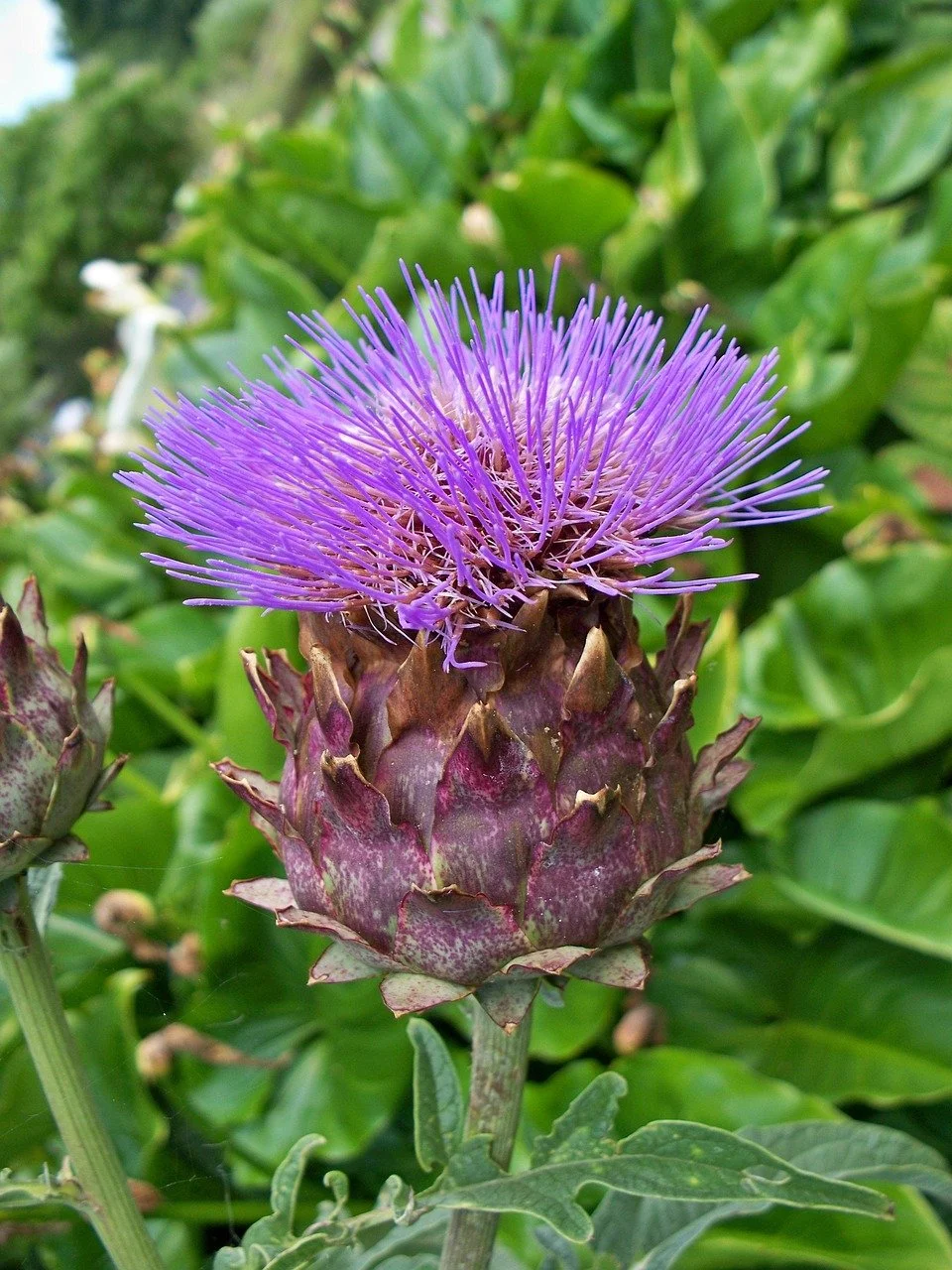
Cardoon plants draw attention. They are tall (up to six feet when flowering), with prickly, toothed, gray-green foliage. The large flowers are purple. While the plant and the flower bud look like they should be edible, this is not the same plant as the edible artichoke (Scolymus Group, a subset of Cynara cardunculus). Their leaf stalks, however, can be harvested and cooked as a vegetable. The roots are reputed to be edible as well.
Cardoons need full sun and moist soil to look their best. They may go dormant in the hottest part of the year or during long periods without rain. Even in perfect soil conditions, they are dormant in winter, emerging in spring from their fat tap roots.
I have not been brave enough to plant a Cardoon in my garden. We had a native thistle that appeared along one of our groomed woodland paths last year. My husband admired it, and allowed it to stay. I should have been smarter and removed the spent flower head before it went to seed. Our admiration has dimmed this year, since every one of those seeds seems to have germinated. I foresee lots of hori-hori activity in the coming weeks as I grub out those roots.
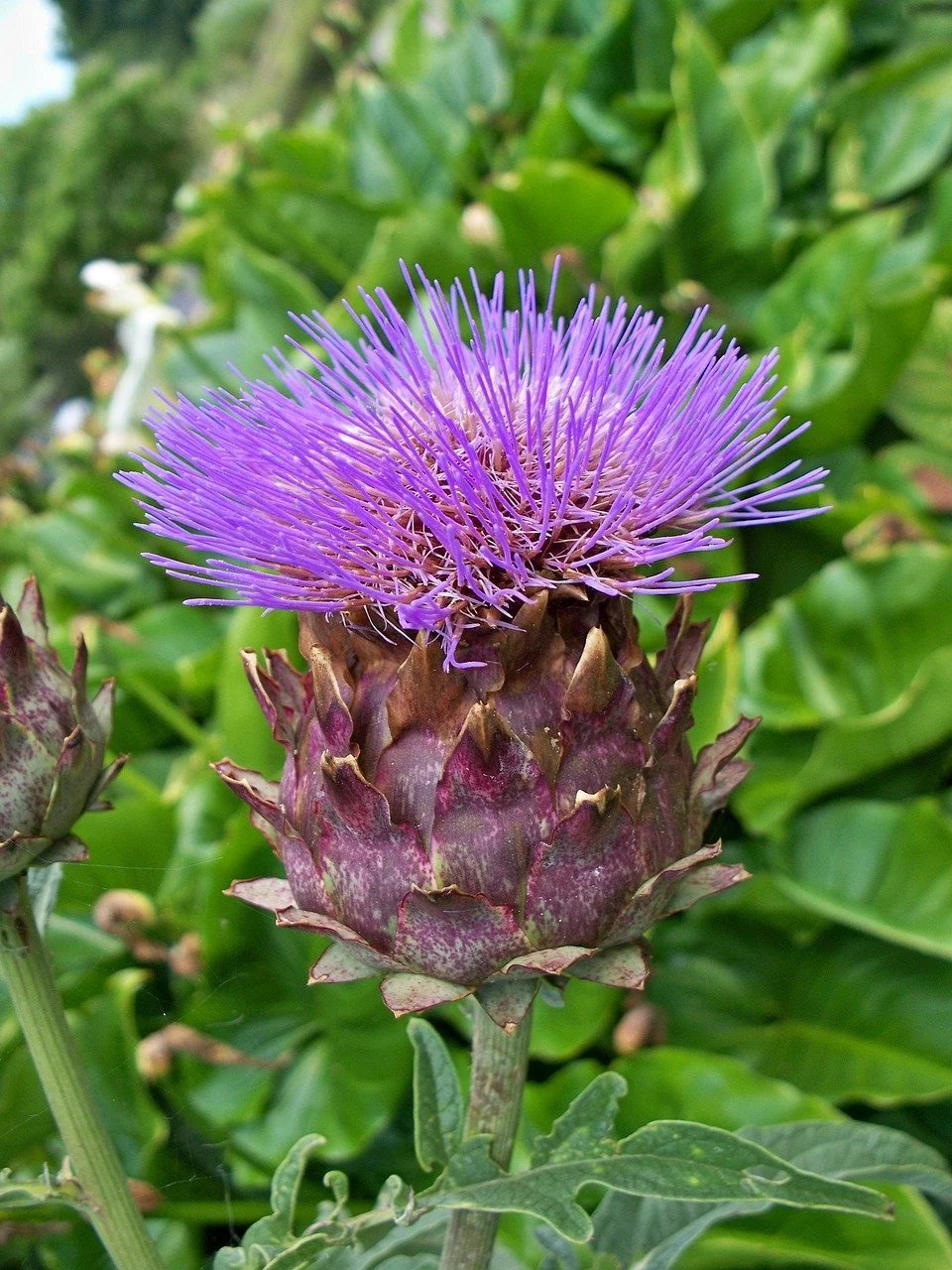
Cardoon’s lovely purple flower
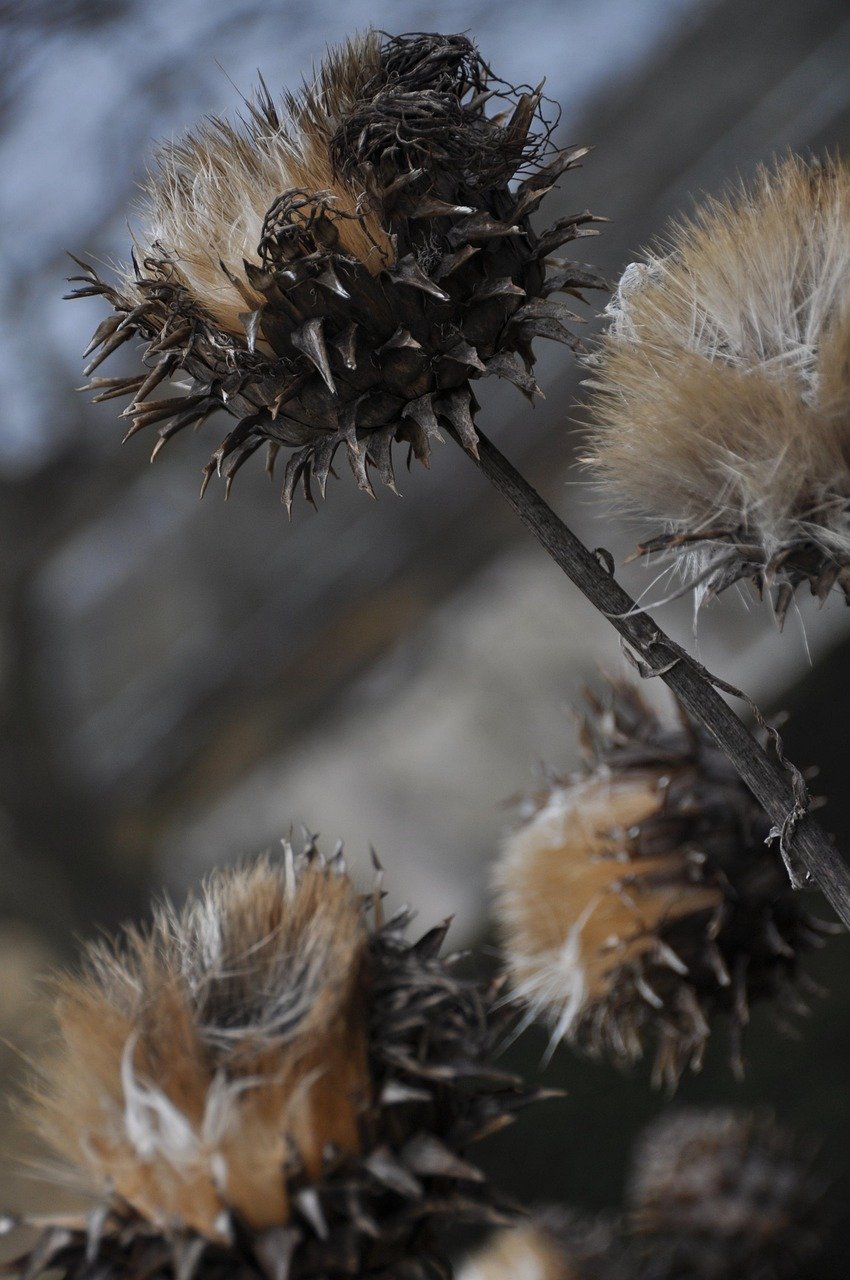
Prickly seed heads of Cardoon. The seeds are attached to fine fibers that allows wind to transport them to new locations.
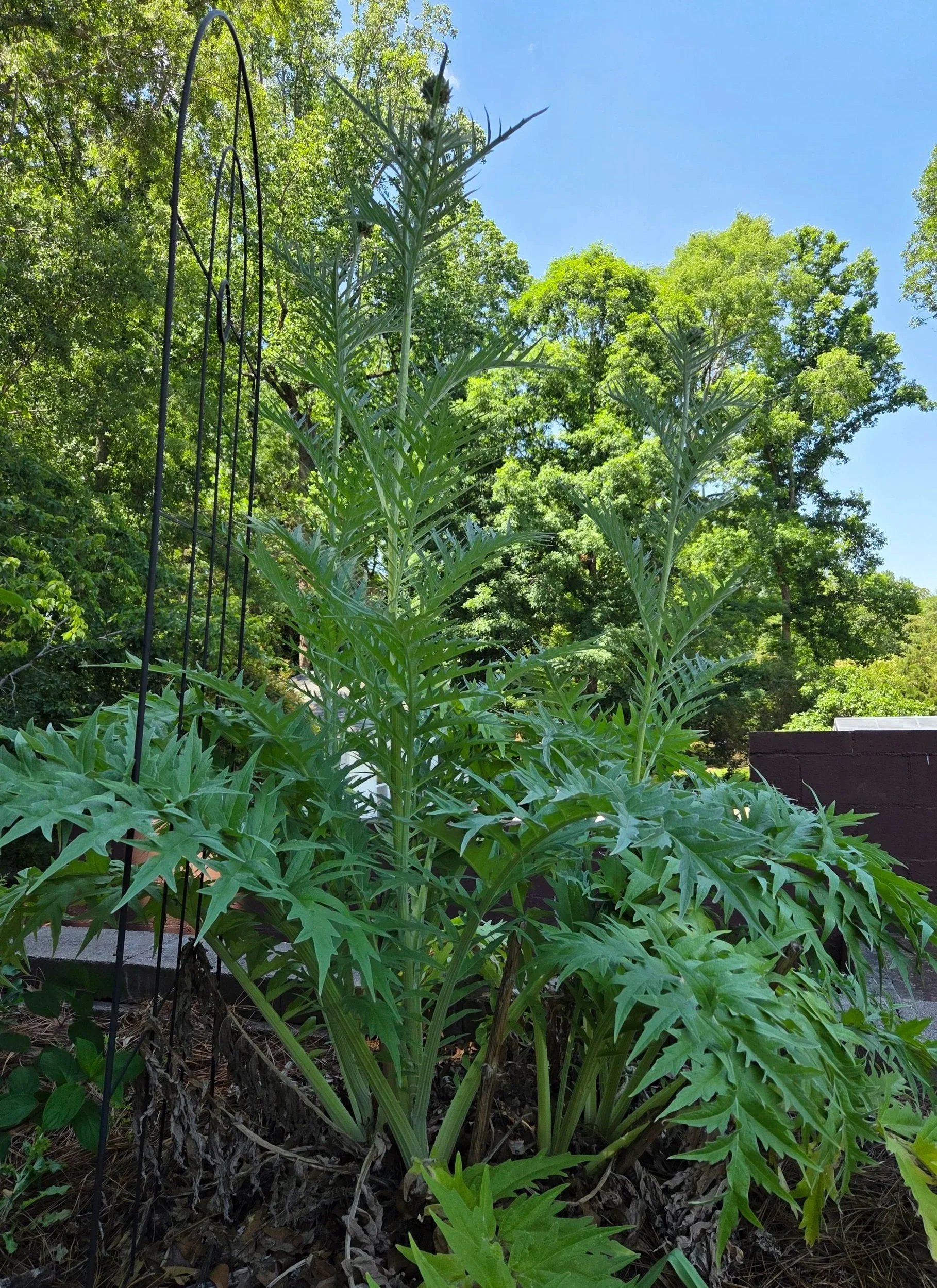
Cardoon, growing in a friend’s garden, showcases prickly, toothed foliage.