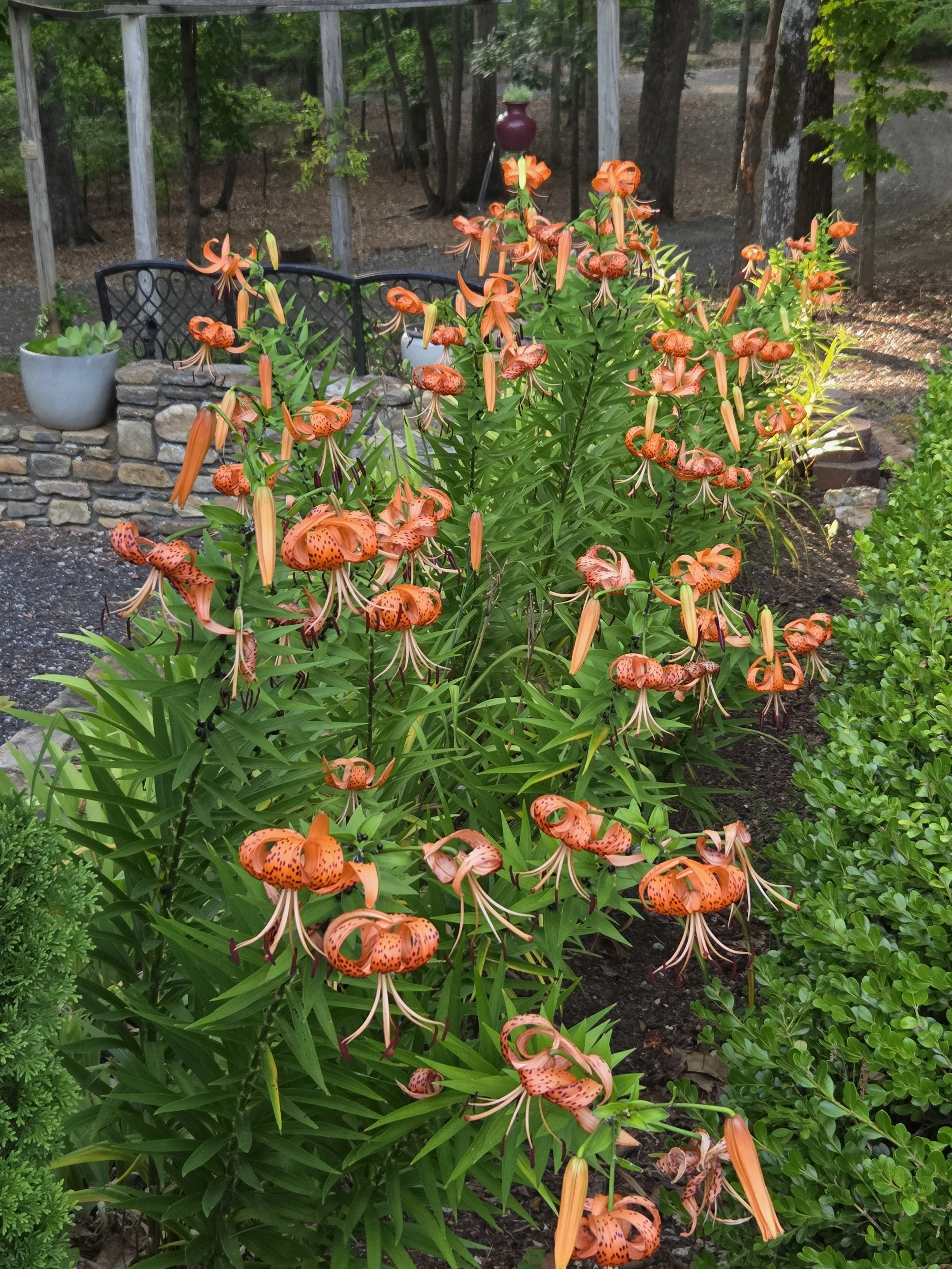
Lilies are among the most prized garden flowers, with large trumpet-shaped blooms in shades of yellow, white, pink, red, and bi-colors. Many of them have a wonderful fragrance. Unfortunately, some species have gained an unwarranted reputation for being finicky. One of the easiest lilies to grow, and often shared as a passalong plant, is Tiger Lily (Lilium lancifolium, formerly Lilium tigrinum).
Tiger Lily is a member of the Asiatic Lily group but, unlike other Asiatics, its blooms face downward (“pendulous”). They have recurved flowers, meaning the petals curve backward toward the stem. Tiger Lily flowers are orange in color with dark freckles toward the flower throats, and have protruding stamens. These bulbs like a well-drained acidic soil and will tolerate clay. For best flowering, site them only in full sun exposure. Those in my garden receive shade until mid-morning. As a result, every stem leans toward the west rather than growing vertically. They flower so profusely and take very little care so I forgive their leaning posture. Plants are hardy in zones 5-8. In my zone 8 garden, their flowers start to open mid- to late-May and continue for several weeks. At season’s end, when freezing weather has turned the top growth brown, dead stems can be removed at soil level to keep the bed looking tidy through winter.
If Tiger Lily has a drawback, it is that they spread a bit too easily. The stems of healthy plants can reach up to six feet in height, and along the length of the stems, at the base of the elongated leaves, they produce little round, black bulblets. These bulblets fall to the ground and sprout into new plants. It takes three to four years for the babies to be large enough to flower. To prevent a population boom, remove the sprouted seeds while the plants are still small. They are easy to pull out with your fingers.
Despite their having zero fragrance, Tiger Lily flowers are visited by swallowtail butterflies. Plants make a great back-of-the-border addition to pollinator beds IF you do not have cats. The pollen and plant parts of all lilies are toxic to cats. There are some plants that have the word lily in their name but are not actually lilies: Peace Lily (houseplant), Canna Lily, and Daylily (Hemerocallis genus, not Lilium).
This row of Tiger Lilies is located in a raised area with excellent drainage, next to a stone retaining wall. I have not applied supplemental irrigation this year.
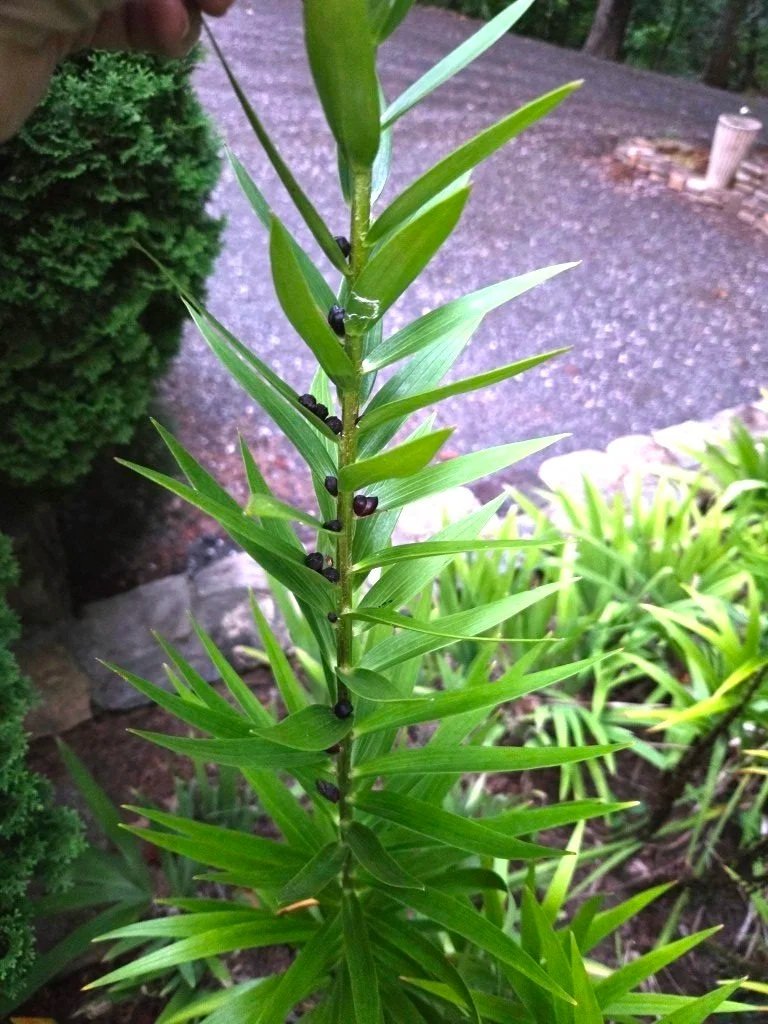
The round, black objects attached to the stem at each leaf base will eventually fall off and sprout into a new Tiger Lily plant.