What is a “passalong” plant? It is a plant that survives and thrives in the garden, spreading enough to allow division, with those divisions being passed along to friends and fellow gardeners.
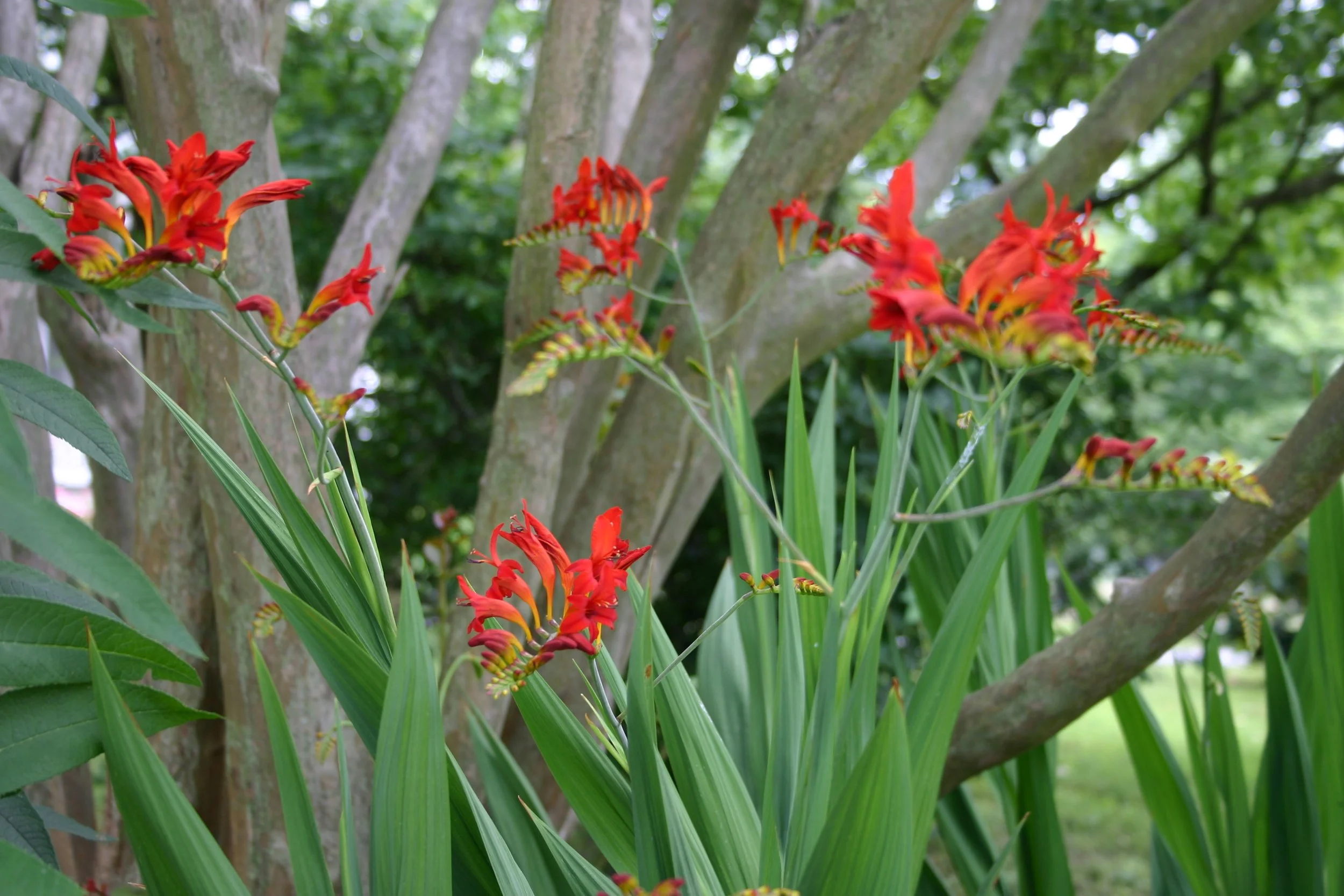
Most common passalongs are Daylilies (Hemerocallis), Cannas, Bee Balm (Monarda), Crinum, Crocosmia, and Black Eyed Susans (Rudbeckia). Experienced gardeners know to accept gift divisions with caution. The reasons these plants are plentiful and often shared is because they are easy to grow, and spread or reproduce readily. Black Eyed Susans, for instance can spread seeds and produce new plants at a pace that transforms them from an attractive, long-flowering feature to a nuisance. (I’m looking at you, Rudbeckia triloba.) Crocosmia corms reproduce rapidly, transforming themselves from a single clump to a dense traffic jam of bulbs that must be divided in order to maintain flowering. Bee Balm spreads by underground runners into an ever-enlarging plants, which is fine if you have a lot of bare ground to cover but not so great if they are overtaking other plants in your borders. Iris, especially reblooming Iris, are wonderful but realize that they will need division every couple of years to maintain flowering and good health.
Many passalongs are not found readily in garden centers. I rarely see Night-blooming Cereus, Blackberry Lily (Iris domestica) or Jewels of Opar (Talinum, one of my favorite heritage plants with succulent chartreuse leaves and tiny, hot-pink flowers). In years past, I have requested divisions of Sea Holly, Blue Mist flower, and Garlic Chives. The Sea Holly did well at the top of a clay slope where it received no supplemental irrigation. It has reproduced enough for me to share, but not enough to overwhelm. Blue Mist (Colestinum, also called Perennial Ageratum) spreads aggressively by both seeds and roots. Several of my friends criticize this plant as demonic, but I have a steep slope with rocky soil that is far from any irrigation source. Blue Mist survives in these tough conditions, and is planted next to a spreading Goldenrod (Solidago). I let these two compete for available space. Blue Mist and Goldenrod flower at the same time, making an attractive carpet of blue and yellow where nothing else would survive. When I asked a friend for a division of Garlic Chives, she obliged but warned me about its aggressive tendencies. I should have listened. I allowed it to go to seed once – once!—and now I’m regularly uprooting babies from a large area. Once the flowers are starting to fade, I now decapitate the plant to eliminate seed drop.
Passalongs that are propagated from stems rooted in water are less likely to become overwhelming. Coleus, Sweet Potato Vine (Ipomoea batatas), and Confederate Rose (Hibiscus mutabilis) cuttings root readily. The first two are annuals, so are unlikely to spread beyond control. Confederate Rose is a perennial that can become a very large, multi-stem shrub. View the mother plant to get an idea of mature size.
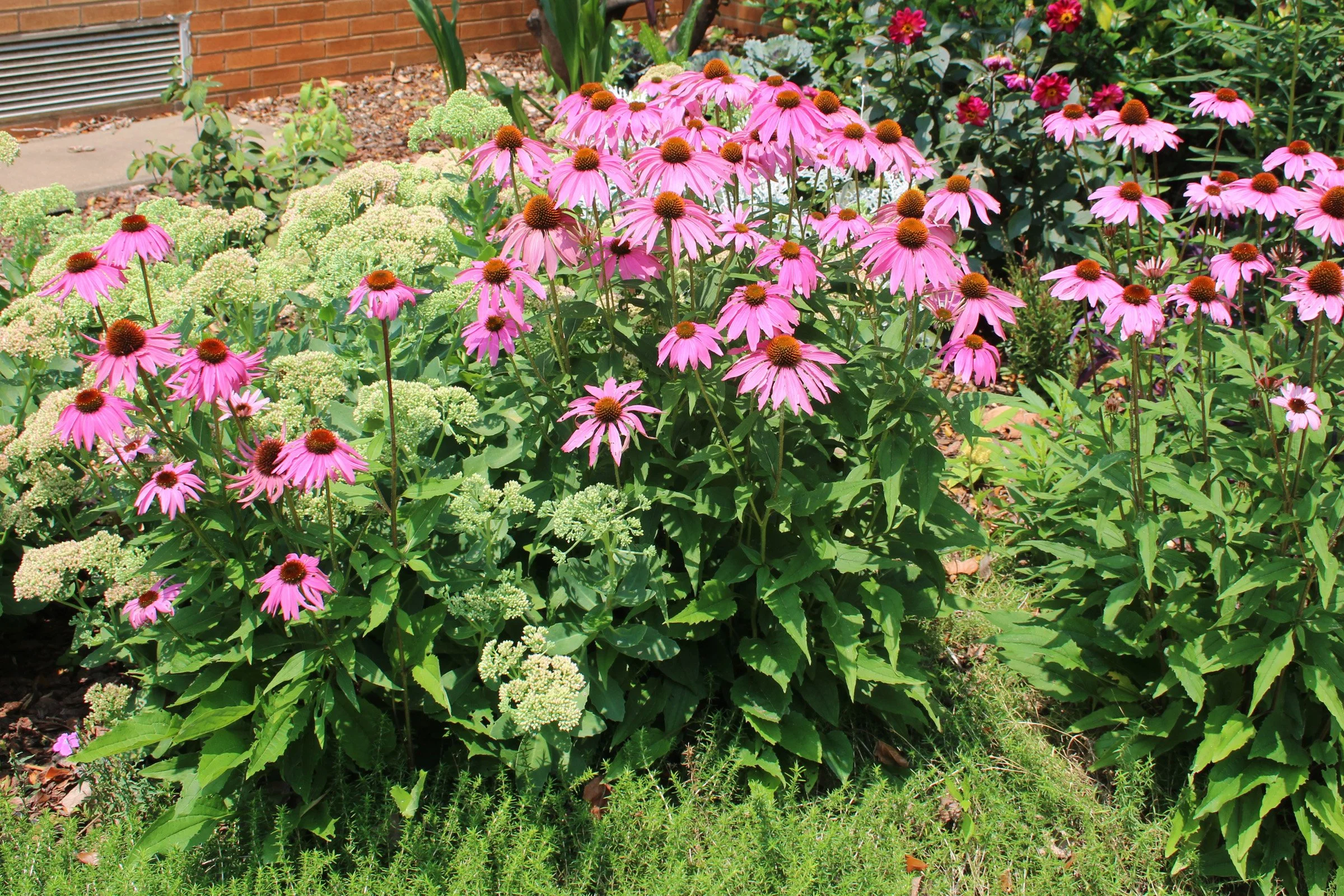
I received my first Autumn Joy Sedum as a passalong plant many years ago. I love it, and have added several other cultivars to the Snoddy garden. I cut back my tall Sedum several times in spring and early summer in an attempt to reduce height, increase flowering, and reduce the unattractive spraddle that may occur in fall when plants have trouble holding heavy flower heads. These tip prunings root readily, and I am happy to pass them along to other gardeners who seek waterwise plants.