For several years, I have walked by a small patch of yellow flowers that grows along the driveway in the edge of our woodlands. My mind would occasionally register them as flowering weeds, but not until this week did I pause for a closer look. Turns out, this weed is pretty enough to introduce to my pollinator garden. A quick image search identified it as Oenothera biennis (ee-no-THEE-ruh by-EN-is), or Evening Primrose. The word Primrose put me on high alert, since I once had a years-long battle to eradicate Pink Evening Primrose, Oenothera speciosa, from my garden. More research was needed.
What I learned is that this Evening Primrose is a biennial (obvious from the species name) that is native to the eastern US. The plant forms a rosette of leaves its first year, then shoots up to a height of 4-5 feet its second year and produces yellow flowers from June until frost. Narrow leaves are arranged spirally around the stems. Flowers open near sundown and close the next day. Plants die after setting seed, but their seeds sprout and grow into new plants so that they appear to be perennial. This ease of spread leads to a reputation for invasiveness. According to the NC State Plant Toolbox, “seeds can stay viable in the soil for up to 70 years.” That single fact means that I will probably cut most stems to the ground in late fall to prevent an overabundance of seedlings.
Like many other perennials, Evening Primrose prefers moist soil in full sun, but will tolerate partial shade, drought, and bad soil. Plants are hardy in zones 4-9. The upside of growing this plant, other than the beautiful yellow flowers, is that it supports night-flying moths, hummingbirds, and several varieties of bees. Birds enjoy the seeds.
Several tribes of Native Americans used boiled Evening Primrose roots for a food dish similar to our mashed potatoes. Leaves were cooked and eaten as greens. Leaves were also used medicinally as a stimulant or pain reliever.
I have reconsidered my plan to move a few plants into the pollinator bed adjacent to my home orchard. Instead, I will move them to a sunny, dry area that slopes sharply from my home down to a creek. The area has rocky clay and is not near any irrigation source. Evening Primrose can multiply in this area without invading cultivated areas. Its spread will be contained by the mowed pathways that crisscross the slope.
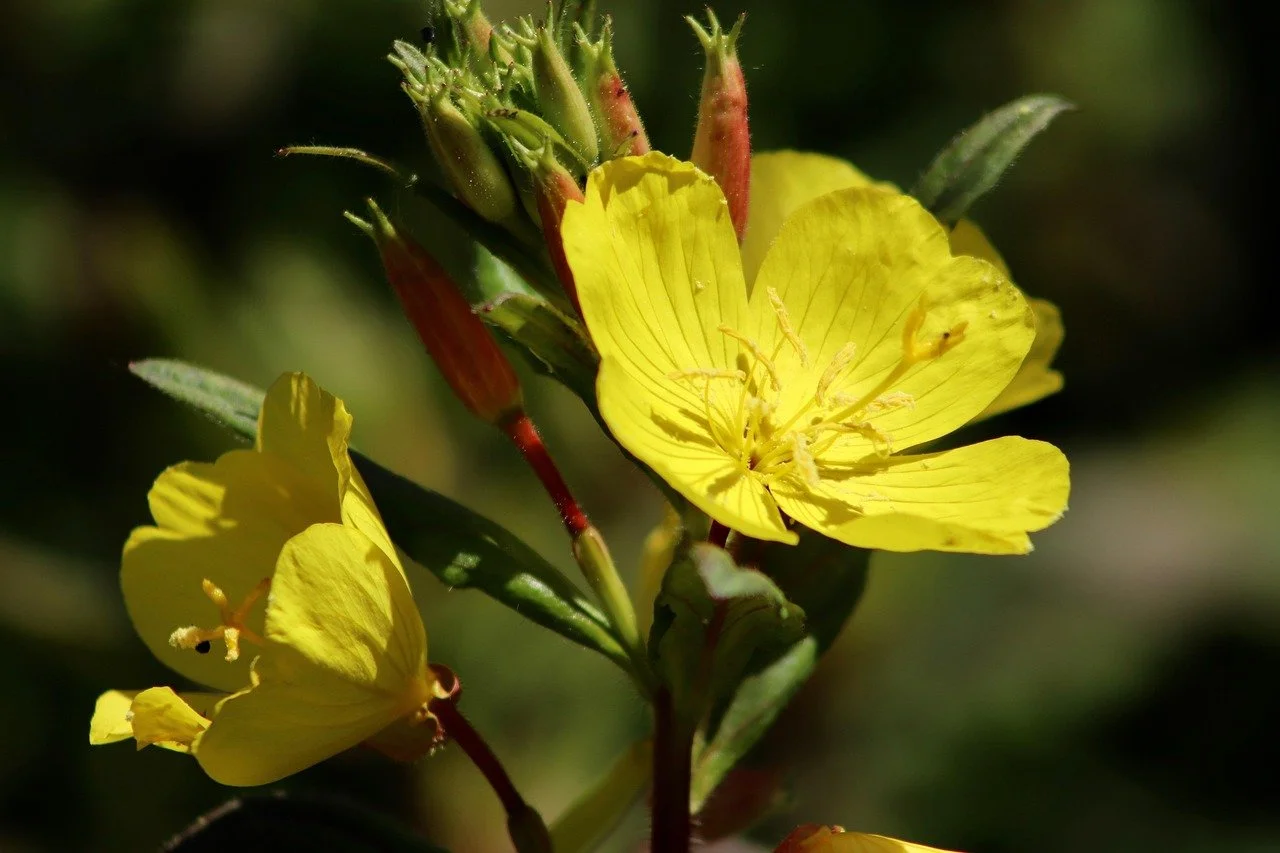
Close view of Evening Primrose flower
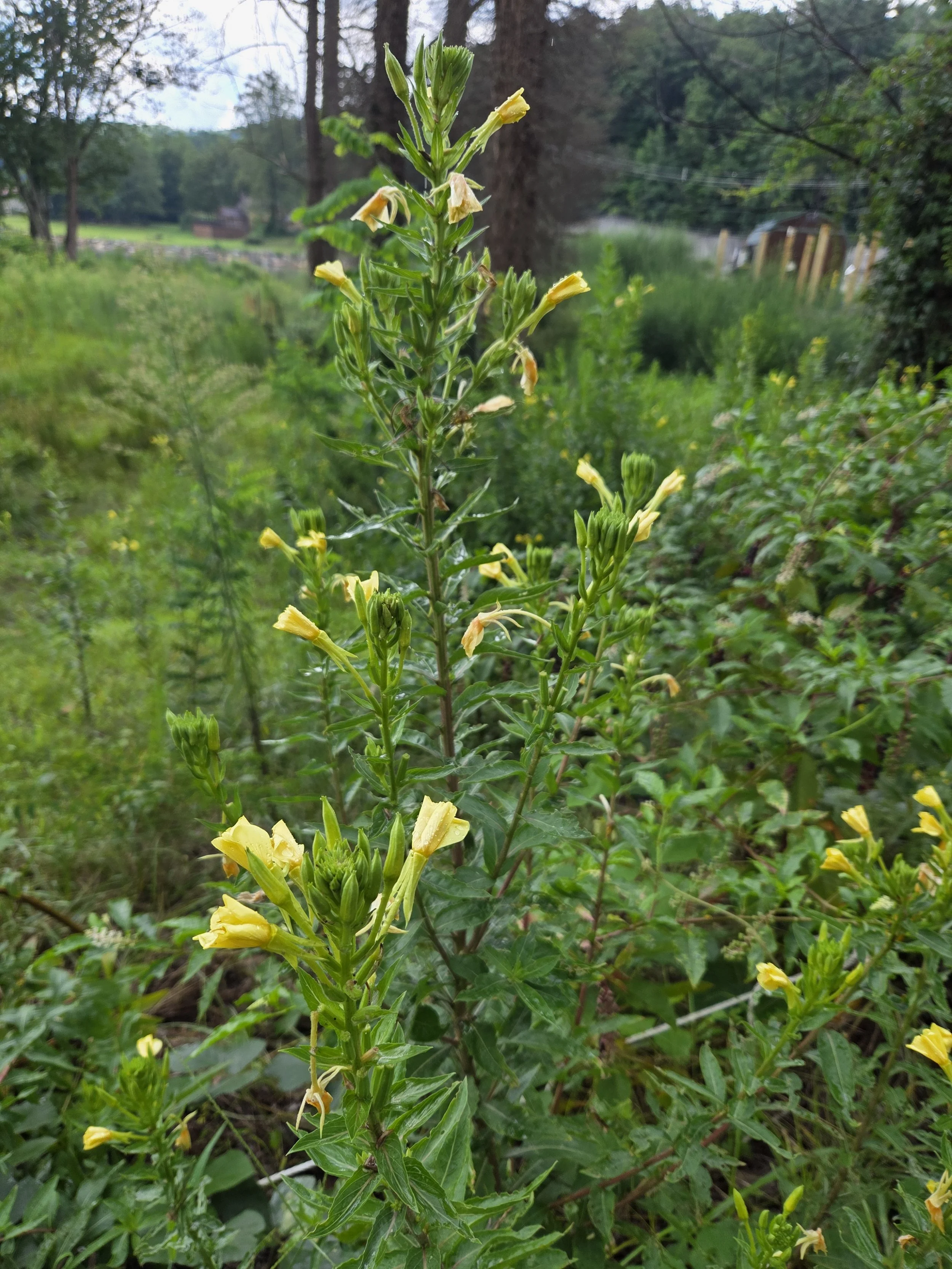
Flowers open at dusk and close the following mid-day, leading to the name Evening Primrose. These have already closed.