In rare cases, various species within a plant genus are so different that it is hard to believe that they are related. And sometimes the use of common names leaves gardeners confused. I have mentioned the Peanut Butter tree, Clerodendrum trichotomum in a past blog. It is a tree, unlike the subject of today’s blog, which focuses on Clerodendrum thomsoniae, Bleeding Heart Vine. Please don’t confuse this vine with the spring ephemeral, Bleeding Heart, Lamprocapnos spectabilis and formerly Dicentra spectabilis, which is yet another completely different plant.
Bleeding Heart vine has lovely dark green leaves and bright red flowers surrounded by pure white calyces. The overall effect is of a white flower with a drop of blood oozing from the center, hence the common name.
Bleeding Heart vine is native to West Africa. It is only winter-hardy in zones 10 and 11, but can be grown outdoors in summer in cooler zones and brought into a frost-free area to overwinter. Anticipate leaf drop as plants adjust to a change of environment. Plants may flower indoors if they receive sufficient light. They prefer to be kept slightly dry during winter dormancy, with nighttime temperatures of 55-65 degrees, which is cooler than most of us keep our homes. Do not fertilize during this resting period. Dormant plants are prone to spider mites and mealy bugs, so check them regularly.
Bleeding Heart vine can reach up to twelve feet in length, but container-grown plants are always less. I tip prune mine to create shorter, more numerous stems. Either provide a trellis for the vines to climb via its twining habit or prune them for a bush-like plant. Flowers are held in clusters that droop gracefully. These plants look fabulous in hanging baskets and are best grown in partial shade in zones 7 and 8.
Bleeding Heart vines put on a wonderful show when given regular water and frequent but light fertilizer. Flowers occur on current year’s growth, so it is best to prune them hard when temperatures begin to warm in spring, then fertilize and water when they move outside for the summer. I neglected to prune mine back when I transferred it to the greenhouse last October, and it bloomed beautifully through most of the winter.
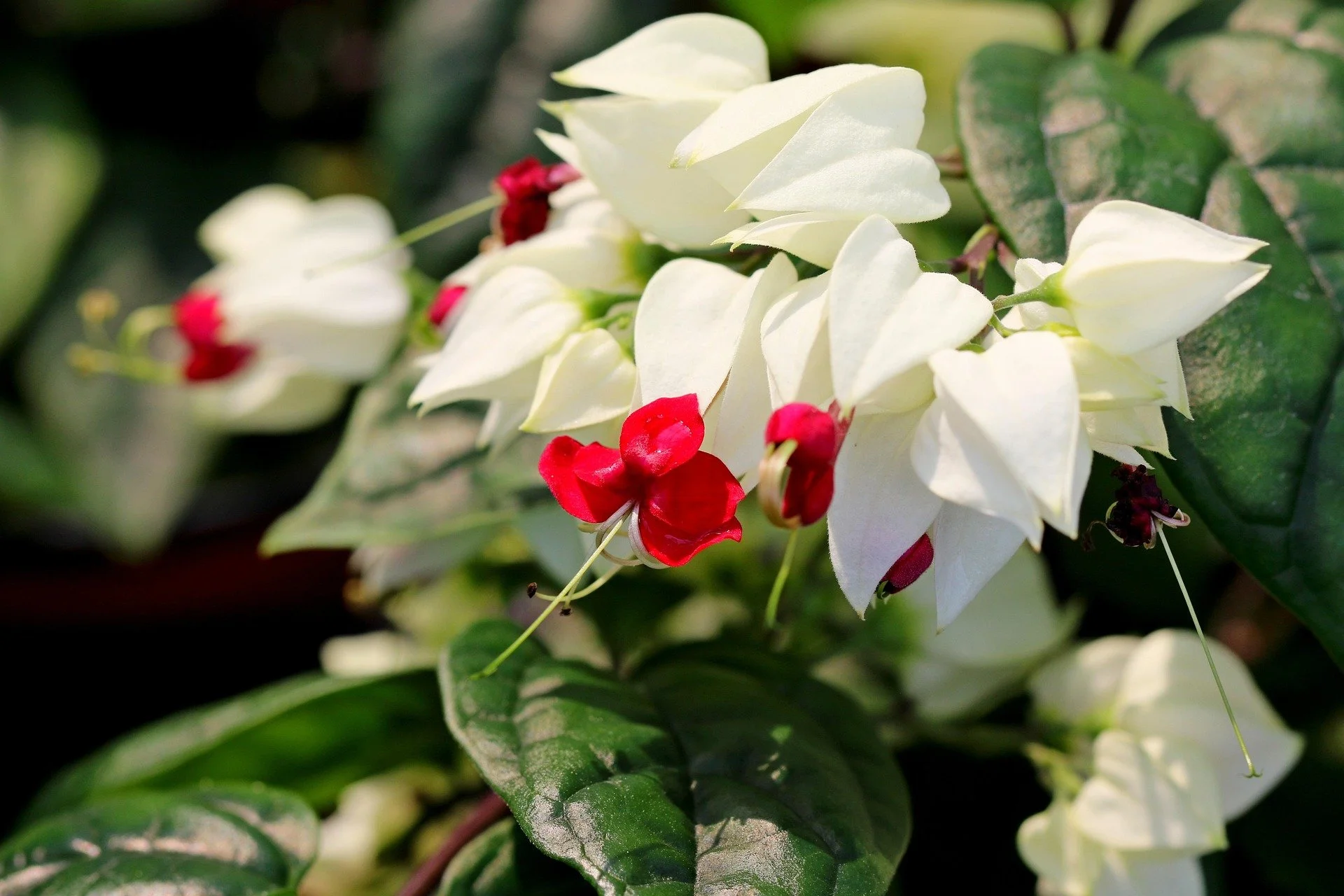
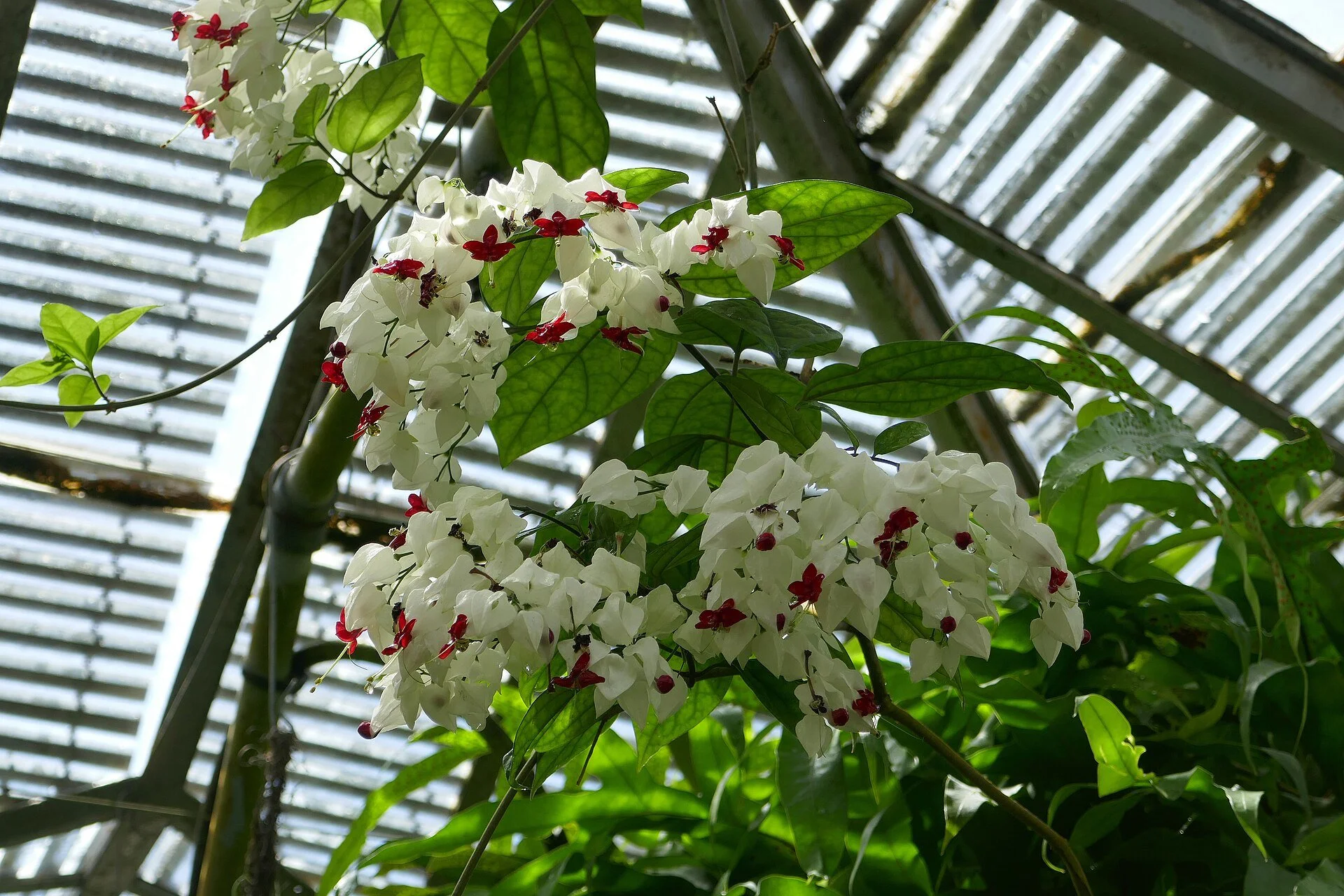
This Bleeding Heart vine has crawled up the trellis in a heated greenhouse and is in flower despite outside weather.
Photo by Ji-Elle - k, CC BY-SA 4.0, https://commons.wikimedia.org/w/index.php?curid=59021978