While everything else in the garden is dull, drab, gray or brown, bright evergreen Holly Ferns stand out like beacons signaling that a positive future awaits in my shade beds. The Latin name for Holly Fern is Cyrtomium falcatum, pronounced sir-TOH-mee-um fal-KAY-tum. They are native to Asia, but have naturalized in the lower US.
Their thick, leathery leaves withstand freezes but can be damaged in extended cold periods or if ice remains on the fronds for any length of time. Damaged leaves should be removed at the base in spring. Plants are perennial in zones 7-10.
Like most other ferns, Holly Fern likes damp shade or part shade. They tolerate short periods of drought. They also do very well near deciduous trees, where they receive a bit of sun in winter but are protected from direct sunlight during the warm months.
Holly Ferns do not produce seeds. They can be started from spores if you have an enormous amount of patience, but they are best reproduced by division. Try using an electric kitchen carving knife (yes, the kind used for slicing your Thanksgiving turkey) to divide the tough crowns. Mature plants can reach two feet in height and up to three feet in width. This means they can be used as low-growing foundation shrubs on the shady side of a house.
While most ferns have a delicate, fine texture, Holly Ferns are coarse. They combine beautifully with hostas, and their evergreen nature means that they can keep a bed from looking bare in the winter.
I see Holly Ferns for sale in various nurseries. Sometimes they vary in appearance from the ones that have been with me for a number of years. I started with one plant and have divided it multiple times, so all mine are exact clones of the mother plant. They have weathered several relocations without sulking. I suspect that those that look different are Cyrtomium fortunei, a similar species with closer spaced leaf lobes.
These easy-to-grow plants do well in containers, pond-side, on slopes, in hanging baskets, just about anywhere shady. They are resistant to damage from deer and rabbits.
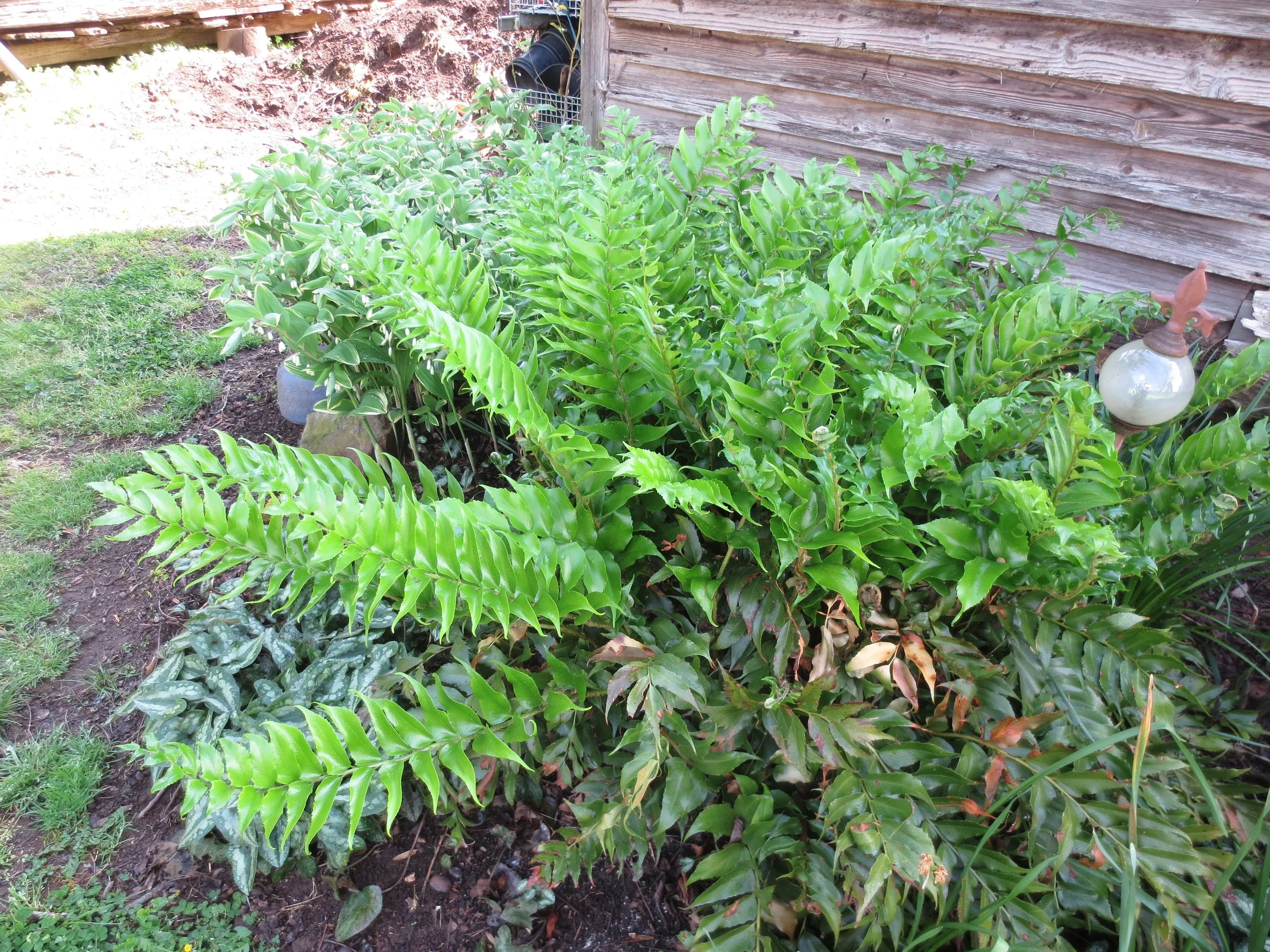
This Holly Fern is five years old. The new growth is bright green. The older,darker fronds at lower right show some winter damage and will be removed. This fern is underplanted with evergreen ginger (Asarum europeana) and next to variegated Solomon’s Seal (Polygonatum odoratum).
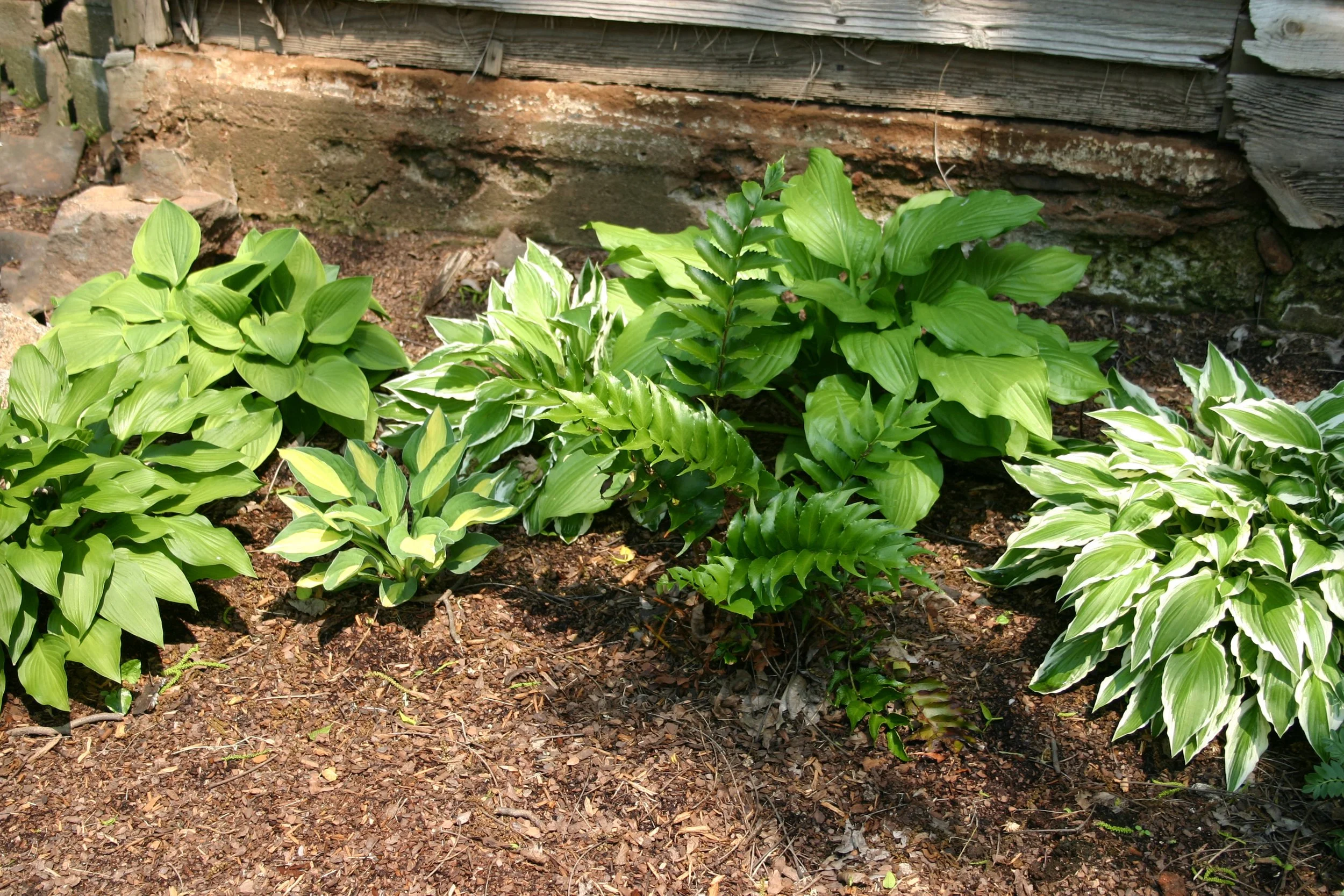
This baby Holly Fern was recently separated from a mother plant. Within a year, it will outgrow the hostas on either side.