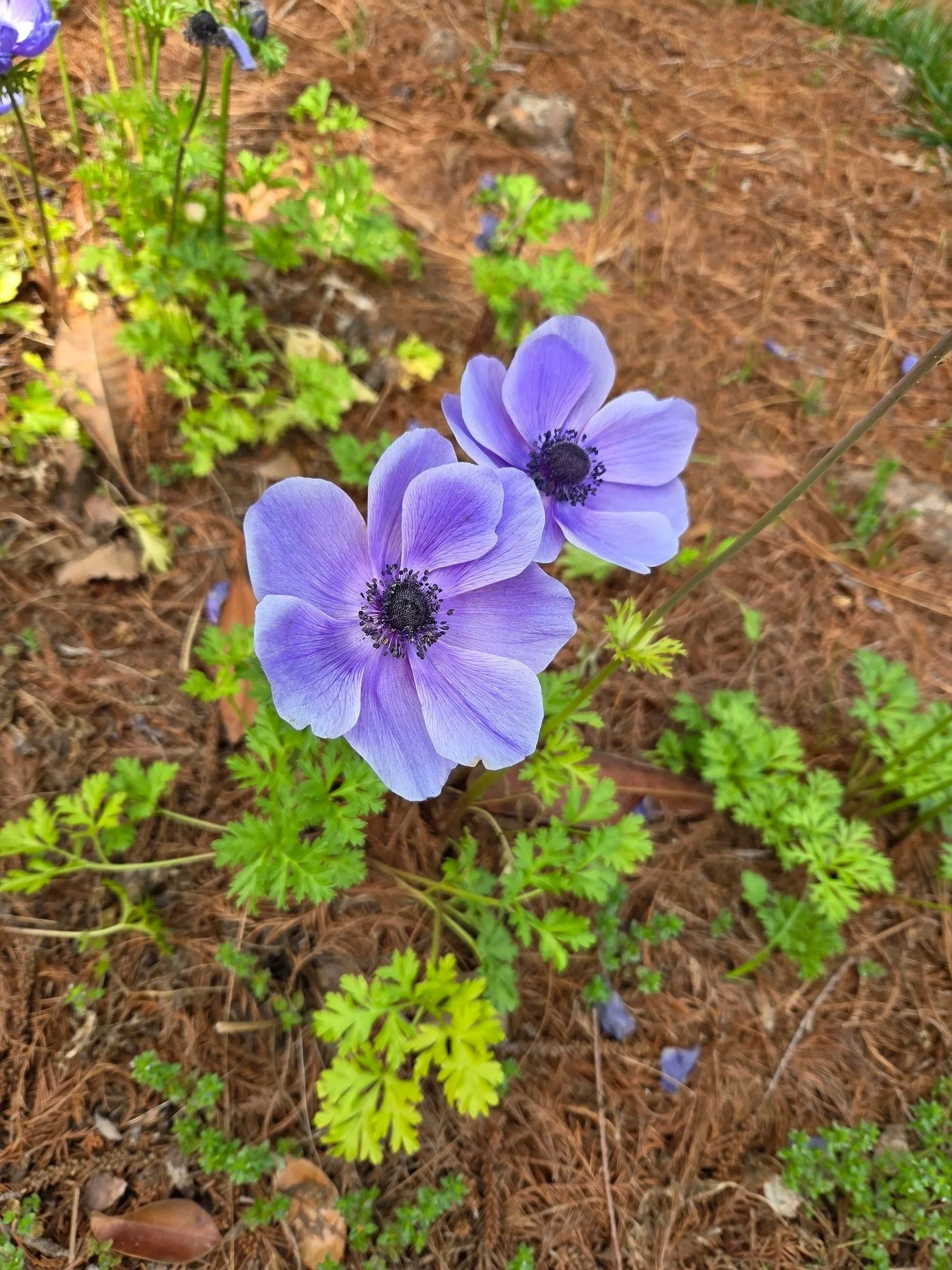
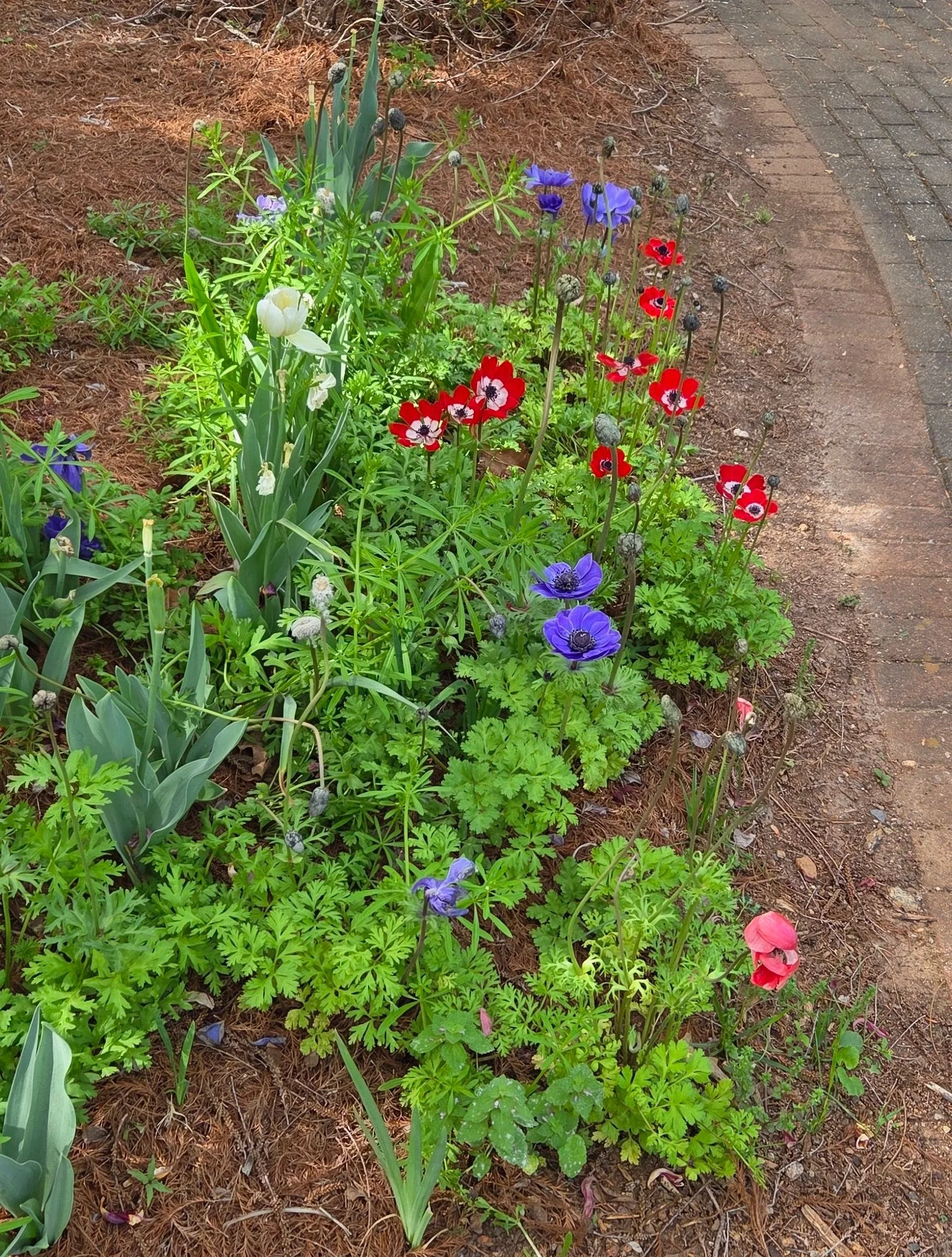
Whether you call it Spanish Marigold, Windflower, or Poppy Anemone, Anemone coronaria (pronounced ah-NEM-oh-nee kor-oh-NAR-ee-ah) makes a bright pop of color in spring gardens. The Saint Brigid series was bred in Hollard. Their flowers are semi-double and will tolerate a little more shade than the De Caen series, which was bred in France.
Anemones are tolerant of most levels of acidity and different soil textures, but they perform much better in loamy or sandy soils than they do in clay. Avoid wet soils, which may lead to root rot. Anemones are cold-hardy in zones 7-10. Plants may reach up to 18 inches in height, but no more than 8 inches in width, so they look best if grown with a fairly tight spacing – 6 inches or so. The bright flowers lose impact when they are spread more than a foot apart. Flowers are long-lasting when cut for the vase, but avoid contact with the milky sap. It may produce a blistering rash in sensitive individuals.
Anemones bulbs should be planted in fall. They are ephemeral, which means that they flower in spring and then their top foliage dies away until the following spring. They may reseed, or can be propagated by division after a couple of years. The bulbs are poisonous. They are not normally damaged by deer or rabbits.
Another Anemone, Anemone x hybrida 'Honorine Jobert', is not quite as well-behaved as the A. coronaria species described above. Honorine Jobert is taller (3-4 feet), with pure white flowers, yellow stamens and a green button center. It spreads aggressively through rhizomes. If you have a large, damp, sunny-to-part-shade area that you want to cover quickly, this is a low maintenance plant (except for the inevitable division, which may occur faster than expected). Honorine Jobert blooms in fall rather than spring, putting on a display for up to eight weeks or more. It is cold hardy in zones 4-8, and has the same blistering sap as its shorter, more colorful cousins.
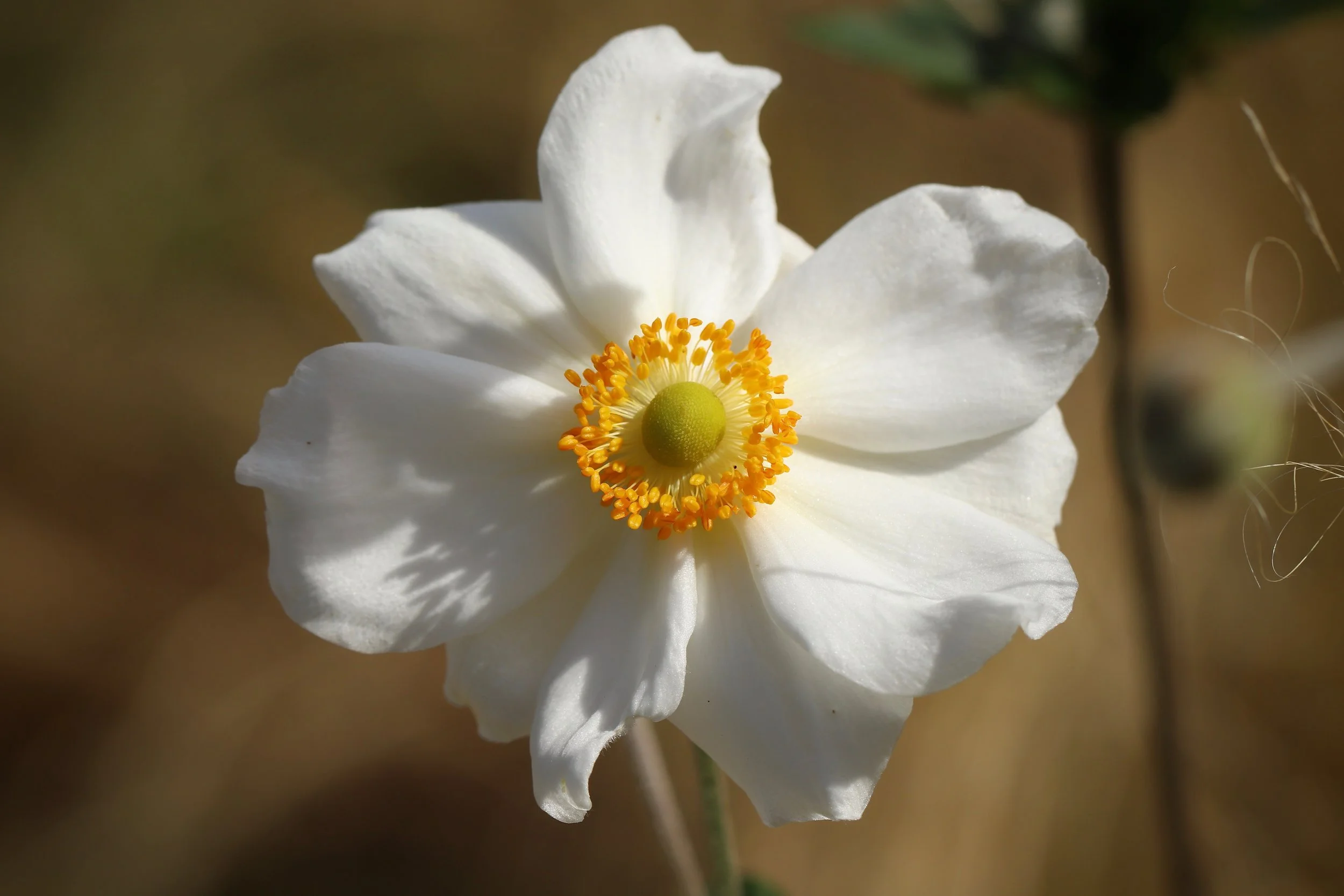
A close view of Honorine Jobert flower. The petals have a slight ruffle to them.