Environment-minded gardeners often grow milkweeds in our southern gardens. Popular choices include the common orange Butterfly Weed (Asclepias tuberosa), and the taller, dusty pink Swamp Milkweed (Asclepias incarnata). My personal favorite, mostly due to its unusual appearance, is Fuzzy Balls Milkweed (Gomphocarpus physocarpus). If you need a refresher on this last one, refer to this past blog: https://www.marysnoddy.com/blog/2024/7/30/hummingbirds-fight-over-this-plant.
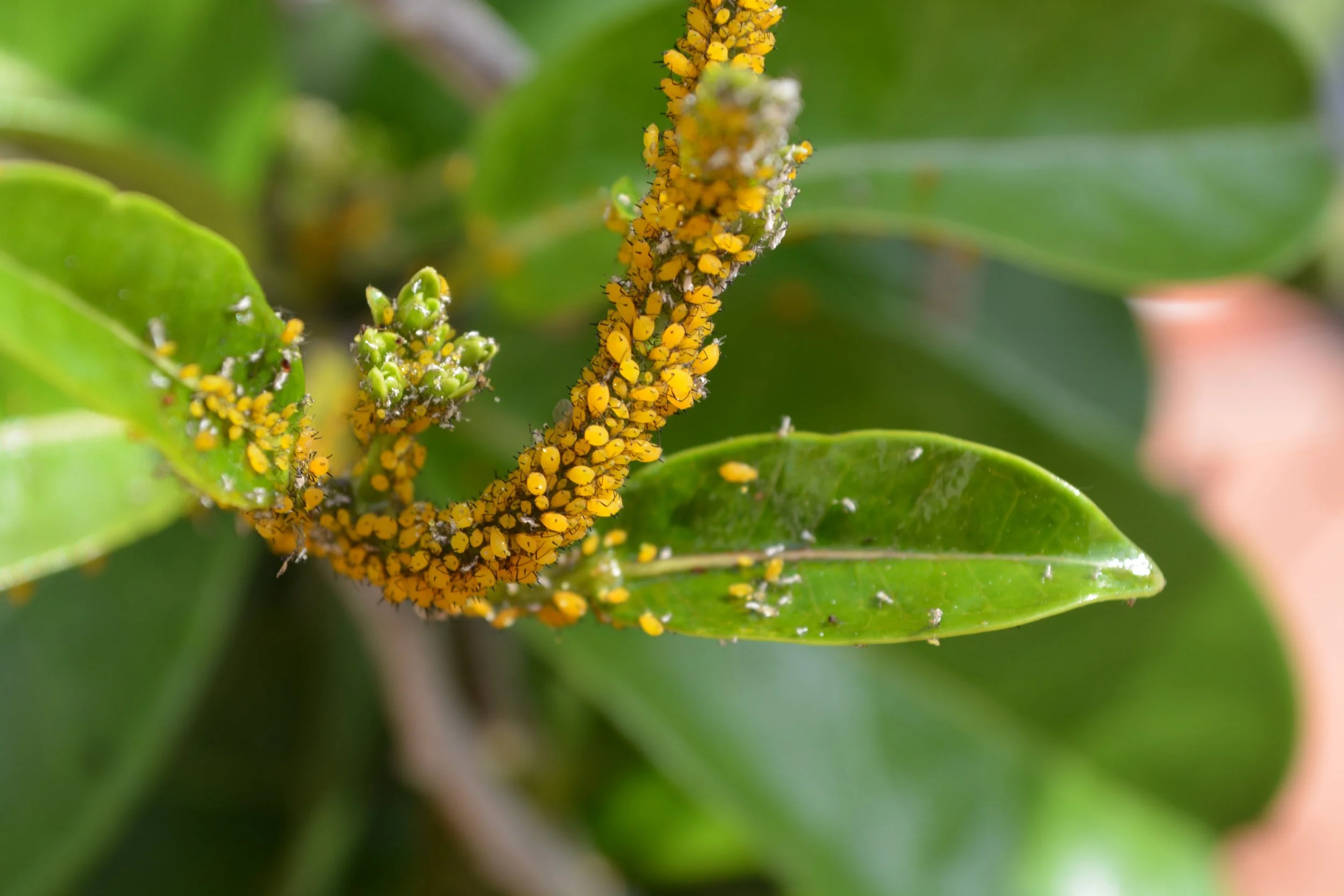
These plants are different in appearance, but they all support butterflies in either their caterpillar or adult stages. But milkweeds share a less pleasant characteristic. They attract numerous aphids. If you grow milkweeds, you almost certainly will have aphids. Aphids rarely cause lasting damage to plants but heavy infestations cause the affected leaves--usually the most tender ones held at the topmost and terminal growth of the stems–to shrivel, dry, and drop. The standard prescription for removal is to dislodge them with a stream of water from a garden hose. Easy prescription to understand, but I find it lacking in effectiveness. I think one would almost need a fire hose to make them loosen their grip. Frequently, my plants sustained more damage from the repeated use of a sharp stream than from the insects themselves. Now, I find a gentle water stream combined with finger action is most effective. Wear nitrile gloves to avoid staining fingertips orange when applying this removal method. I use this method early in the season, but by midseason the insects are numerous and I stop the manual removal and allow lady beetle (“ladybug”) larvae to take over the fight. Evidently, aphids are a tasty meal to these insects so I allow Mother Nature’s battlefield to unfold in my flowerbeds without my interference.
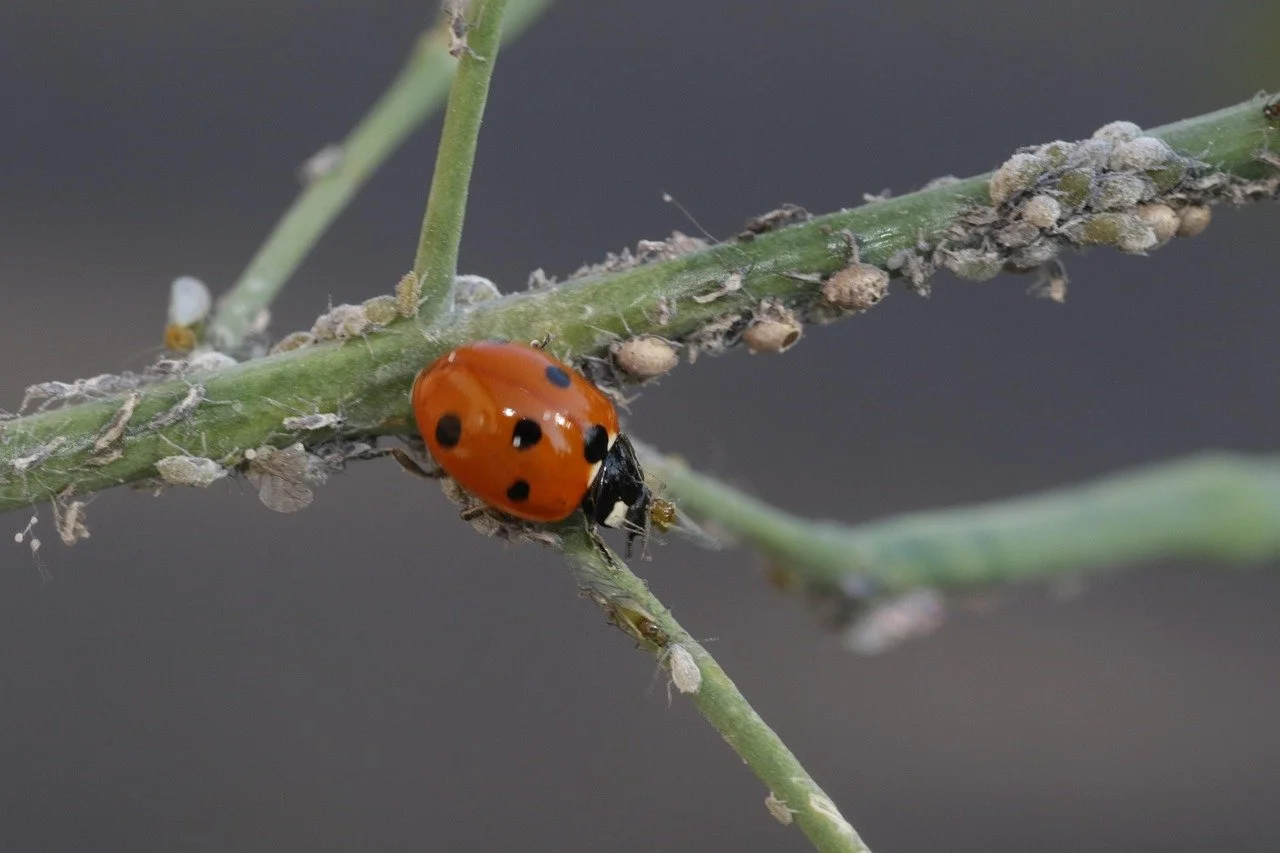
Adult lady beetle enjoying a meal of aphids
Last year, the aphids were joined by a new invader, milkweed bugs (Oncopeltus fasciatus). These are easy to spot due to their orange and black color combination in both nymph and adult stage. Later, tussock moth caterpillars joined the party. Tussock moth caterpillars may defoliate milkweed plants, but established plants generally recover. They do not bite or sting, but their hairs can cause skin irritation, so avoid handling them with bare hands
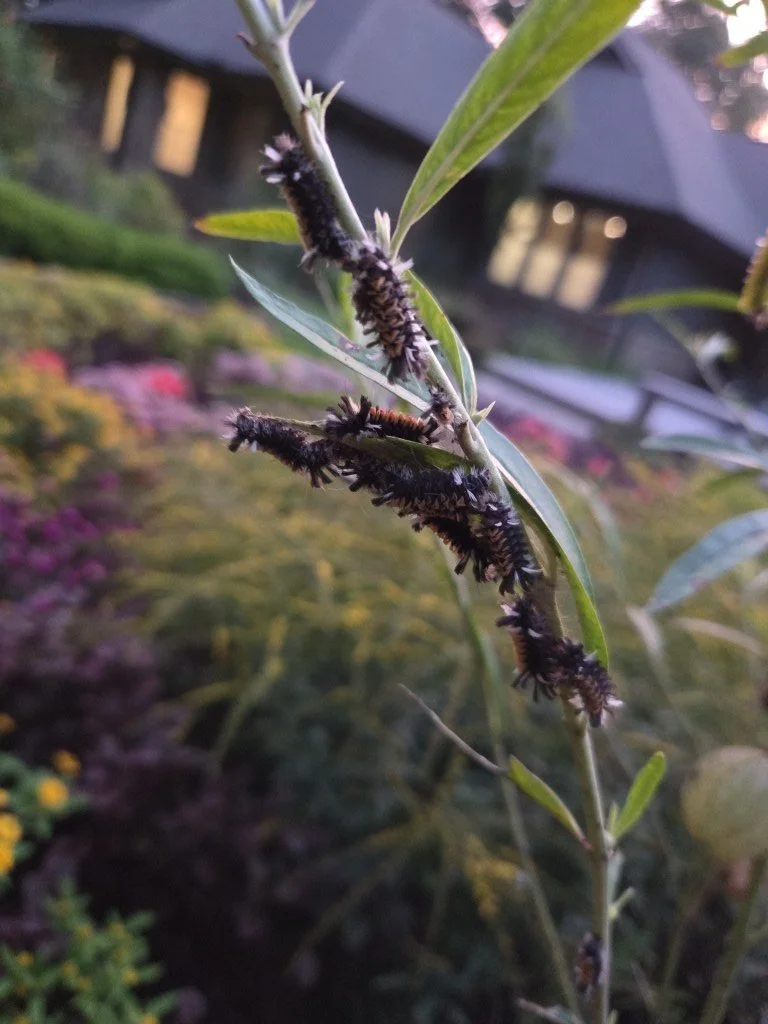
Tussock moth caterprillars have eaten almost all the leaves on this Fuzzy Balls Milkweed.
Milkweed bugs primarily feed on the developing seeds produced by their host plant. My orange Butterfly Weed is perennial and returns reliably year after year, but the Fuzzy Balls Milkweeds are more subject to cold damage. I always retain a few “just in case” seeds as insurance in case a harsh winter means mine do not return. If you save seeds from year to year so that you can start replacements in the following season, you will notice a much-decreased germination rate if the plant has hosted milkweed bugs. I counter this by harvesting a seedpod just as soon as the seeds turn dark but before the pod has split and the seeds start drifting away on their downy tails. I wrap the seedpod in a damp paper towel, place it in a sealed plastic bag, and store it in my freezer a week to ensure any insects are no longer a threat. I remove the bag from the freezer and store it in a cool, dry place along with my other seeds.
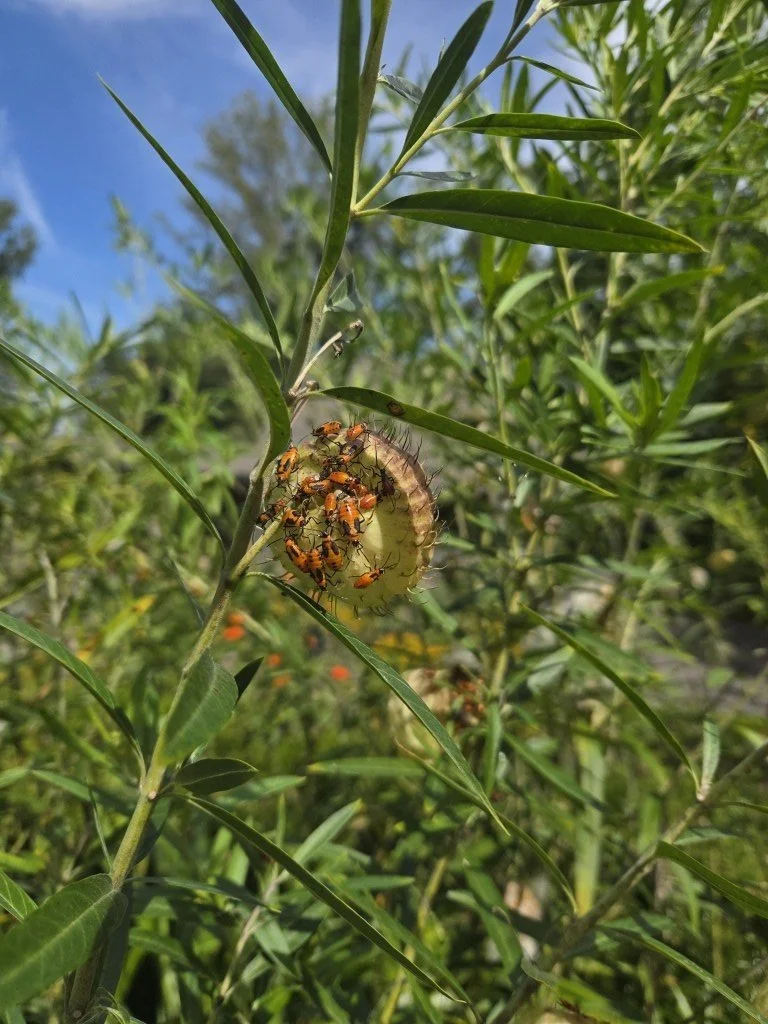
Milkweed bugs on Fuzzy Balls Milkweed. These are young insects. Mature adults have a more distinct pattern of black shield on orange wings.
In an attempt to stop this insect’s Garden of Eden, I have made the difficult decision to skip a year or two of enjoying Fuzzy Balls Milkweed in the garden beds near my home. Instead, I will plant a few seeds in the pollinator bed adjacent to the orchard. It is almost a quarter-mile from the house, so I hope that disrupting their convenient food source near the house will at least reduce their numbers. Will keep you posted.