spring blooming shrub

Spring Garden Jewelry: Pearl Bush

If you seek an uncommon spring-flowering shrub for your garden, consider Exochorda racemosa (pronounced ek-so-KOR-da ra-see-MO-sa ), commonly called Pearl Bush. These shrubs have white flowers that appear slightly later than Forsythia blooms and put on a show for several weeks. Pollinators flock to the non-fragrant flowers. Two cultivars are found in garden centers, ‘Snow Day® Blizzard' and ‘The Bride.’ Both reach four to five feet tall. The former is a  little denser and more refined in appearance than the latter.

Pearl Bush is hardy in zones 5-8, and prefers an acidic to neutral soil in full sun to partial shade. Best flowering occurs in full sun. It is heat-tolerant and moderately drought-tolerant once established.

The round flower buds resemble pearls, hence the common name. Flowers appear on previous year’s growth, so prune right after flowering. The post-flowering period is unremarkable. Pearl Bush is deciduous, so it is best included in a mixed border with later flowering shrubs and evergreens to detract once it is past its peak. It is rarely troubled by insects or diseases.
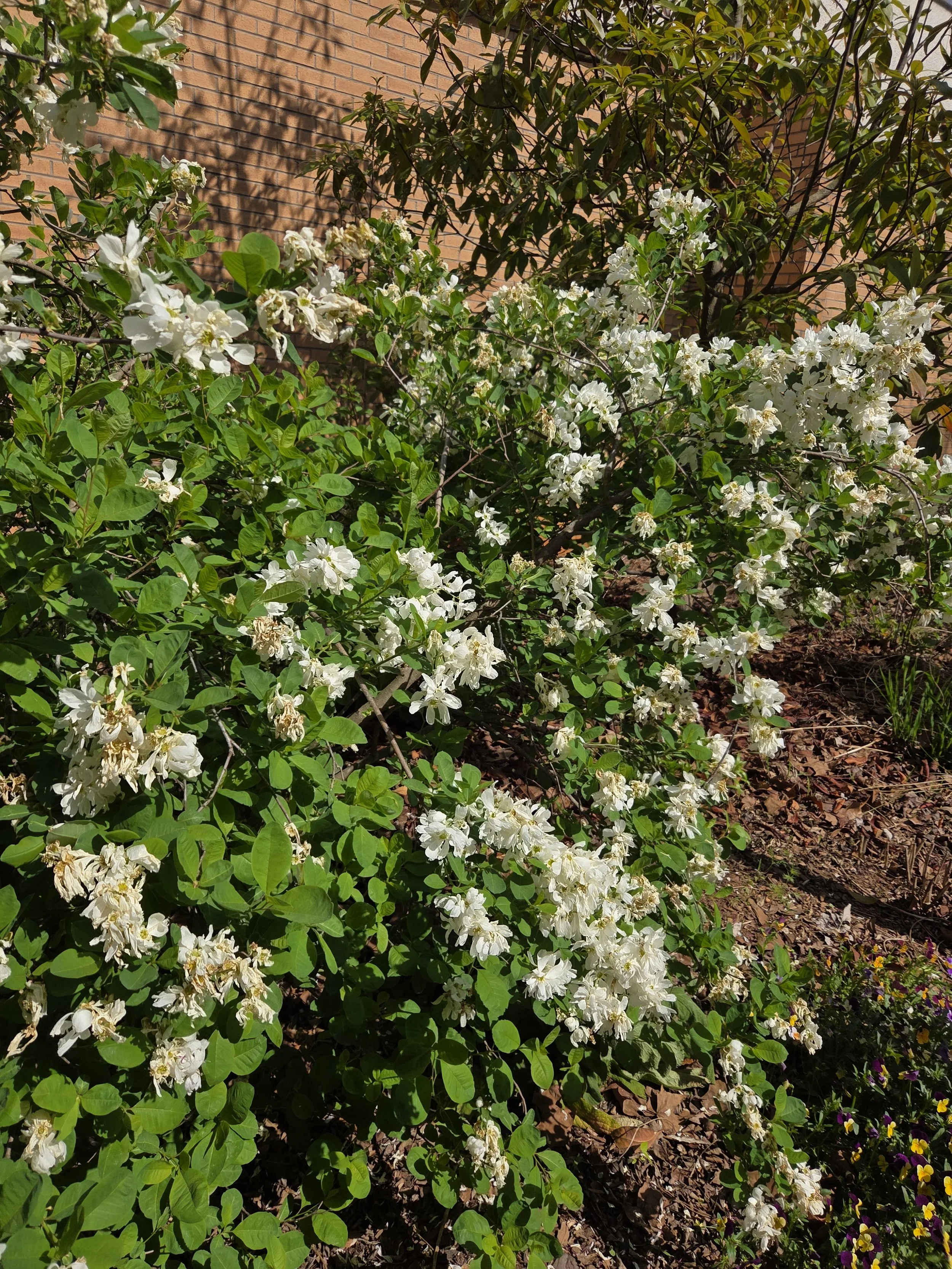
single white flowers with yellow stamens on green shrub

Pearl Bush in full flower

Spring Beauty In A Small Package

One precious plant I inherited when I married and moved to the country was a healthy group of Dwarf Flowering Almond. Prunus glandulosa is pronounced PROO-nus glan-dew-LO-suh, which sounds like a Harry Potter spell.

This time of the year, they have pink or white pom-pom flowers on leafless stems. The flowers last only two weeks or so, but what a show! Leaves enlarge after the flowers shed, and the rest of the year, there is nothing to admire. I prune mine down to the height of the adjacent Liriope groundcover (12-16 inches) as soon as the flowers disappear, just to disguise their homely appearance. I attempted to propagate these plants from cuttings but had no success.

When we moved to the current home, I brought along several plants of both the pink and the white. This is when I learned that they don’t enjoy relocation. I’m down to two pinks and two whites, which means that I give the survivors extra tender care. I have never seen Dwarf Flowering Almond for sale in local nurseries. It is available from online sources, but is not inexpensive. This plant is native to China, but has been grown in America for a long time. It was mentioned by Thomas Jefferson in 1794.

Left unpruned, Dwarf Flowering Almond will eventually reach a height of four feet. It does well in part sun to full sun, in zones 4-8, and is tolerant of any type of soil. While plants will tolerate limited drought, they are healthiest and look best grown in moderately moist soil. They will not tolerate a boggy soil.

Plants do not produce edible nuts. Dwarf Flowering Almond is a larval host plant for Eastern Tiger Swallowtail. Other butterflies visit the flowers and insects enjoy eating the leaves. By the time autumn arrives, the entire shrub can look tattered. Please keep this one away from dogs, cats, horses, and children. Leaves and stems contain cyanide compounds and can be deadly if ingested.

Pink double flowers on bare stems