I am a dedicated coffee drinker, but I am expanding my tastes to various teas. The National Garden Bureau provided a very helpful article on growing your own. Today’s post is a guest blog, of sorts, since content is sourced directly from the NGB. Link to the full article is at the end.
From Backyard to Teacup: The Ultimate Comfort Craft
Comfort. Personal rituals keep us grounded during tough times and long days. And what’s more cozy than a delicious cup of tea? For thousands of years, our ancestors heralded herbal tea as a comforting, healthy concoction. Today, millions of people enjoy tea, whether it’s served with a scone at breakfast or sipped before bed to unwind.
But why settle for store-bought tea when you can create your own tea garden? It’s easy to grow gorgeous, fragrant plants to use in your favorite “cuppa.” From homegrown herbs to flowering trees, you’ll find many beautiful, beneficial plants to include in your tea garden.
TEN Terrific Plants for a Tea Garden
1. Camellia sinensis—The Tea Plant
Green tea, white tea, black tea…if you’re a true tea connoisseur, you’ll love growing true tea in your backyard. Camellia sinensis—also known as the tea plant—is the foundation for one of the world’s most popular beverages.
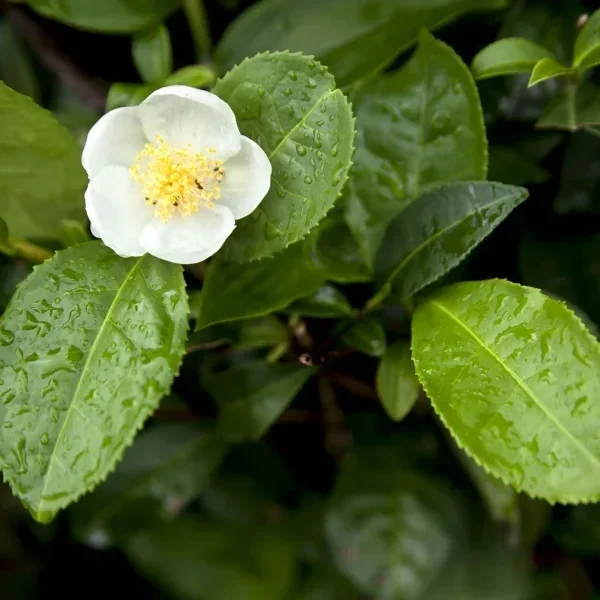
Camellia sinensis, Tea Camellia. Do not confuse it with Camellia japonica or Camellia sasanqua.
Hardy in warmer climates, Camellia sinensis also grows well as a potted plant, so you can bring it indoors during the winter if you live in a cold climate. Like other camellias, Camellia sinensis prefers well-drained, acidic soil with a pH of 5.5 or lower. The shrub needs full to part sun and grows 6 to 15 feet tall. USDA Zone 7-9.
Fun fact: The various types of tea—green, white, or black—simply depend on how you dry and cure the leaves.
How to Harvest:
Use only tender, new growth for all forms of tea. Snip the top two leaves, along with a bud. Then, the secret is in the prep:
White tea: Let the leaves rest for a few hours on a tray at room temperature, then dry in the oven at 190 degrees F. for about an hour.
Green tea: Wither the leaves for two hours. Heat oven to 300 degrees F., and dry leaves for 7 minutes. The leaves should still be soft enough to roll between your hands so the leaves curl. Spread the rolled leaves on a pan, heat the oven to 250 degrees F., then dry the leaves for 40 minutes.
Black tea: Oxidation gives black tea its dark color. Wither the leaves overnight. Roll the leaves in batches. Spread them in a thick layer in a pan, cover with a moist cloth, and place in a 100-degree oven for 1 hour. Keep the moisture level high by adding a bowl of water in the oven. Remove the cloth and bowl of water, increase the temperature to 250 degrees F., and dry the leaves for another 40 minutes.
How to Make Tea with Camellia Sinensis:
White tea: Steep a small handful of withered leaves in 1 cup of boiling water for 10 minutes.
Green tea: Steep 1 teaspoon prepared leaves in 1 cup of boiling water for 4 to 5 minutes.
Black tea: Steep 1 to 1-1/2 teaspoons of tea in boiling water for 4 to 5 minutes.
Always strain tea before drinking or place tea in a diffuser before steeping.
2. Rose Hip Tea
Made from the small, red-orange pseudo-fruits of rose plants like Blanc Double de Coubert, which look a bit like miniature apples, rose hip tea is rich in vitamin C, antioxidants, and flavonoids. Traditionally used to boost immune systems, it’s thought to reduce “bad” cholesterol and blood pressure, while also containing anti-inflammatory properties. Rose hip tea sports a slightly sweet flavor with a tart kick, similar to a green apple.
Rose hips form after the flower is pollinated in the spring or summer, with the hips ripening from late summer into autumn. Roses prefer rich, well-drained, slightly-acidic soil with a pH of 6.0-6.5. Most roses need full sun, while a few varieties tolerate part-sun.
While you’ll find hips on most roses, some heirloom varieties produce larger hips. Collect the hips in the fall for use in tea. USDA Zone 3-9, depending on variety.
When to Harvest:
Stop deadheading flowers in fall, allowing the hips to form and ripen on the shrub. Harvest hips when plump. Remove the hips from stems and rinse. Use fresh or dry for later use.
How to Make Rose Hip Tea:
Fresh: Place 4 to 8 hips in 1 cup of boiling water. Steep 10 to 15 minutes.
Dried: Steep 1 to 2 teaspoons of dried hips in 1 cup boiling water. Steep 10 minutes.
Avoid spraying pesticides on plants that you are growing for tea.
3. Roselle Hibiscus Tea
For a tasty summertime drink, try hibiscus tea. Brewed from the deep-red sepals and calyces of roselle hibiscus, it’s full of vitamin C and anthocyanins. The bright-red beverage is a healthy, no-sugar alternative to sweet tea.
Easy to grow as an annual in northern zones, roselle hibiscus can be planted directly in the ground, or grow it in a large container to move inside during cold winters. Plants are 7 to 10 feet tall with a bushy growth habit.
Pretty flowers typically last only one day, after which a red calyx forms. Prefers full sun and well-drained soil. USDA Zone 9-11.
When to Harvest:
Harvest calyces 7 to 10 days after flowering, or when the calyx is about an inch wide. Use fresh or dry for later use. To dry, separate the dark red calyces from the seed pod and dehydrate.
How to Make Hibiscus Tea:
Steep 1-2 teaspoons dried calyces in 8 ounces of boiling water for 5 to 10 minutes. Serve hot or cold.
For the following plants, use the Basic Tea Recipe that follows.
4. Linden Tea
Not only does the linden tree look lovely in the landscape, but it also produces pretty, petite yellow flowers adored by both tea enthusiasts and bees.
For centuries, the flowers have been used in tea to promote relaxation, relieve stress, and soothe digestive upset.
While linden trees grow throughout the world, American Linden, also known as “Basswood,” is native to eastern North America. Mature trees reach 75 to 90 feet tall and 40 to 50 feet wide, so give this beauty space to grow. USDA Zone 3-8.
When to Harvest:
Harvest fully open, heavily fragrant blooms. The flowers can be used fresh in tea or dried for later use.
5. Mint Tea
If you love the crisp, sweet flavor of mint, you’ll adore this easy-to-grow herb in your tea garden. But beware: mint can run rampant over other plants. Consider growing mint in pots to contain it.
You’ll love the mint varieties available: peppermint, sweet mint, spearmint…even chocolate mint! Because mint hybridizes readily between different varieties, plants grown from seed often fail to remain true to type.
For specific cultivars or varieties, buy established plants from reputable sources. Mint prefers moist soil. Hardiness zones vary, depending on the variety.
How to Harvest:
Snip leaves in the morning after the dew dries. Only harvest up to 1/3 of the plant at a time. Rinse. Use fresh or dry for later.
Many herbs develop a stronger flavor when dried. When deciding how much to use, a good rule of thumb is 1 tablespoon dried herbs to 3 tablespoons fresh.
6. Lemon Balm Tea
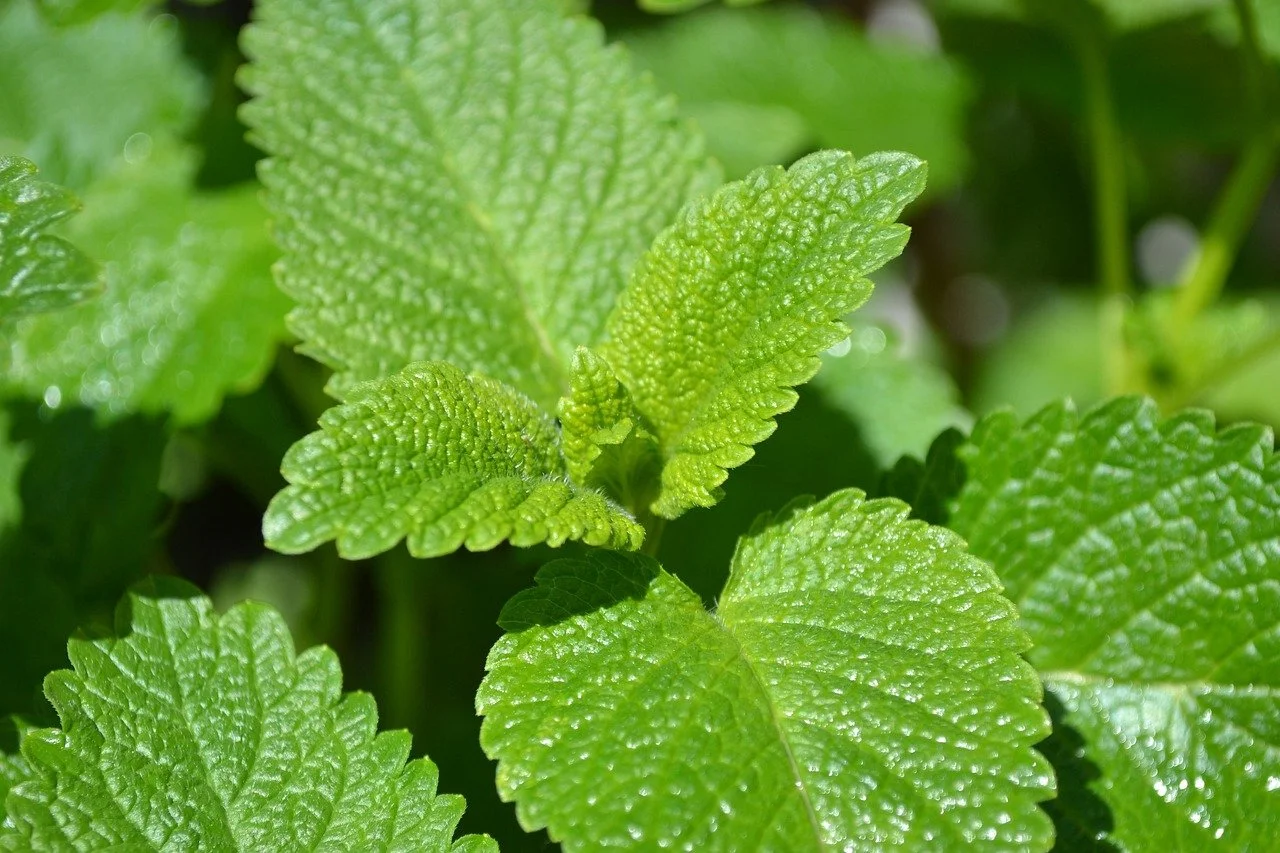
Lemon Balm, Melissa officinalis. Like other mints, it will spread aggressively, but if it escapes into your lawn, mowing becomes a pleasant, fragrant experience.
A member of the mint family, this mild, citrusy herb makes a soothing drink, whether you enjoy it hot or cold. Traditionally used to reduce stress, anxiety, and insomnia, lemon balm also adds a burst of aromatherapy in the garden.
Rub a leaf between your fingers, and the scent transports you to a lemon grove. But—like other mints—this lovely perennial herb will take over your garden if it’s not contained. USDA Zone 3-9.
How to Harvest:
Snip leaves in the morning after the dew dries. Only harvest up to 1/3 of the plant at a time. Rinse. Use fresh or dry for later.
7. Rosemary Tea
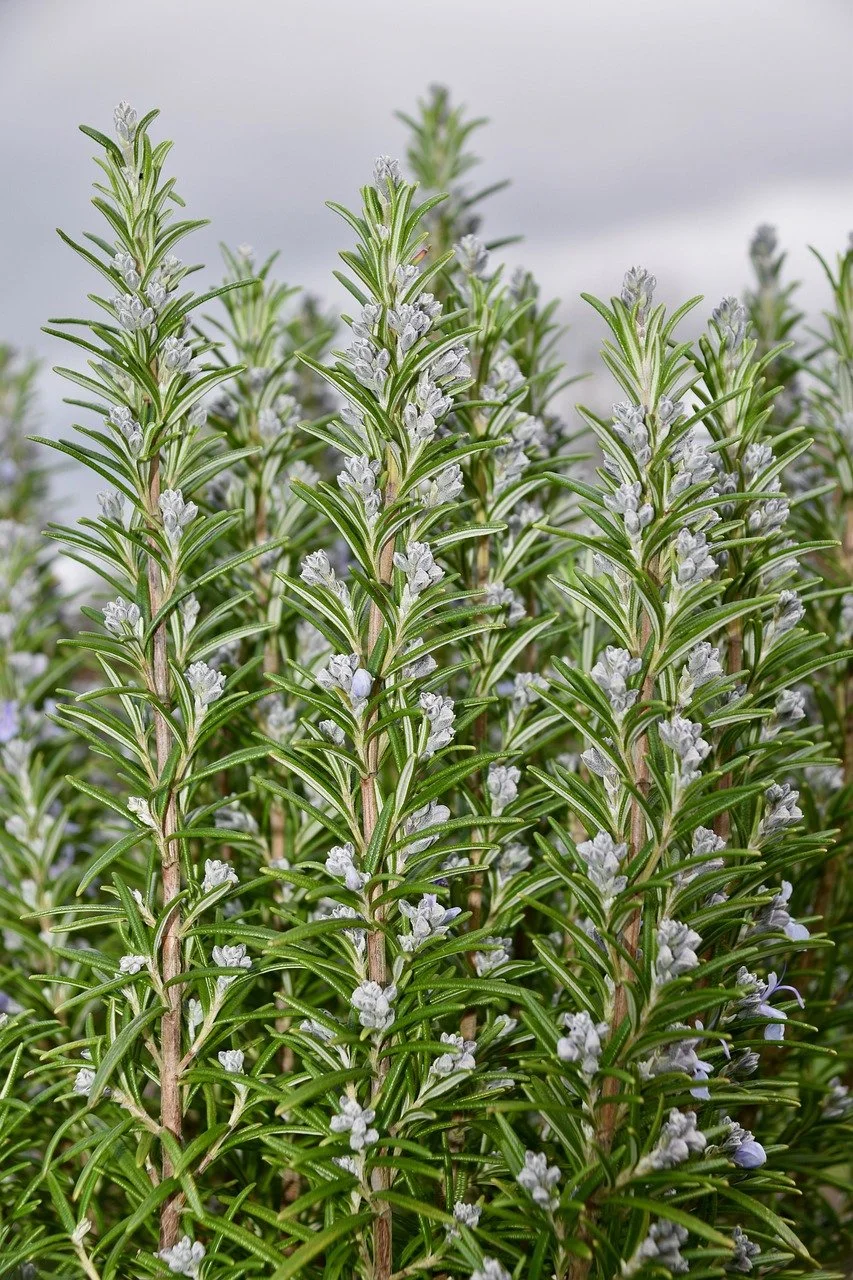
Rosemary has a wonderful, pine-like fragrance.
Rosemary tea not only tastes and smells delicious, but it’s a great way to boost immune health. The savory flavor and pine fragrance make an invigorating, rejuvenating beverage. Plus, this tender perennial is rich in vitamins, iron, and antioxidants. It’s also thought to help improve memory.
Rosemary prefers full sun and well-drained soil. It thrives in dry, Mediterranean-like conditions. USDA Zone 8-11.
How to Harvest:
Snip branches in the morning after the dew dries. Only harvest up to 1/3 of the plant at a time. Rinse. Strip leaves from the branch to use fresh or dry for later use.
8. Lemongrass Tea
The citrusy flavor and fragrance of lemongrass are traditionally used to promote sleep, relieve pain, and boost immunity. The grassy herb contains antioxidants, as well as antibacterial and anti-inflammatory properties.
Growing 2 to 3 feet tall, with thick masses of green leaves on yellow stems, harvest the leaves for tea. In northern regions, grow this tender perennial as an annual or plant it in a large container to bring indoors when the weather cools. USDA Zone 9-10.
How to Harvest:
Wear gloves to protect your hands from the razor-sharp leaves. Cut the mature leaves at the outer base of the plant. Rinse, chop into 2-to-3-inch pieces, then use fresh or dry for later.
9. Lavender Tea
A popular herb used in aromatherapy, the fabulous flavor and fragrance of lavender also make it an ideal herb for tea. High concentrations of vitamin C, vitamin A, calcium, and amino acids help boost the immune system. But lavender is most noted for its calming properties. It was traditionally used to relieve stress, calm anxiety, improve sleep, and reduce depression. Because of its soothing properties, it’s the ideal bedtime tea.
This drought-tolerant perennial needs full sun and well-drained, dry soil. Pollinators adore lavender—but deer dislike it. USDA Zone 3-9 (depending on variety).
How to Harvest:
Snip branches in the morning after the dew dries. Only harvest up to 1/3 of the plant at a time. Rinse. Remove flower buds from the stem and leaves, as only the buds are used for tea. Use fresh or dry for later use.
10. Chamomile Tea
Is there a tea more renowned for promoting a good night’s rest than chamomile? Traditionally used to reduce insomnia, chamomile also contains antioxidant properties that reduce inflammation, aid digestion, and may even support heart health. You’ll find both the annual German chamomile (Matricaria recutita) and perennial Roman chamomile (Anthemis nobilis) equally beneficial in the garden and in the teacup.
Chamomile grows easily from seed. Plant it in a sunny, well-drained site. It also grows beautifully in containers. Plus, pollinators adore the daisy-like blooms, while deer dislike them.
How to Harvest:
Harvest fully opened flowers with flat petals. Pinch off flower heads from the stem. Only the flowers are used for tea. Use fresh or dry for later use.
Once tea leaves or flowers are completely dry, store them in airtight glass jars for future use. (Make sure to label the jars.)
Brew the Perfect Cup of Tea
Whether you prefer a calming cup of hot tea to release the tension of the day or need a chilled glass of a mood-boosting brew, your tea garden gives you plenty of choices for your favorite beverages.
Basic Tea Recipe:
Bruise freshly picked herb leaves gently by crushing them with a wooden spoon to release their aromatic oils.
1 teaspoon dried herbs (or three teaspoons freshly picked herbs)
1 cup boiling water
Boil water. Add the herbs to an infuser and place in a teacup. Pour boiling water over the herbs. Steep for 10 minutes until the flavor is released. To extract the herbs’ medicinal properties, steep for 15 to 30 minutes. Remove the infuser and serve. Add sweeter, like honey or sugar, if you prefer.
Here are a few recipes to get you started:
Mint Iced Tea
1 large handful of mint, fresh
8 cups water
Bring water to a boil.
Place mint in water and steep for 10-15 minutes.
Strain the water to remove leaves and pour into a pitcher.
Rosemary-Lemon Sun Tea
1/4 cup of rosemary leaves
1/4 of a large lemon, sliced thin
Ice
Place rosemary in a pitcher and bruise leaves with a wooden spoon.
Add lemon and water, cover.
Let stand for 4 hours in the sun.
Strain and serve over ice.
Soothing Hibiscus Tea
1 teaspoon dried hibiscus flowers
1 teaspoon dried chamomile flowers
8 ounces of water
Add mixed flowers to the tea infuser and place in a cup.
Pour boiling water over the infuser.
Steep 5-10 minutes.
Follow this link for the complete article: https://ngb.org/how-to-grow-a-tea-garden/
*National Garden Bureau does not wish to advise or recommend herbs for medicinal or health use. The information here is intended for inspirational and educational purposes only. Please consult a healthcare professional before considering any herbal treatments.