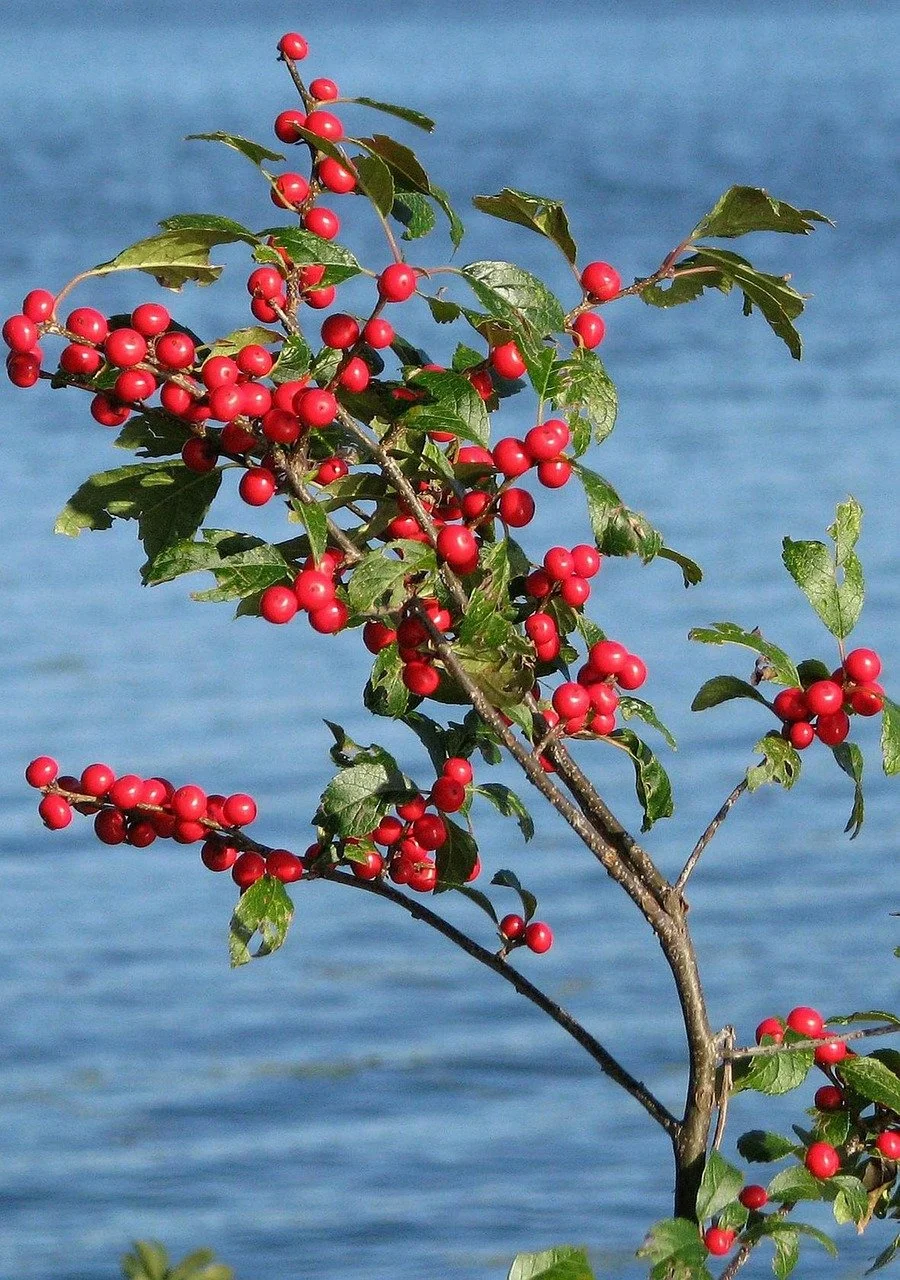
We normally think of holly shrubs as having spiny evergreen leaves and red berries. Winterberry holly, Ilex verticillata, is deciduous. The bright red berries are held against leafless stems, offering a welcome spot of garden color in winter. These are especially eye-popping when seen against a solid green backdrop, as in the accompanying photo.
Winterberry holly is native to North America. It enjoys a moist, acidic soil in full sun to partial shade and is perennial in zones 3-9. Mature plants may reach twelve feet or more in height, and up to five feet wide. They are slow growing, however, and will take years to achieve this size.
Gardeners should know two things about Winterberry. First, it flowers and produces berries on new growth, so you can prune plants to shape in early spring and reap the rewards of more berries in winter. Adding a bit of fertilizer will push even more new growth.
Second, Winterberry Holly plants are either male or female. Only the female plants produce those lovely red berries, and only if a male plant is nearby (within fifty feet) to ensure pollination. A single male holly can pollinate ten females.
Critical point: The males and females must bloom at the same time. Try to buy plants from a knowledgeable nursery so that you don’t go home with an early-season female and a late-season male. Early-flowering females (like Red Sprite, Afterglow, Berry Nice, and Berry Heavy) need early males (Jim Dandy). Late-flowering females (like Sunset, Winter Red, Winter Gold) need late males (Southern Gentleman, Apollo). If you pair early-flowering Red Sprite with late flowering Apollo, for example, you will see few if any berries. Berry set will also be reduced if plants suffer drought conditions.
These shrubs, both male and female, don’t offer much in the way of eye candy unless berries are present. I like to plant the male pollinators in an out-of-way location so they don’t draw attention to their unimpressive shape, size, and foliage.
Birds are attracted to the berries and bees enjoy the flowers. Plants are moderately deer resistant and are also fire resistant. Berries are not meant for human consumption; they won’t kill you but they can cause stomach upset.
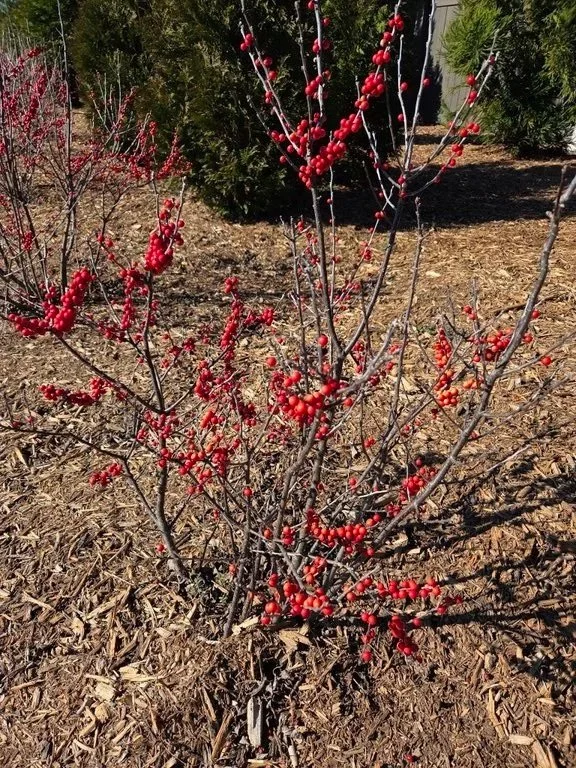
This Winterberry was planted just a few months ago. Red berries stand out when seen against the solid green backdrop of Leyland Cypress.
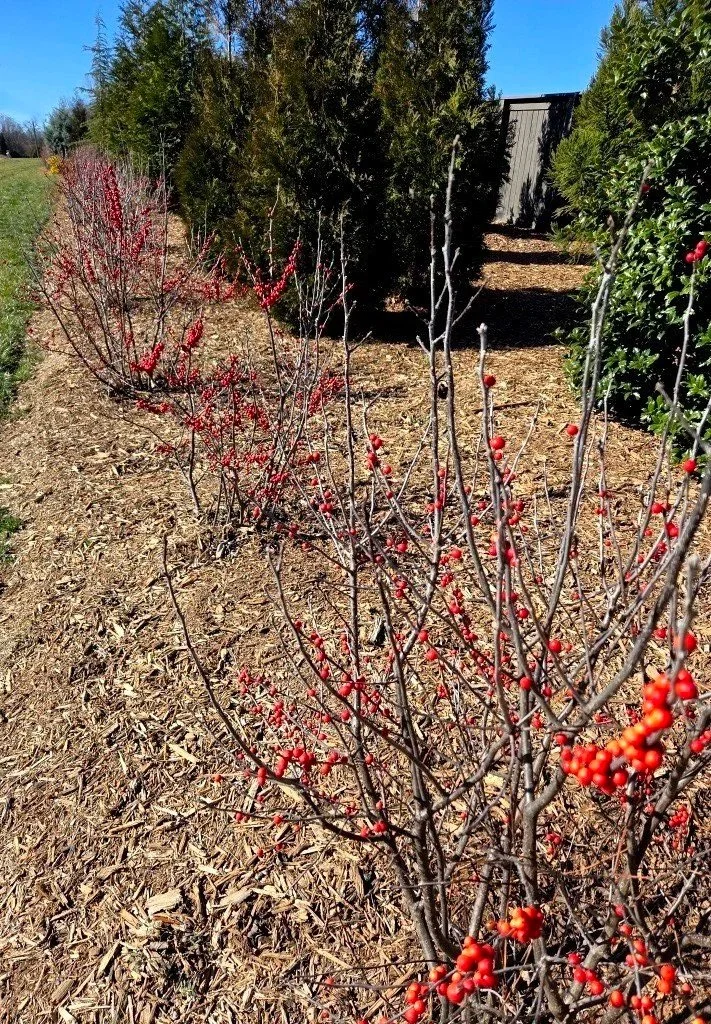
These plants were installed at a new development entrance just a couple of months ago. The berry display will be much heavier in successive years.