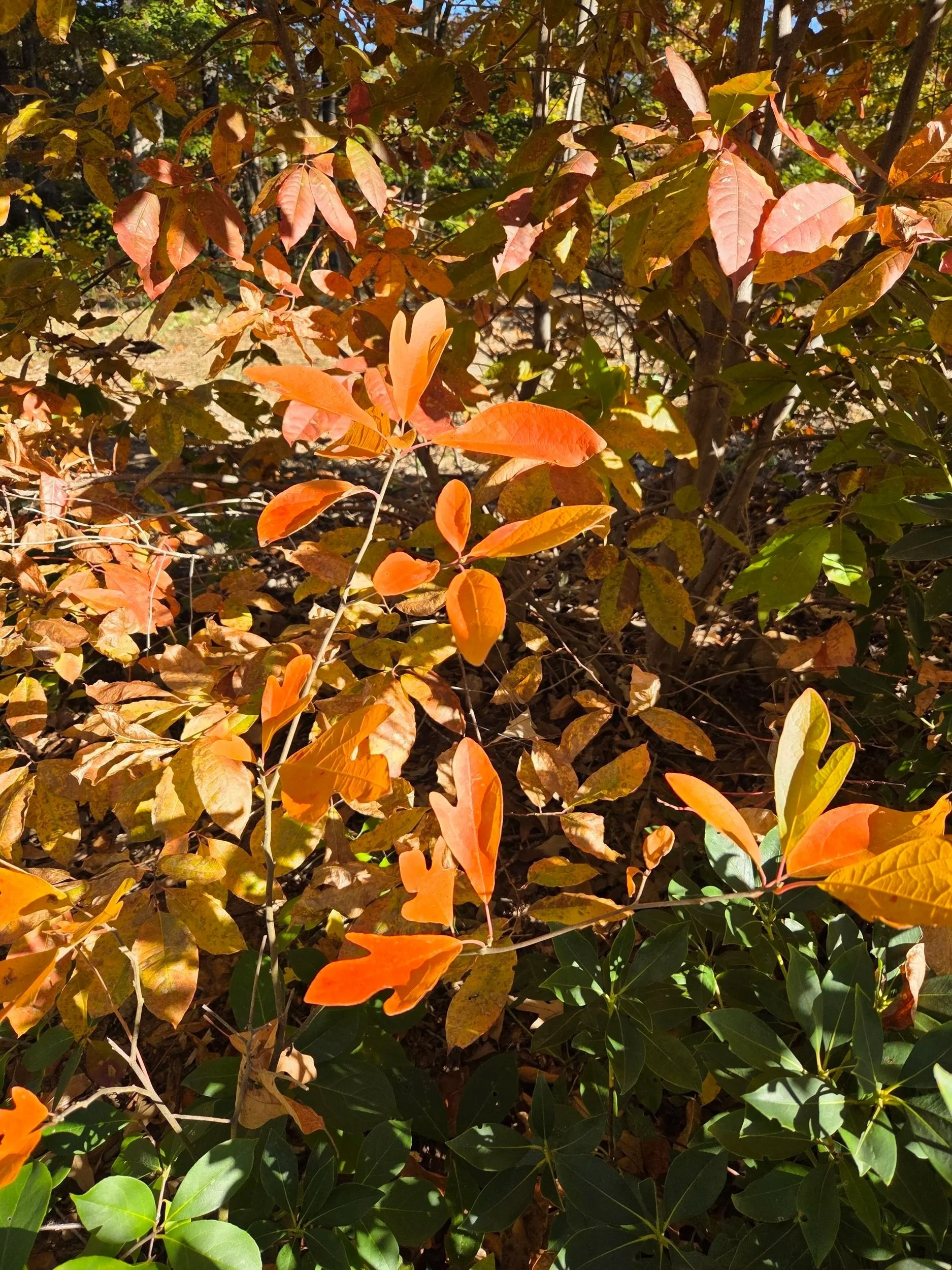
Southern trees popular for their autumn color include sugar maples, red maples, hickory, tupelo, and sweetgum. My favorite is sassafras (Sassafras albidum, SAS-ah-fras AL-bih-dum), a lesser-known native with some unique characteristics.
Sassafras leaves take three different forms, all found on the same tree at the same time. Leaves can be rounded (entire), mitten-shaped (both left-handed and right-handed), and three lobed. It is sometimes labeled an understory tree, but mature specimens can reach 60 feet tall and 40 feet wide, which is hardly understory.
Sassafras will take full sun or part sun, in zones 4-9. It will not tolerate a boggy location. It prefers sandy soil but adapts well to clay. Soil must be acidic to neutral; leaves turn a sickly color in alkaline soils (“chlorosis”). Leaves are fragrant when bruised and the bark has a pleasant, spicy scent also. Trees develop a substantial taproot that contributes to drought tolerance once established, but also makes them difficult to transplant unless they are very young. They can also spread by suckers, which might be a cause for concern if grown in a manicured lawn setting.
Sassafras trees have genders. Some trees are male; others are female. Both male and female trees have yellow-green flowers. Female trees develop small, egg-shaped blue drupes that are connected to the tree with a red stalk and cap. Songbirds and mammals love these fruits, and pollinators visit the flowers. Deer tend to leave sassafras alone.
As a child, I watched a lot of western shows on our old black and white TV that picked up three public channels. Those western actors swilled a lot of sarsaparilla, which I always thought was derived from sassafras. An older, wiser me now knows that sarsaparilla flavor was derived from roots of the Smilax vine. The bark of sassafras roots was once used to flavor root beer, but that practice was prohibited by the Food and Drug Administration in 1960 after studies linked safrole, a major component of sassafras oil, to cancer. We still use the dried, powdered leaves (filé) to thicken and flavor many Cajun dishes like gumbo.
Sassafras’s best feature is its fall color – shades of yellow and orange, mostly, with the occasional brilliant red. Seen against other fall trees, it holds its own. Its lightweight, decay-resistant wood has been used for making canoes and paddles.
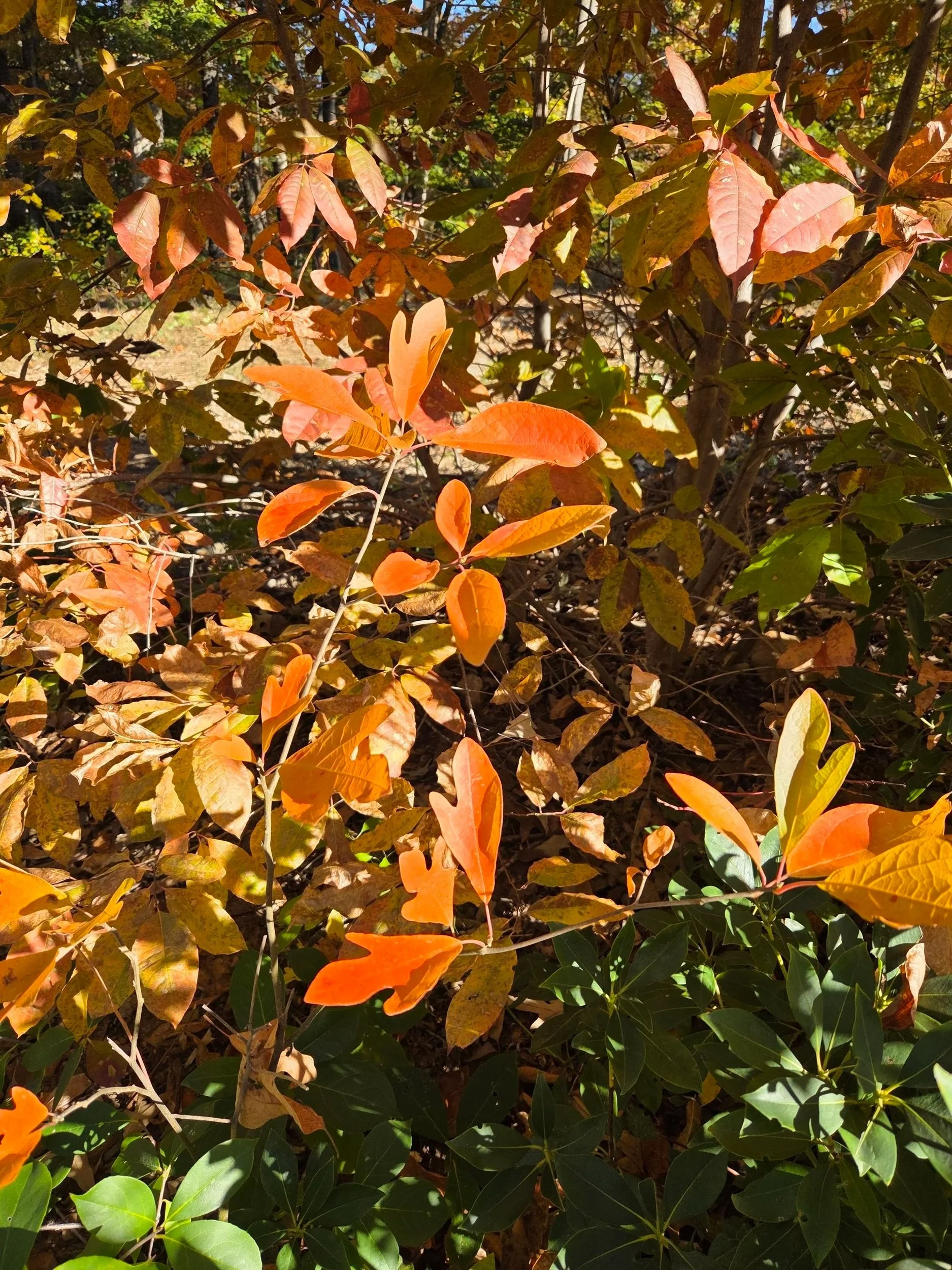
Sassafras showing three distinct shapes of leaves, with fall color.
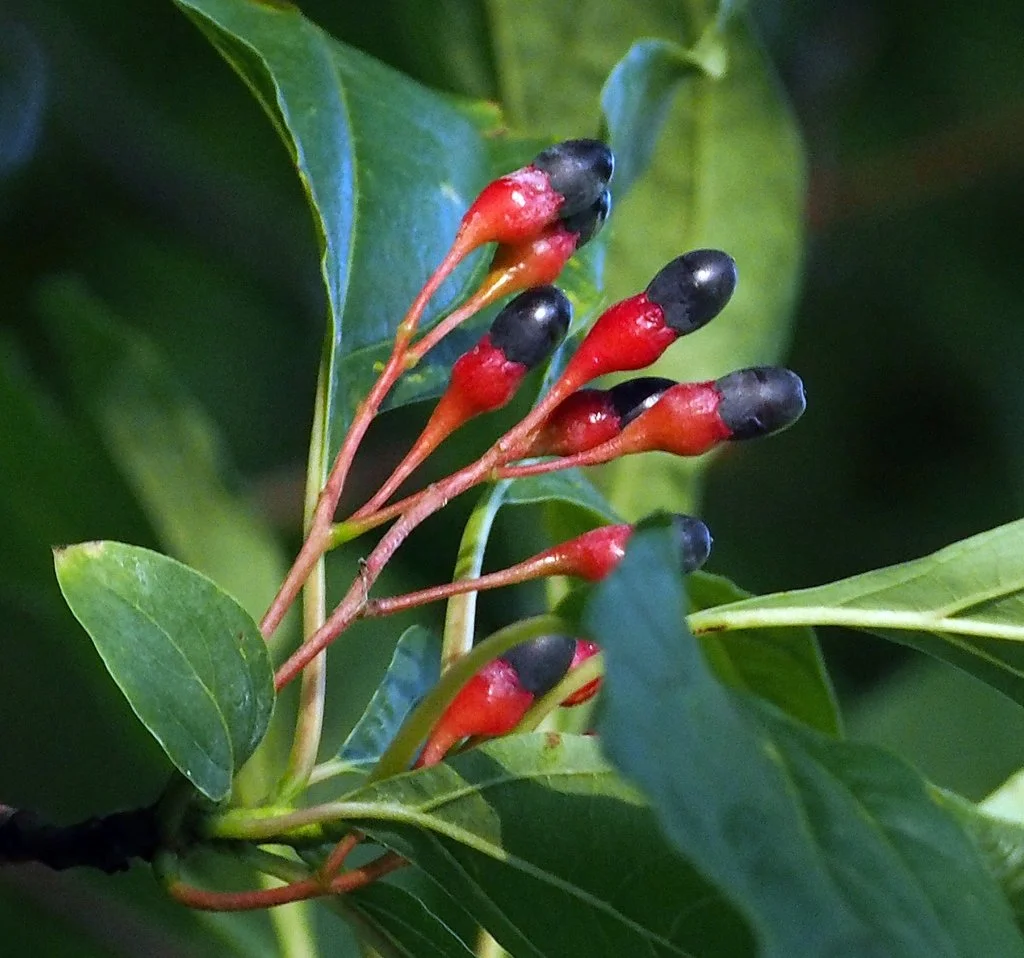
Sassafras fruit. Photo by Ken Potter CC BY-NC 4.0