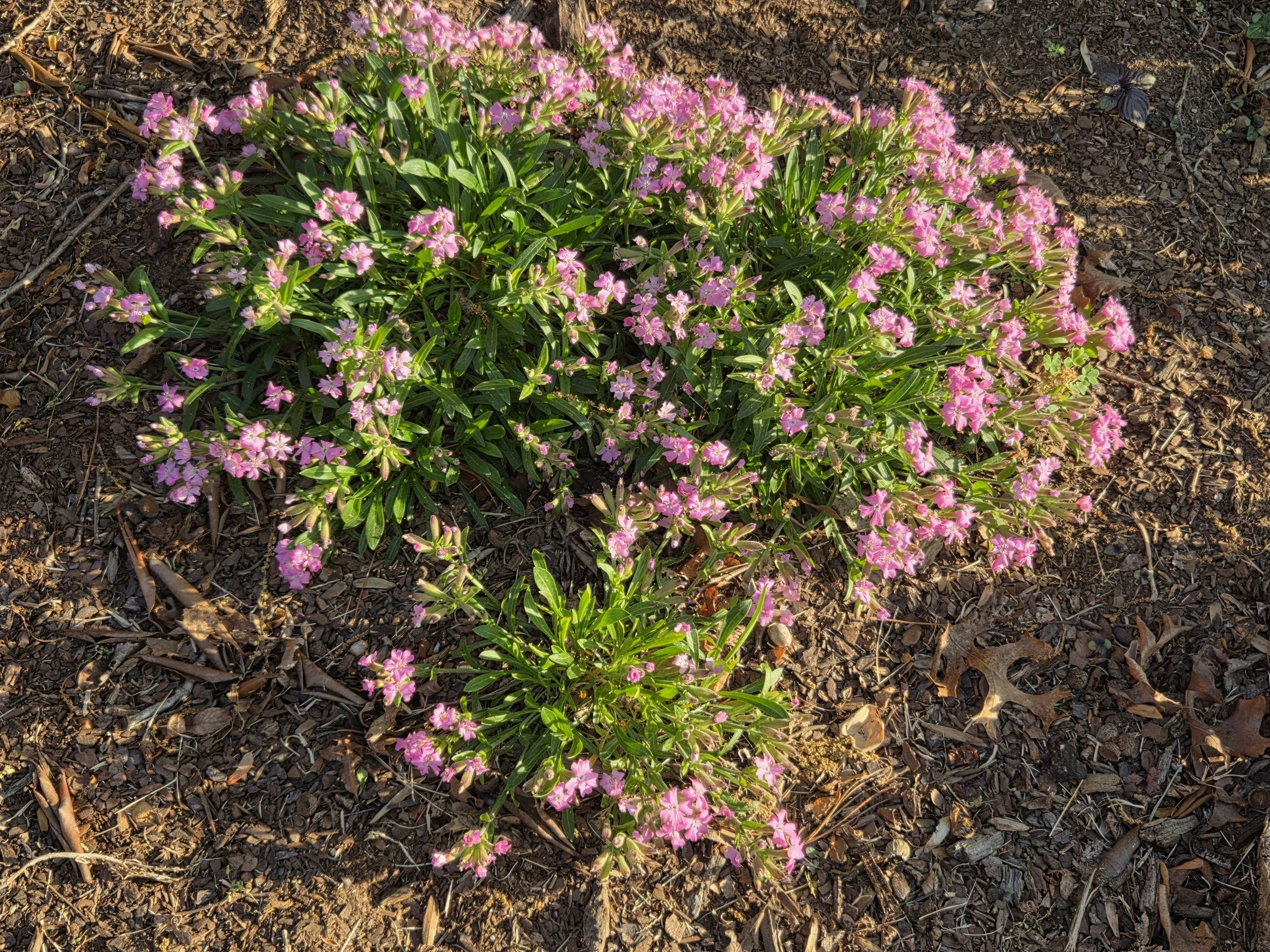
A couple of years ago, I purchased three tiny specimens at a native plant sale. They were labeled ‘Catchfly’ which caught my interest. A little research revealed that these were Silene caroliniana (sigh-LEEN kair-oh-lin-ee-AY-uh), and native to the southeast.
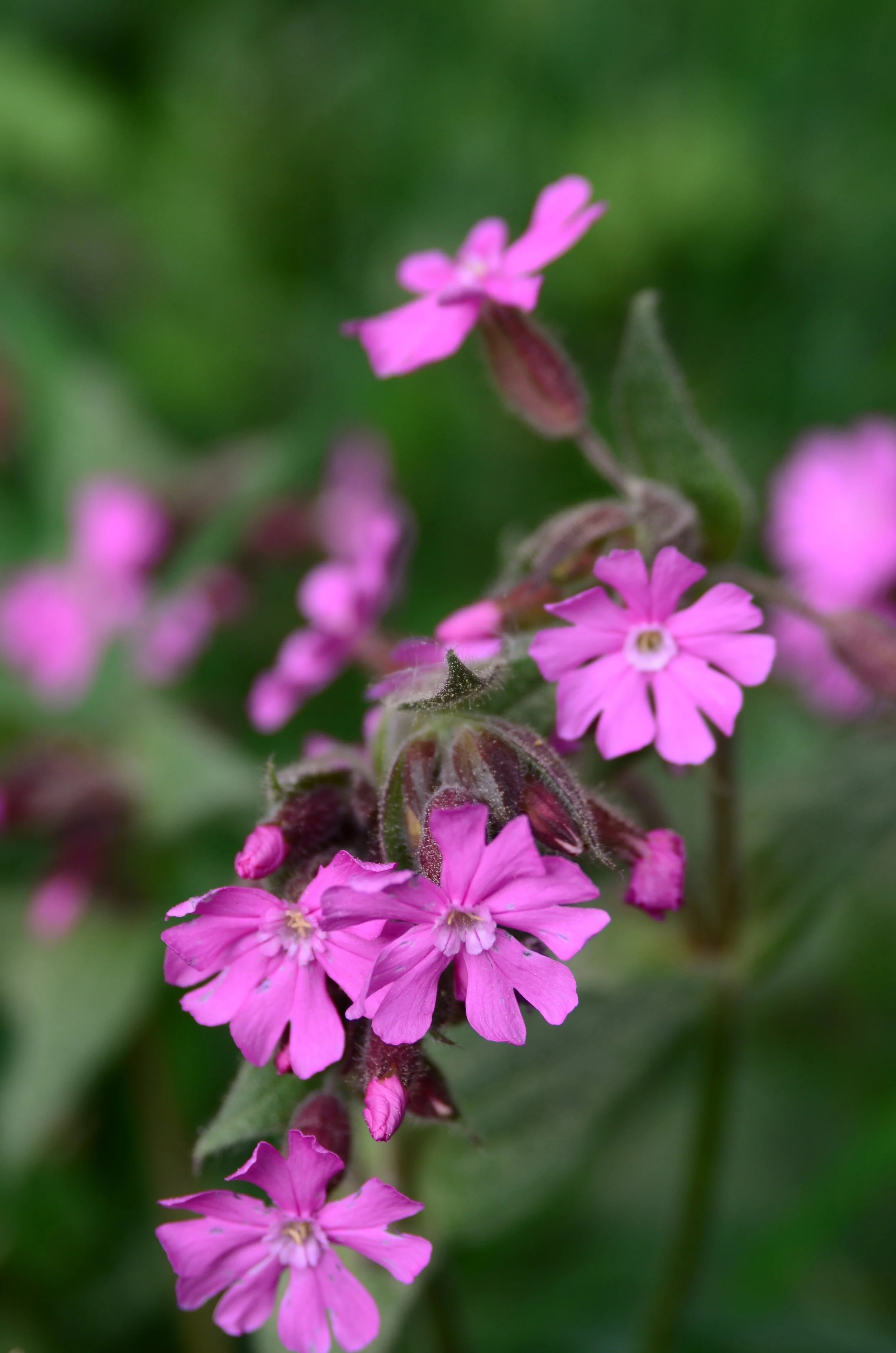
The plants didn’t do much more than survive their first year, but since then they put on a reliable spring show. Each plant formed into a rounded mound about ten inches tall and a similar width. Leaves are narrow and range in length from one inch to three inches. The rosy, five-petaled flowers look very much like phlox. The ‘catchfly’ name comes from the sticky hairs on the stems that discourage insects from eating them.
Silene is easy to grow in full to part-sun, neutral to acidic soil, and any soil texture. They dislike wet soils but do well in gravely or sandy soil. Once established, they are drought tolerant and may be included in rock gardens, xeric gardens, or pollinator beds. Mine are in a sloped area that does not receive supplemental irrigation, and they have done fine without any extra care. Plants are semi-evergreen, and hardy in zones 5-8. Butterflies and hummingbirds visit the flowers, which occur only in the spring. The rest of the year, they are innocuous clumps of foliage that are easy to overlook.
I would like to have more Silene, but I have not attempted to propagate it yet. I understand that they can be raised from stem cuttings, but I hope that they will self-seed and spare me the trouble.
I’m always happy to discover a native that works for me, and Silene is a winner