I have a couple of “mother” Coleus plants in my greenhouse. I take cuttings from these in November or December, root them in starter cells, then move the rooted cuttings to four-inch containers. I grow them into transplants to set out when threat of spring frost is past. Using large starter plants gives my garden a hint of future lush appearance while bedding annuals are still tiny. The tag from my mommy plants is long gone, but I believe it is ‘Freckles,’ a personal favorite because the yellow and orange splotched leaves look good with the Melampodium I grow every year. The source plants are not pretty – taking cuttings means they are misshapen and stubby looking. Still, I can pull at least a dozen healthy cuttings from them annually. Until this year, that is.
I have very few plants that remain in the greenhouse during summer months, since plants I propagated or overwintered have moved to their outdoor summer locations. I disengage my automatic watering system during summer, so I visit the greenhouse every other day to manually water and ensure health of the few plants that remain. Imagine my disappointment when I found that my Coleus had been overtaken by a mealybug infestation that left them damaged beyond a hope of recovery.
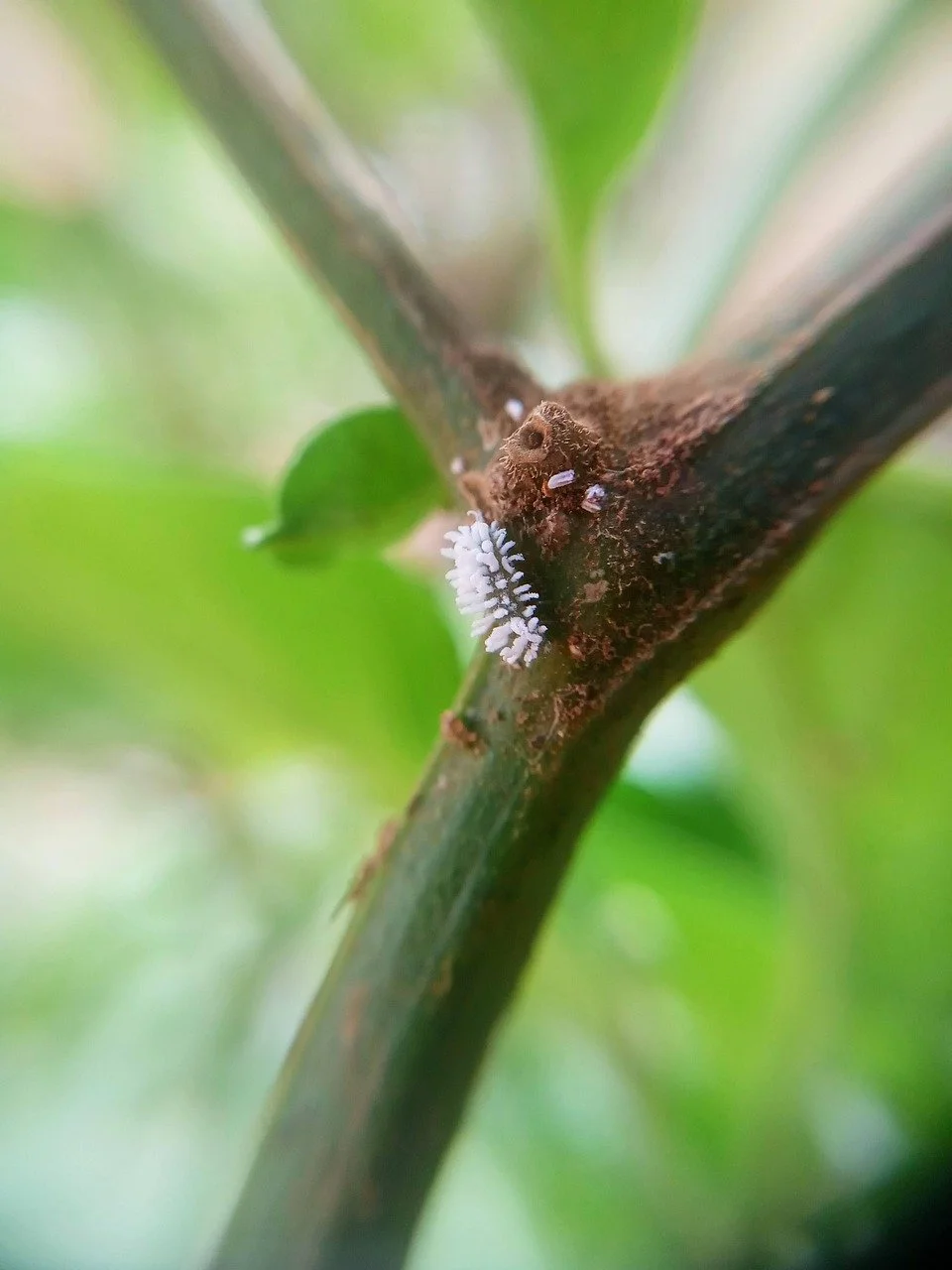
Mealybugs are scale insects that suck the juices out of plants like Coleus, Cactus, Poinsettia, Rosemary, and many houseplants. Under magnification, they look like roly-poly bugs wearing white parkas. They can weaken plants to the point of death.
They are difficult to get rid of, requiring a three-prong approach. If the invasion is caught early, you may be able to control them by the first step only. First, use rubbing alcohol and a cotton-tipped swab to remove their bodies. Be careful to remove any eggs visible. Eggs are tiny, so a follow inspection is required. An alternate first treatment is to wash them away with a sharp stream of water. Second, applying a horticultural soap or oil will suffocate them. The oil will also smother any that are hiding in the tiny joints where leaves meet stems. And third, a systemic insecticide will kill any new bugs that decide to feed on the treated plants. Alcohol-soaked swabs and horticultural oils will kill adults but the eggs will be undamaged, so be prepared to repeat treatments several times as eggs hatch.
I reserve systemic insecticides for special or dire situations, since they kill good bugs along with the bad ones. Products containing the systemic Imidacloprid are widely available in garden centers and home improvement stores. Follow application instructions precisely.
I think flowers detract from the beauty of Coleus, so I remove flower buds as soon as I see them. Without flowers, pollinator damage from systemic poison is less of a concern. The bonus of flower removal is that it functions as a form of pruning that forces plants to bunch, making them look fuller. Unpinched plants tend to look rangy by season’s end, so I regularly pinch back to a pair of leaves even when they are not forming buds.
The best way to treat mealybugs is to prevent them if possible. Too much nitrogen leads to soft growth, so fertilize judiciously. Do not reuse potting soil that has been exposed to mealybugs, since their eggs can easily hide in soil. Sanitize tools and any pots you reuse. Quarantine any new arrivals for a day or two to ensure no hitchhikers. Most important: Inspect plants often so that problems are caught early.

A close view of a long-tailed Mealybug. Photo D-Kuru, CC BY-SA 3.0 AT

This is the sad result of a mealybug attack on a Coleus in my greenhouse.