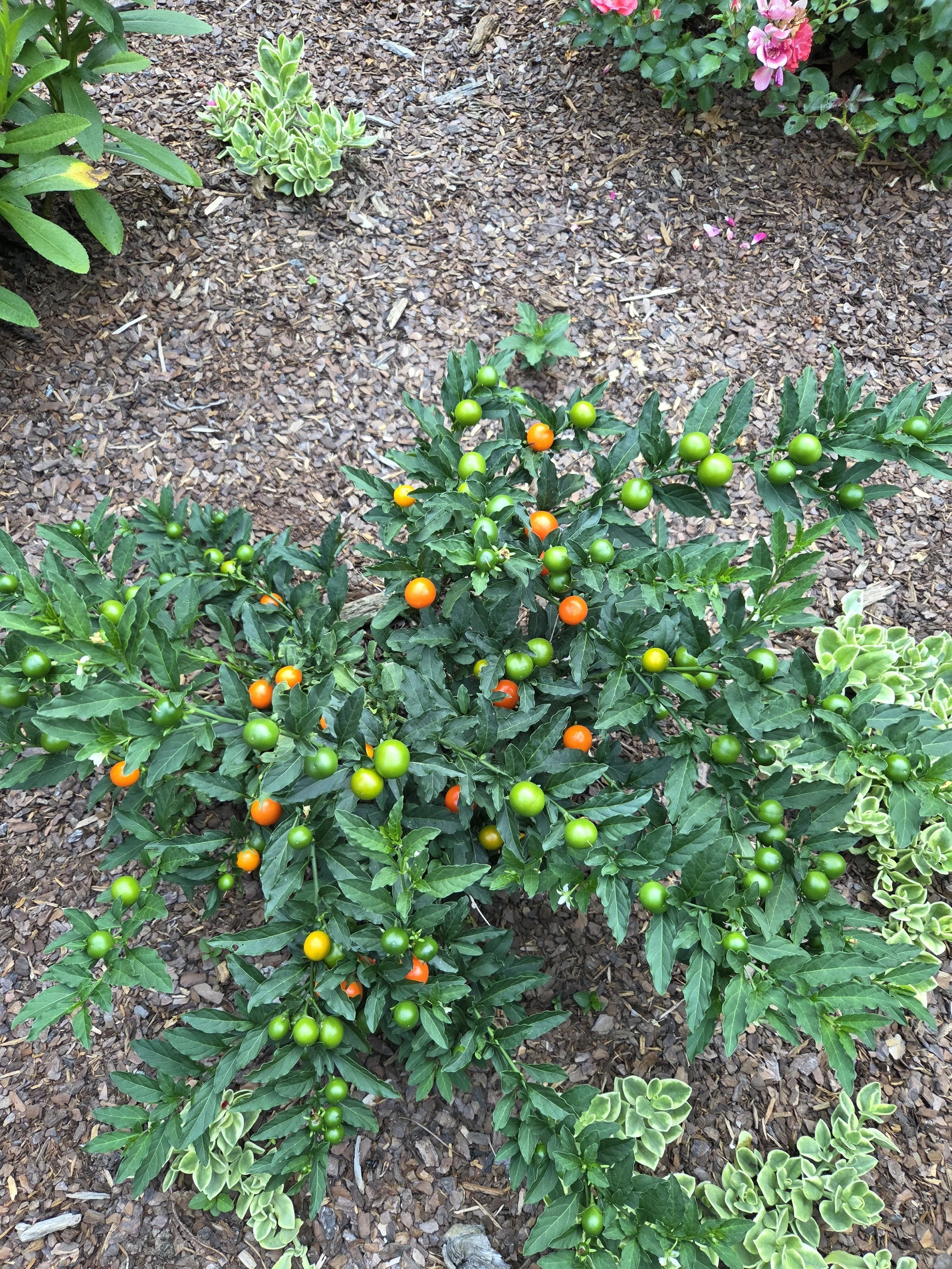
Recent visitors to my garden have asked the identity of a plant that was a part of my childhood, Jerusalem Cherry (Solanum pseudocapsicum). These evergreen perennials have dark green, elongated leaves with wavy edges. Plants will not wow you with their tiny, white, star-shaped flowers, but those flowers produce marble sized green fruits that mature to an eye-popping bright orange color. Fruits persist for weeks and sometimes months before they shrivel and fall.
My specimens are heritage plants, obtained from my mother who got a start from her own mother. That should tell you something about their hardiness and longevity. In my grandmother’s day, resources went into raising food, not decorative flowers. Her soil was rock-filled clay, and her Jerusalem Cherries persisted and even spread to a large clump.
While they are not native to the US, Jerusalem Cherries spread across the southeast long ago. Plants prefer full sun but will survive even with half-sun. They are hardy outdoors in zones 8 and 9, but are sometimes grown as houseplants to bring a spot of bright color indoors. Outdoors, plants attain a height of about two feet, with a similar spread. Both the leaves and the fruits have an unpleasant odor if crushed.
My research revealed that the fruits are toxic, causing problems for people, pets, and horses. The symptoms resulting from eating any part of the plant read like a nightmare, but I confess that, as a kid, I bit into one of the fruits at least once a year (yes, I was THAT child) until the awful flavor stopped me from consuming it. I never experienced the gastric symptoms described. The sap can cause issues for those with sensitive skin. Several university websites recommended against using the plant indoors because of its toxicity.
Jerusalem Cherry is a member of the Solanaceae family which also includes tomatoes, potatoes, peppers…and deadly nightshade. The fruits are filled with seeds that look like those of peppers or tomatoes.
Outdoors, wind and birds take care of pollination chores. Birds are unaffected by the plant’s toxins. If you decide to grow one of these as a houseplant, you will need to cross pollinate the flowers yourself to obtain fruit. Use an artist’s paintbrush or a cotton swab to move pollen from flower to flower. If you wish to avoid any spreading outdoors, do a quick clean up of fallen fruit in the autumn. If you miss any, the small seedlings are easily removed in early spring with a swipe of a hoe.
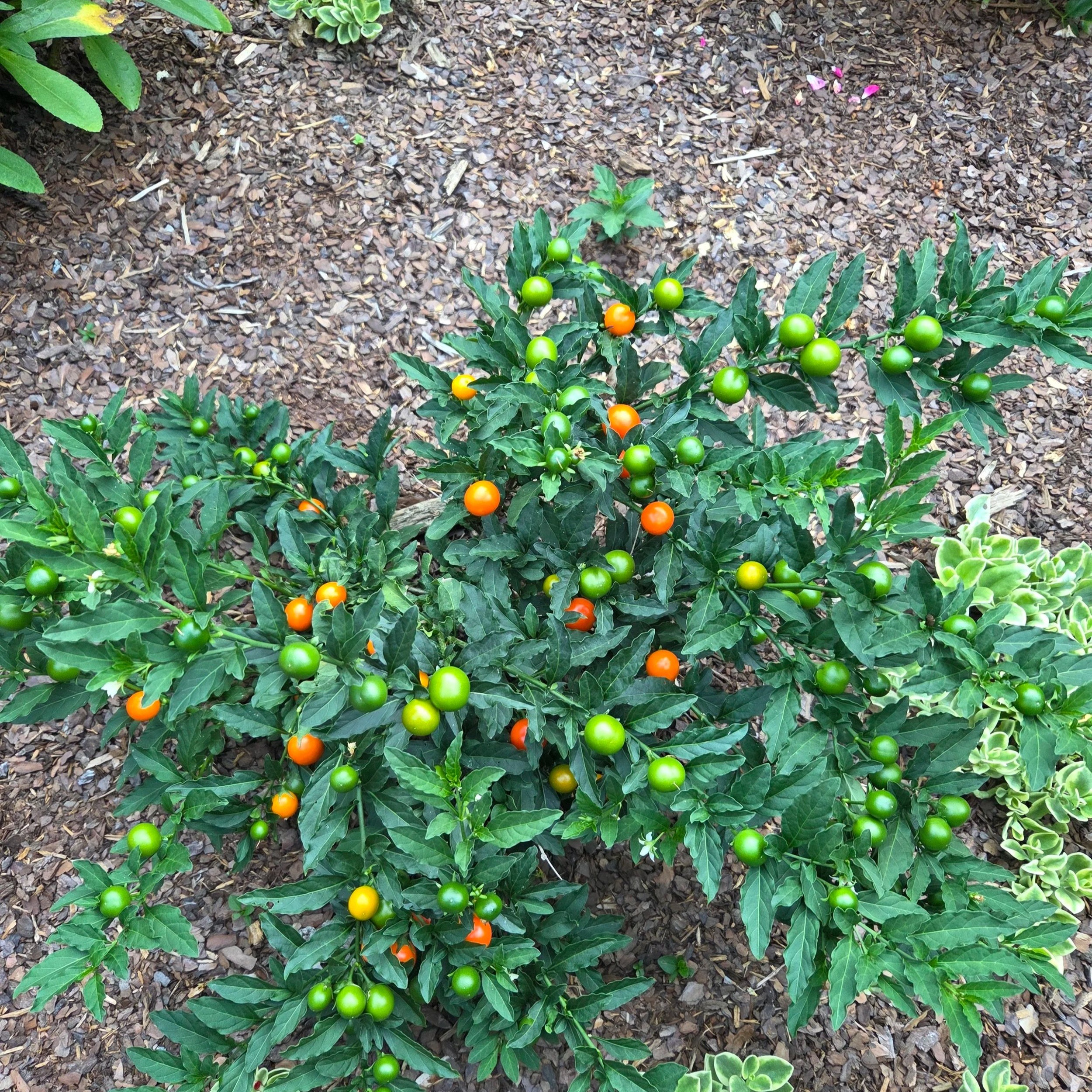
A mature Jerusalem Cherry plant showing both green and ripe fruits.
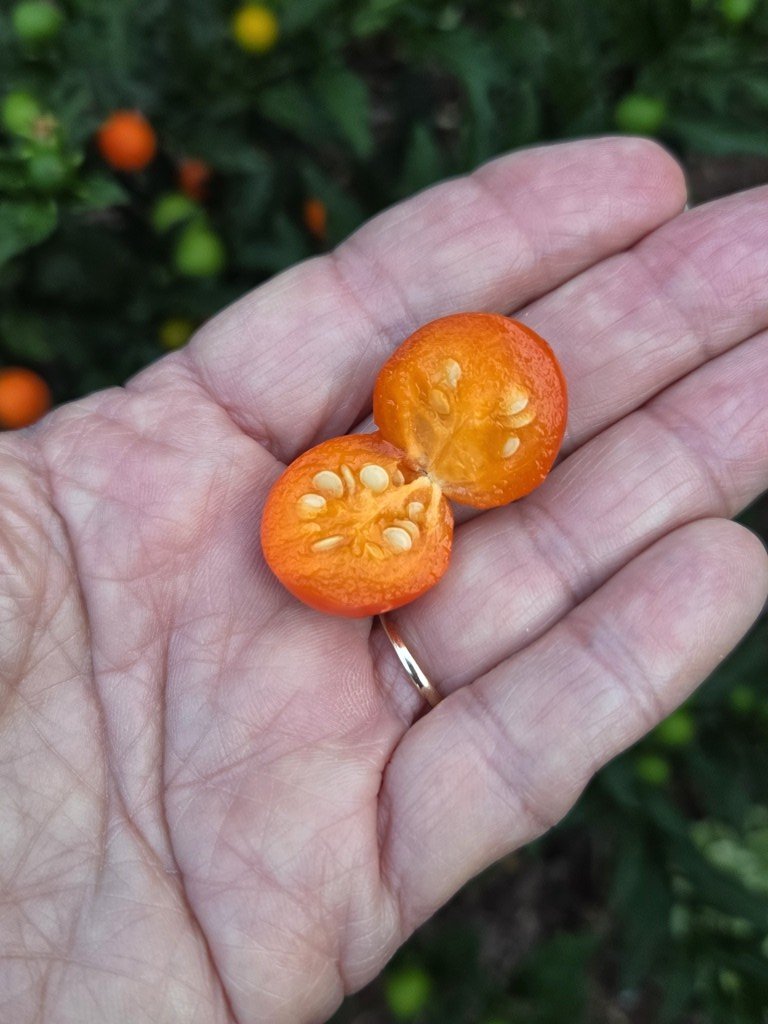
The seeds inside Jerusalem Cherry look like those of other members of the nightshade family — tomatoes, peppers.