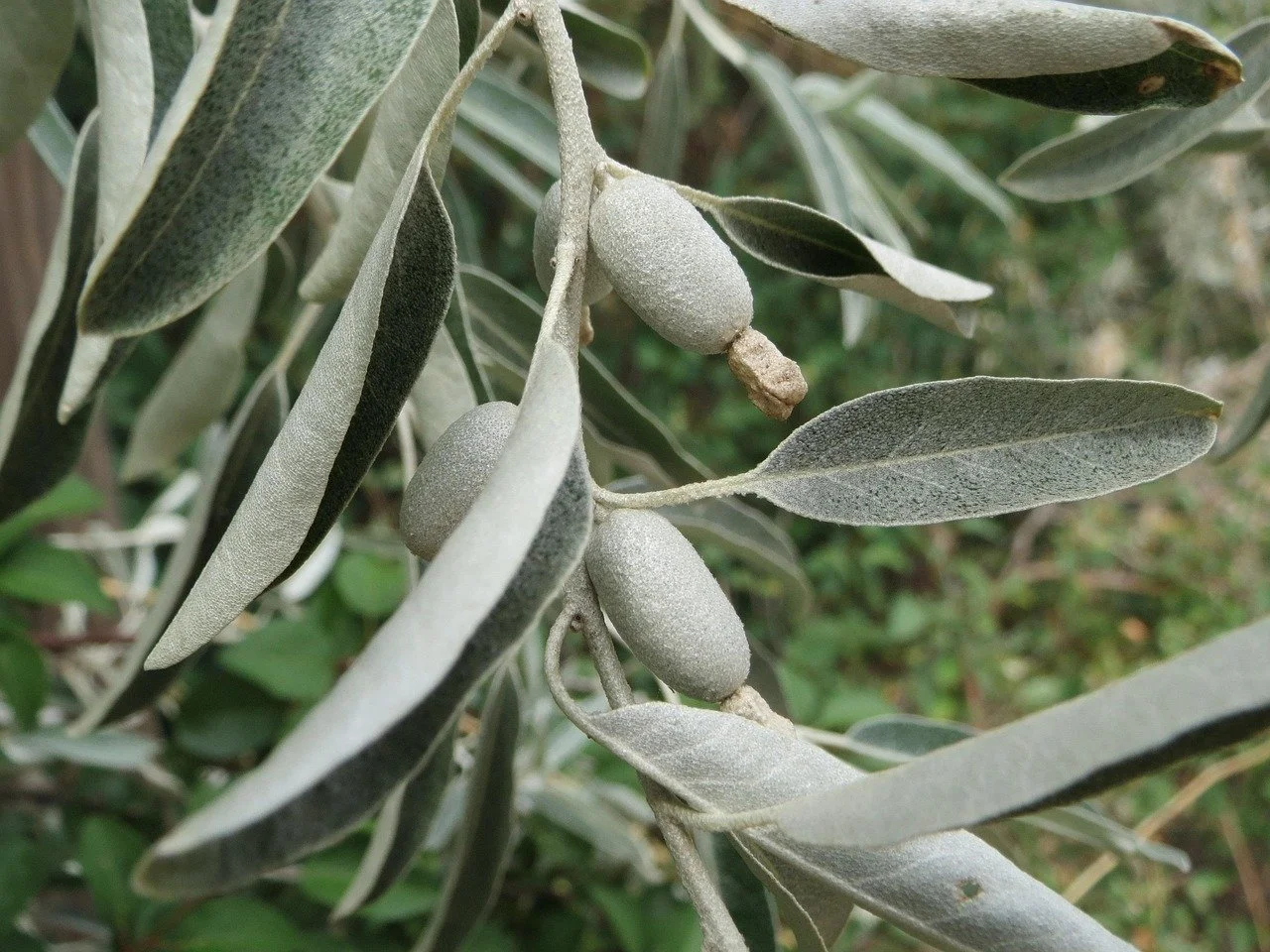
My woodlands are bare and quiet now, a collection of tree trunks surrounded by a thick carpet of fallen leaves: oak, sycamore, maple, hickory, and others. Beech trees are still hanging on to their tan leaves. Pines, magnolias, and mountain laurel offer spots of green. The muted grays and browns bring attention to evergreen Leucothoe (which I like) and semi-evergreen Elaeagnus (that I don’t like). There are multiple species in the Elaeagnus genus: E. umbellata, E. pungens, E. angustifolia. They share common names, including Silverthorn, Silver Leaf, Autumn Olive, and Russian Olive. My favorite common name came from an agent at Clemson University Extension, “Ugly Agnes,” a wordplay on the hard-to-spell genus.
There are a few advantages of Elaeagnus. It is hardy in a wide range (zones 4-9), and will tolerate any soil texture, any sun exposure, and any moisture level except for constantly wet. It is resistant to damage by deer. Its white flowers are sweetly fragrant, and are followed by silver/olive fruit that matures to red. Birds and small mammals feed on the seeds and scatter them far and wide. Per NC State Extension, a single E. umbellata shrub can produce 80 pounds of fruit annually.
That seeding habit lands it on the naughty list. Non-native Elaeagnus will spread aggressively, quickly forming a dense thicket. In fixes nitrogen in the soil, effectively self-fertilizing, allowing it to grow and thrive in poor soils where it overtakes native plants. It is listed as an Invasive Plant of Southern Forests and appears on the Invasive Plant Atlas of the MidSouth (developed and maintained by the United States Geological Survey).
Originally introduced to serve as a windbreak and erosion control, this fast-growing shrub has thorns that will rip through a gardener’s glove. It has a habit of throwing wild whippy growth that rise many feet beyond the base shrub, giving it an otherworldly look. The sale of Elaeagnus has been banned in many states.
There are several great alternatives to Elaeagnus. Please consider Beautyberry (Callicarpa), Holly (Ilex), Viburnum, Cherry Laurel (Prunus caroliniana), Gardenia, Itea, or Fothergilla.
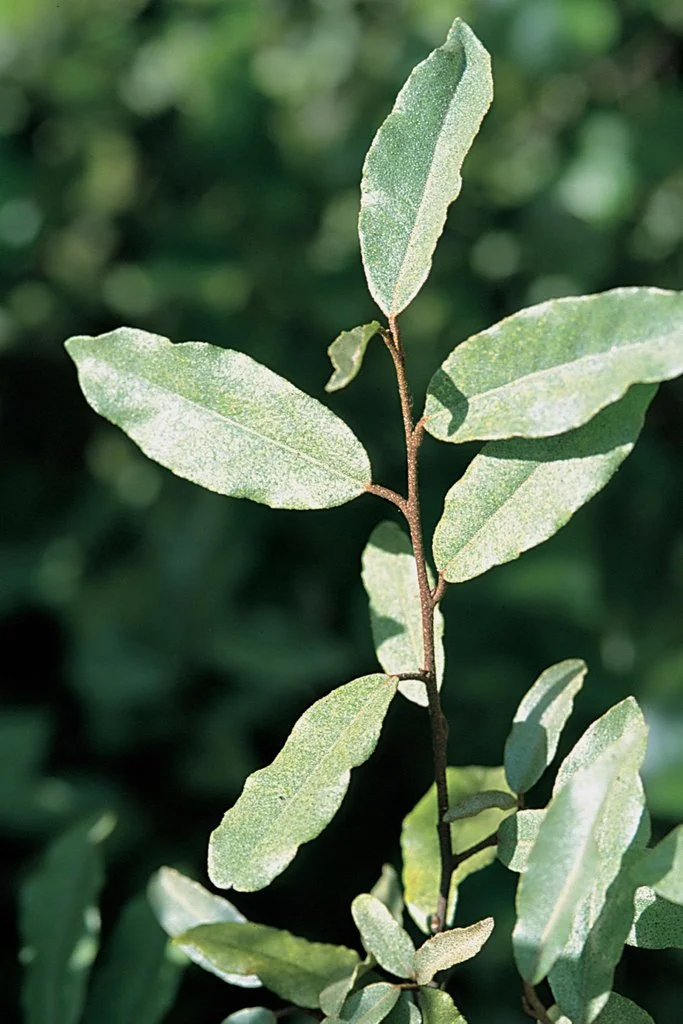
Elaeagnus pungens James H. Miller CC BY 3.0
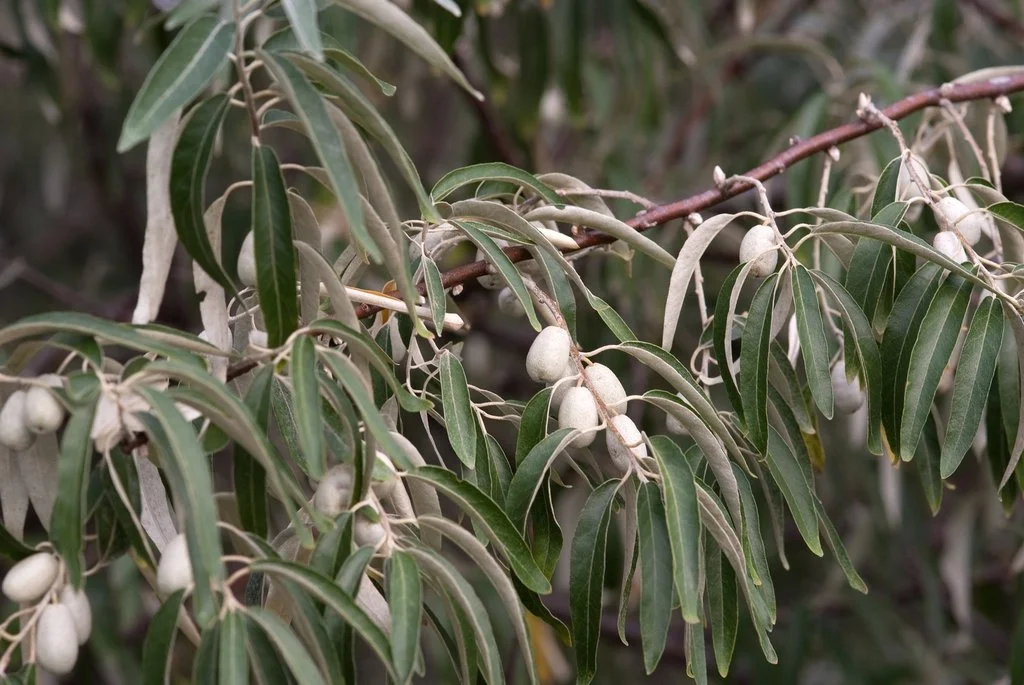
Elaeagnus angustifolia immature fruit Dinnye CC BY-SA 4.0
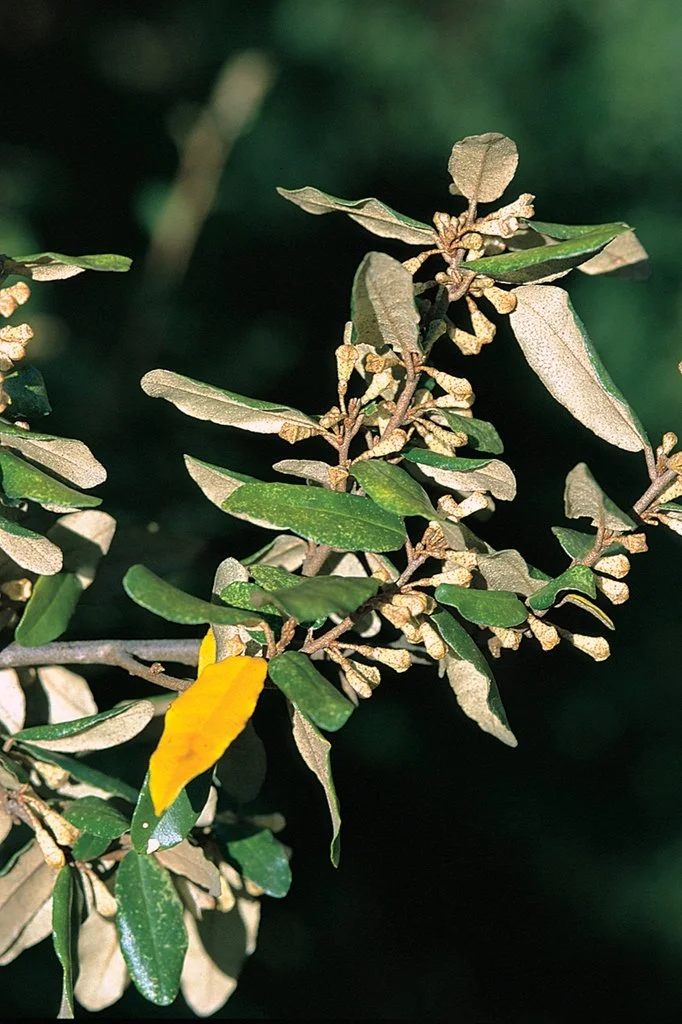
Elaeagnus flower James H. Miller CC BY 3.0