invasives

Don't Choose Ugly Agnes

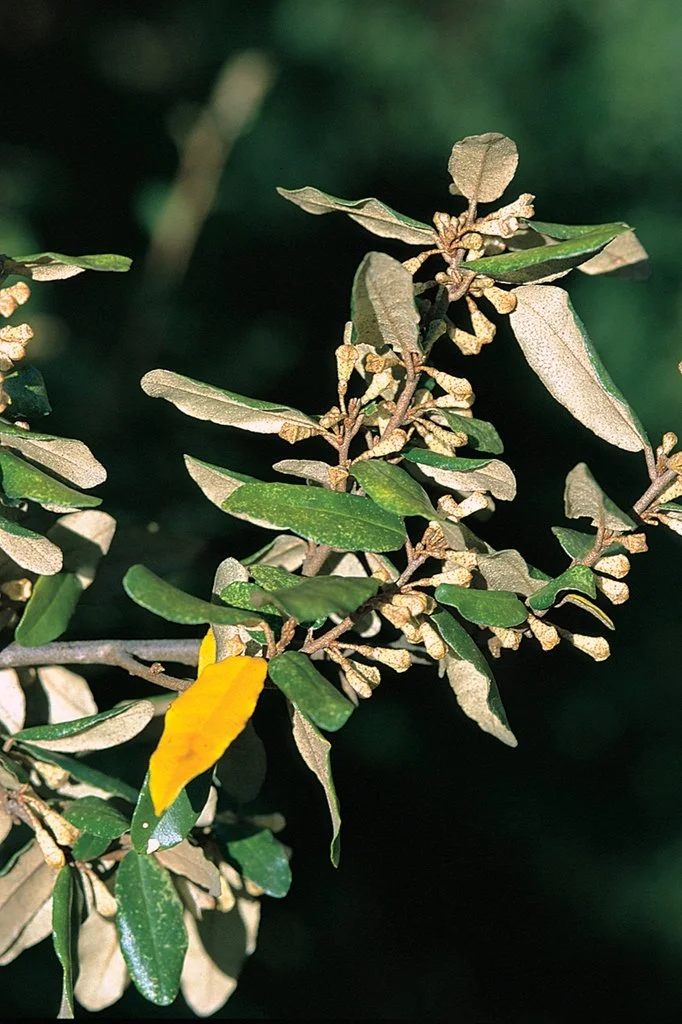
My woodlands are bare and quiet now, a collection of tree trunks surrounded by a thick carpet of fallen leaves: oak, sycamore, maple, hickory, and others. Beech trees are still hanging on to their tan leaves. Pines, magnolias, and mountain laurel offer spots of green. The muted grays and browns bring attention to evergreen Leucothoe (which I like) and semi-evergreen Elaeagnus (that I don’t like). There are multiple species in the Elaeagnus genus: E. umbellata, E. pungens, E. angustifolia. They share common names, including Silverthorn, Silver Leaf, Autumn Olive, and Russian Olive. My favorite common name came from an agent at Clemson University Extension, “Ugly Agnes,” a wordplay on the hard-to-spell genus.

There are a few advantages of Elaeagnus. It is hardy in a wide range (zones 4-9), and will tolerate any soil texture, any sun exposure, and any moisture level except for constantly wet. It is resistant to damage by deer. Its white flowers are sweetly fragrant, and are followed by silver/olive fruit that matures to red. Birds and small mammals feed on the seeds and scatter them far and wide. Per NC State Extension, a single E. umbellata shrub can produce 80 pounds of fruit annually.

That seeding habit lands it on the naughty list. Non-native Elaeagnus will spread aggressively, quickly forming a dense thicket. In fixes nitrogen in the soil, effectively self-fertilizing, allowing it to grow and thrive in poor soils where it overtakes native plants. It is listed as an Invasive Plant of Southern Forests and appears on the Invasive Plant Atlas of the MidSouth (developed and maintained by the United States Geological Survey).

Originally introduced to serve as a windbreak and erosion control, this fast-growing shrub has thorns that will rip through a gardener’s glove. It has a habit of throwing wild whippy growth that rise many feet beyond the base shrub, giving it an otherworldly look. The sale of Elaeagnus has been banned in many states.

There are several great alternatives to Elaeagnus. Please consider Beautyberry (Callicarpa), Holly (Ilex), Viburnum, Cherry Laurel (Prunus caroliniana), Gardenia, Itea, or Fothergilla.
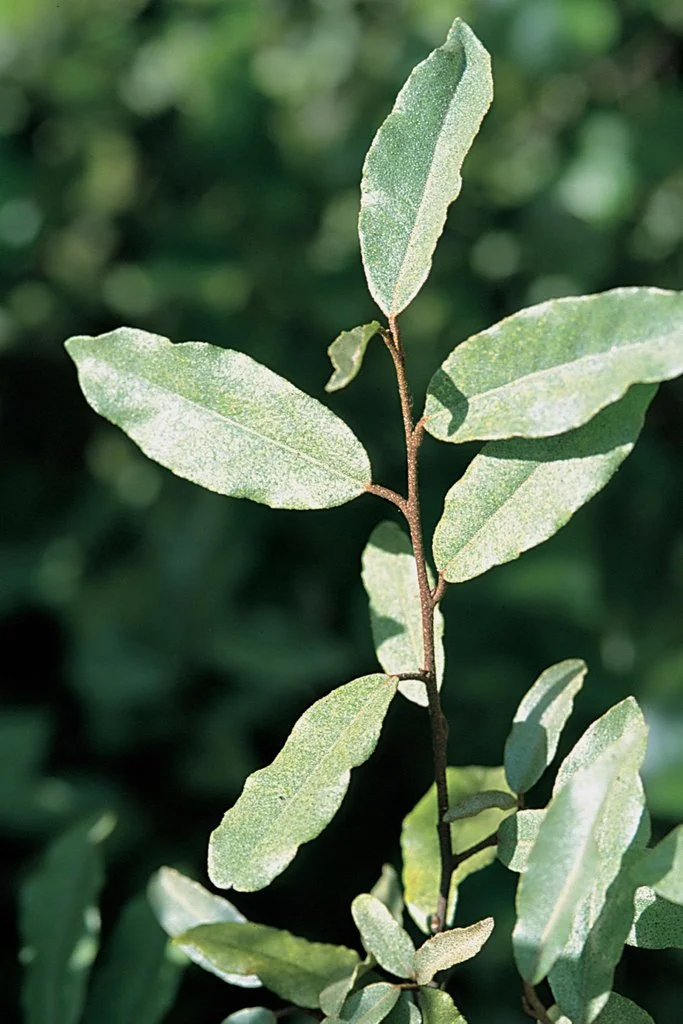
Elaeagnus pungens James H. Miller CC BY 3.0
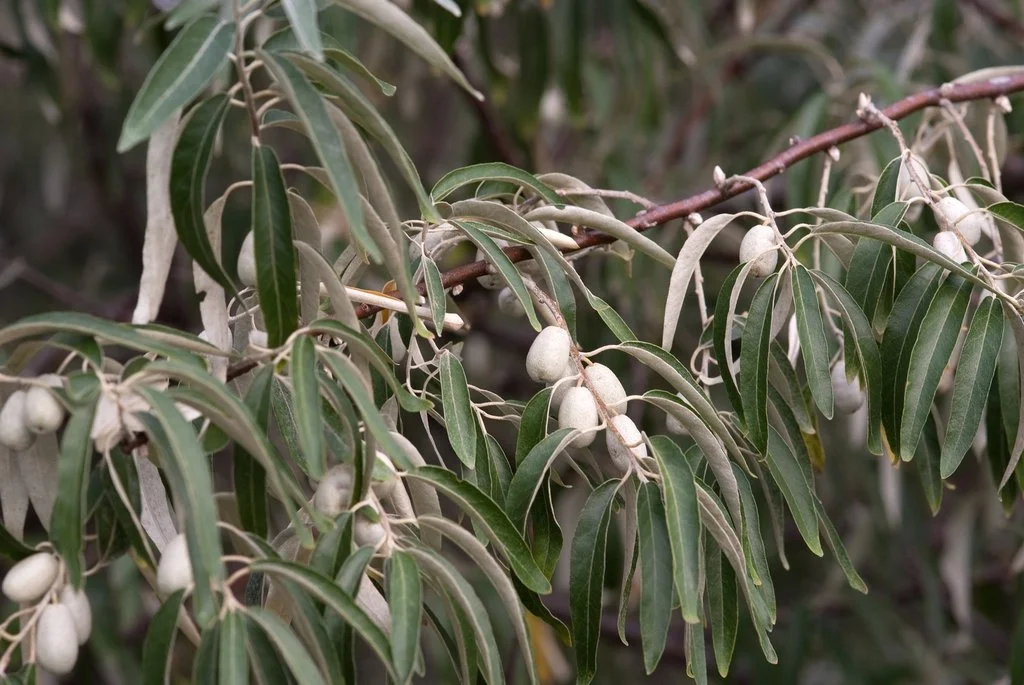
Elaeagnus angustifolia immature fruit Dinnye CC BY-SA 4.0
Elaeagnus flower James H. Miller CC BY 3.0
The Love of the Weird Leads Us Astray

Even experienced gardeners fall victim to plant lust. I learned a valuable lesson five years ago when I purchased an unfamiliar (to me) plant at a spring plant festival. I should have recognized danger when the seller identified the plant by a cute name (“Spotted Dinosaur Food”) and had no clue as to its genus and species. The innocent-looking plant resembled a miniature version of Gunnera, a gorgeous plant that thrives in the Pacific Northwest and will not survive in the heat of the southeast. Gunneras are known for their extremely large, exotic leaves.

The colloquial moniker of my quart-sized purchase meant a long search for its true identity. I am forever grateful for the internet image search results that allowed me to identify my new baby as Petasites japonicia ‘Variegatus’ (pronounced pet-ah-SIGH-tees), common name Variegated Butterbur or Sweet Coltsfoot. The second red flag waved in phrases like “vigorous spreader” and “large colonies.” Now, I wage an ongoing battle to keep mine in check.

Unusual, unimpressive clusters of green blooms arise in late winter, before leaves appear. The plant spreads aggressively by fleshy rhizomes rather than seeds. Their expansion should be restrained by a barrier such as metal edging, concrete or asphalt. Any tiny portion of the fleshy root will regenerate into a new plant. Butterbur grows in zones 3a to 8b. It goes completely dormant in cold weather. Leaves are fuzzy to touch. Deer leave them alone.

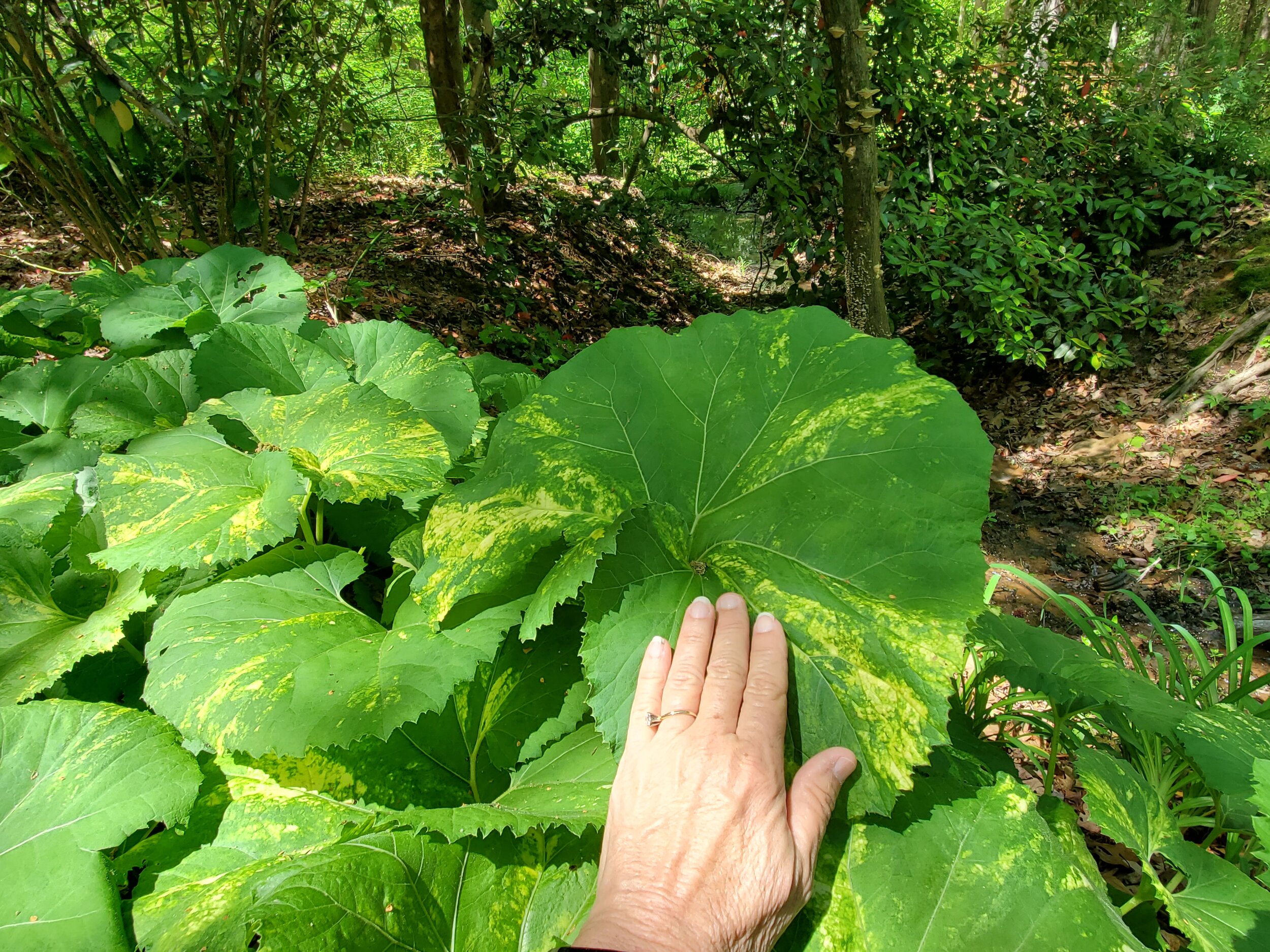
Taking its tendency to spread into account, Butterbur makes an impressive show. Leaves of the variegated forms may reach two feet in width. The non-variegated form may reach an impressive four feet in width. Both forms prefer shade to partial shade and plentiful moisture. Spread can be reduced somewhat by providing  lower moisture, but be prepared for wilting leaves in the hottest part of the year.  The leaves have an exotic, tropical appearance that pair well with hosta and ferns.

Plant scale is obvious when compared to my hand.

Plant scale is obvious when compared to my hand.

Variegation is apparent but not overwhelming.

Variegation is apparent but not overwhelming.

Awesome Thorns - Hardy Orange

Every gardener has their favorites. I love anything with thorns. My friend Sallie labeled this peculiarity a Crucifixion Complex. Of the many choices available, Hardy Orange (Poncirus trifoliata) is high on my list.

Not a true citrus, this 15-foot deciduous tree is cold hardy in zones 6-9. The fragrant white blooms produce yellow-orange fruits a bit larger than a quarter. Some may be as large as golf balls. The aromatic fruit is filled with seeds rather than pulp. It should be considered inedible, since ingestion causes stomach pain and nausea. Skin contact can cause minor dermatitis to sensitive gardeners.

Trees are drought tolerant. They prefer full sun and will grow in almost any soil. My specimen was planted on our property by my husband’s grandmother. It had been overtaken by a spreading evergreen tree. I transplanted the scrawny whip to be a focal point in a perennial bed. It thanked me for its rescue by growing rapidly. The growth habit tends toward a few long, wild water sprouts. I prune it hard every other year to keep its size in check and to give it a more pleasing shape.

Pruning is an act of self-flagellation. The three-inch thorns are sharp. When I pruned this week, I wore an insulated jacket, padded ski gloves, safety glasses, and a construction hard hat from my father’s workshop. The thorns will penetrate ski gloves, so I handle each branch carefully. I burn the discarded limbs rather than composting them. The dead limbs take forever to decay. Even after a couple of years, the thorns are sharp enough to penetrate the tires of my farm tractor. (Go ahead – Ask me how I know this.)  The lethal thorns make the tree inedible to deer. It is also disease-free and insect-free in the Mary Snoddy garden. 

The USDA lists Hardy Orange as invasive in fifteen states that encompass the southeastern quadrant of the USA. It was introduced across the country in the mid-1880s as a potential rootstock, with the hope that tender oranges could be grafted onto it and grown in colder areas.  That combination was not successful.

I carefully harvest every one of the dropped fruits to avoid rampant reseeding. If you cannot make the commitment to restrict the plant from spreading, please skip it. Birds and animals distribute seeds and plants sprout across the landscape. This invasiveness is unfortunate, because it would make a dandy barrier to trespassers.  ‘Flying Dragon’ is the only selected cultivar. Its limbs are little more contorted than the straight species.

One way to restrict plant size and control invasiveness is to grow the plant in a container.  I maintained several for years until they became too unwieldy.

Why grow such a dangerous plant? Glad you asked! They offer endless opportunities for decorating. Yes, you read that right. The stiff thorns will support gumdrops that can change colors with the seasons. One year I cut branches and spray-painted them glossy black. I jammed the stems into ripe pumpkins and draped them with fake spider webs. Best Halloween Décor Ever.

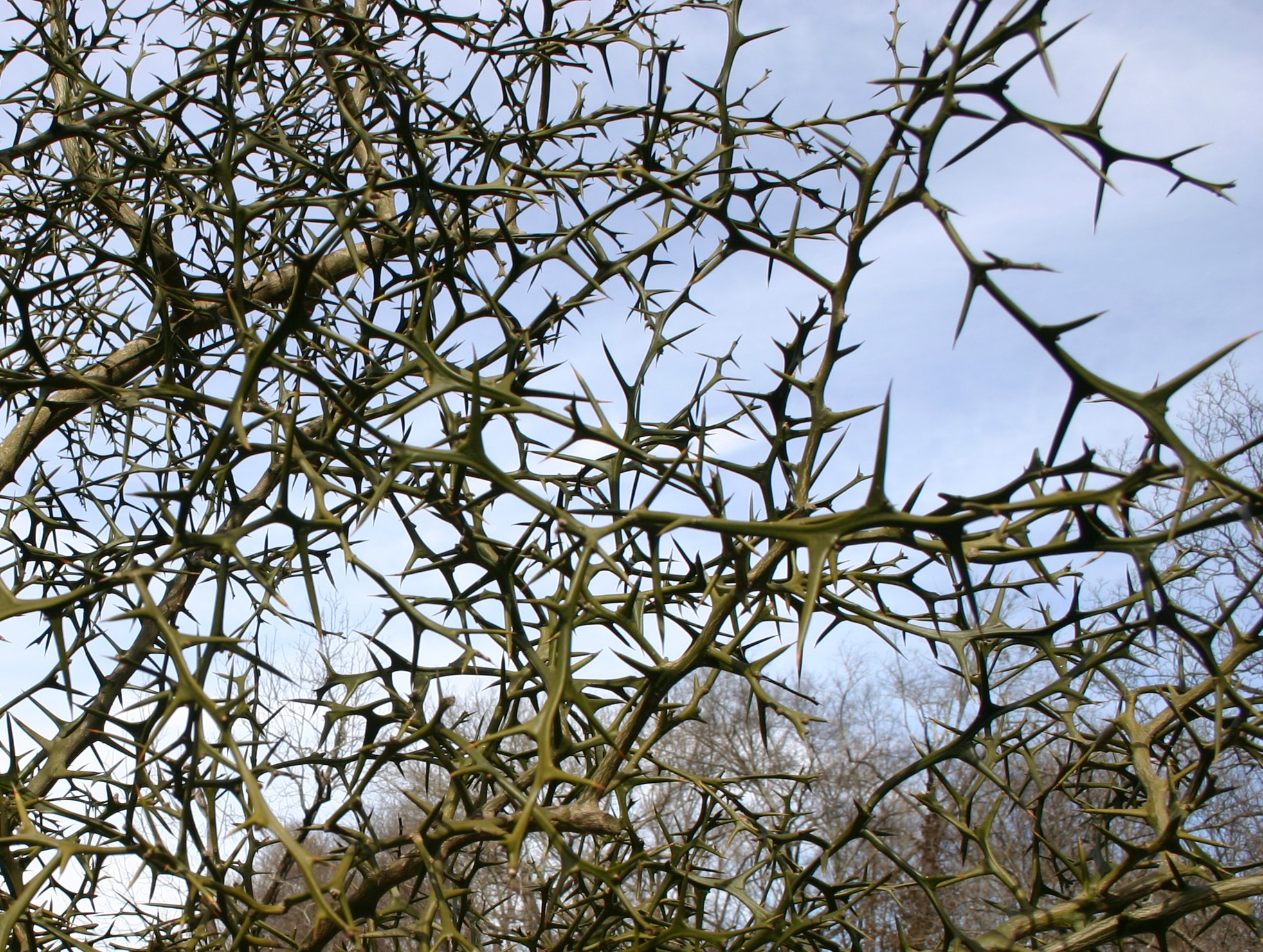
Bare limbs seen against a winter sky highlight the impressive thorns.

Bare limbs seen against a winter sky highlight the impressive thorns.