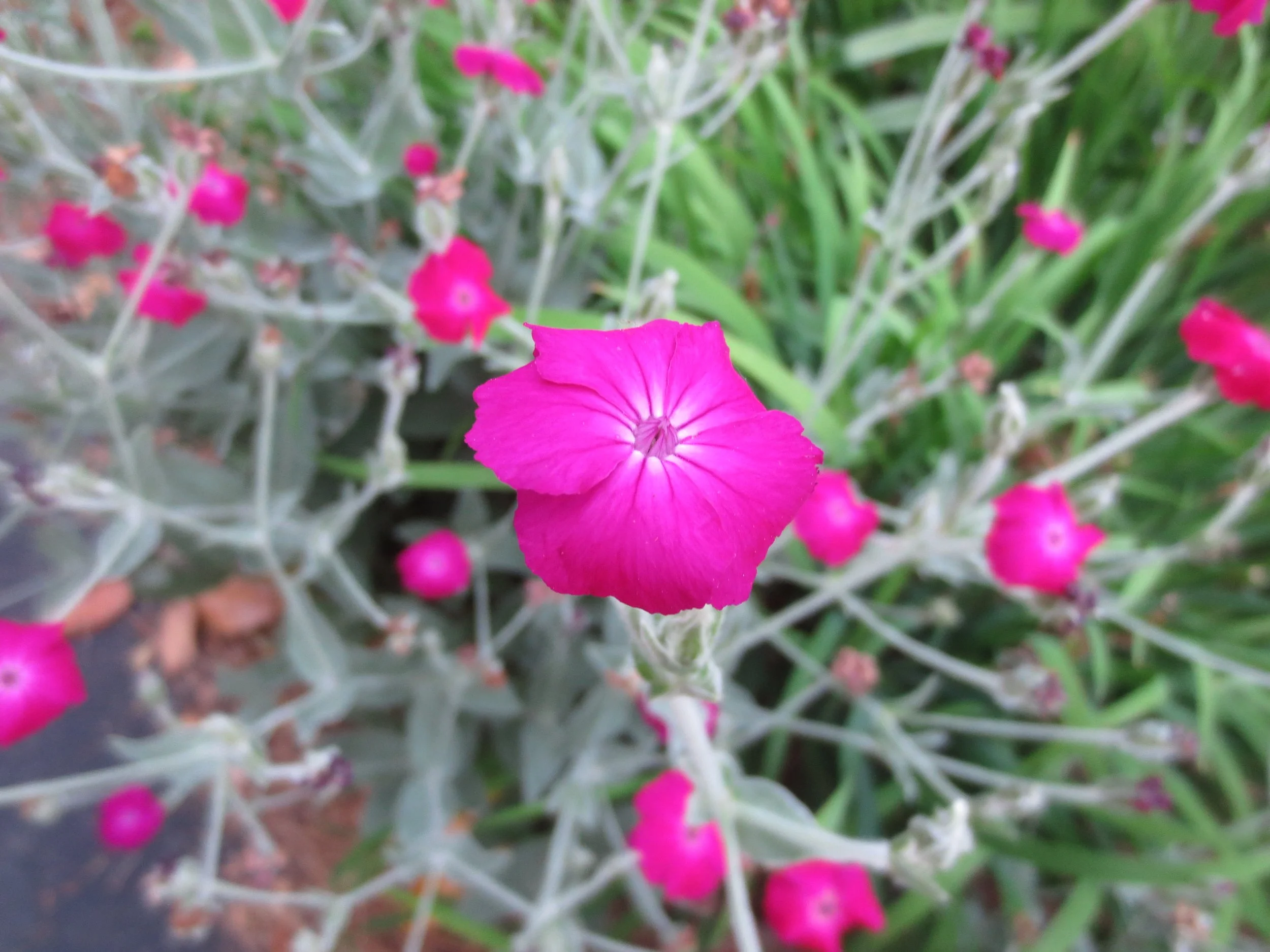
Elaeagnus

Don't Choose Ugly Agnes

My woodlands are bare and quiet now, a collection of tree trunks surrounded by a thick carpet of fallen leaves: oak, sycamore, maple, hickory, and others. Beech trees are still hanging on to their tan leaves. Pines, magnolias, and mountain laurel offer spots of green. The muted grays and browns bring attention to evergreen Leucothoe (which I like) and semi-evergreen Elaeagnus (that I don’t like). There are multiple species in the Elaeagnus genus: E. umbellata, E. pungens, E. angustifolia. They share common names, including Silverthorn, Silver Leaf, Autumn Olive, and Russian Olive. My favorite common name came from an agent at Clemson University Extension, “Ugly Agnes,” a wordplay on the hard-to-spell genus.

There are a few advantages of Elaeagnus. It is hardy in a wide range (zones 4-9), and will tolerate any soil texture, any sun exposure, and any moisture level except for constantly wet. It is resistant to damage by deer. Its white flowers are sweetly fragrant, and are followed by silver/olive fruit that matures to red. Birds and small mammals feed on the seeds and scatter them far and wide. Per NC State Extension, a single E. umbellata shrub can produce 80 pounds of fruit annually.

That seeding habit lands it on the naughty list. Non-native Elaeagnus will spread aggressively, quickly forming a dense thicket. In fixes nitrogen in the soil, effectively self-fertilizing, allowing it to grow and thrive in poor soils where it overtakes native plants. It is listed as an Invasive Plant of Southern Forests and appears on the Invasive Plant Atlas of the MidSouth (developed and maintained by the United States Geological Survey).

Originally introduced to serve as a windbreak and erosion control, this fast-growing shrub has thorns that will rip through a gardener’s glove. It has a habit of throwing wild whippy growth that rise many feet beyond the base shrub, giving it an otherworldly look. The sale of Elaeagnus has been banned in many states.

There are several great alternatives to Elaeagnus. Please consider Beautyberry (Callicarpa), Holly (Ilex), Viburnum, Cherry Laurel (Prunus caroliniana), Gardenia, Itea, or Fothergilla.
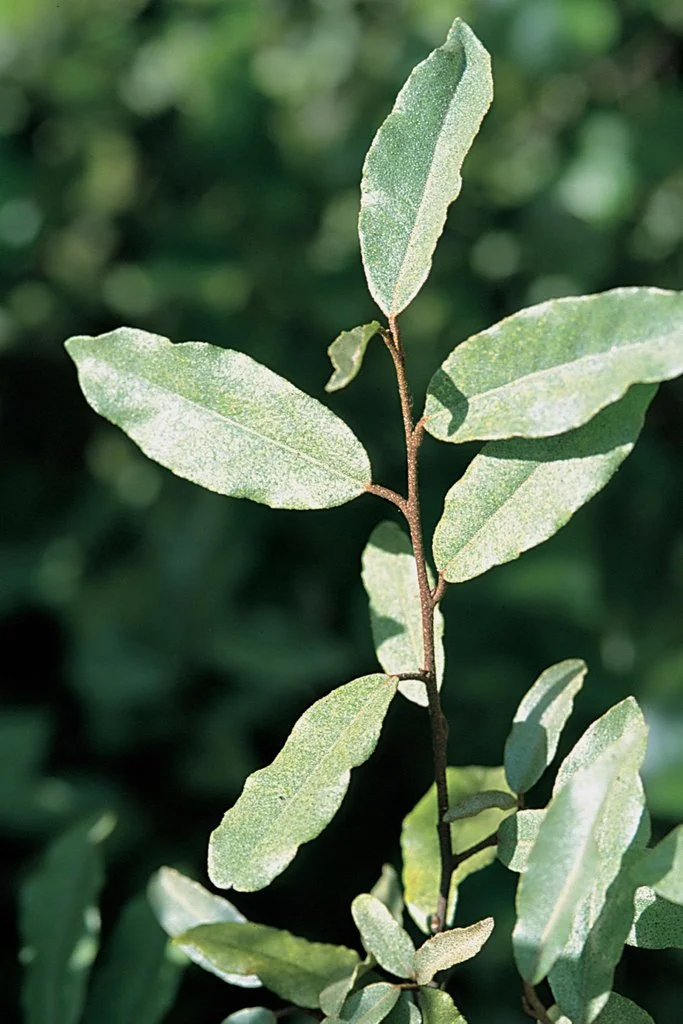
Gray green plant stem

Elaeagnus pungens James H. Miller CC BY 3.0
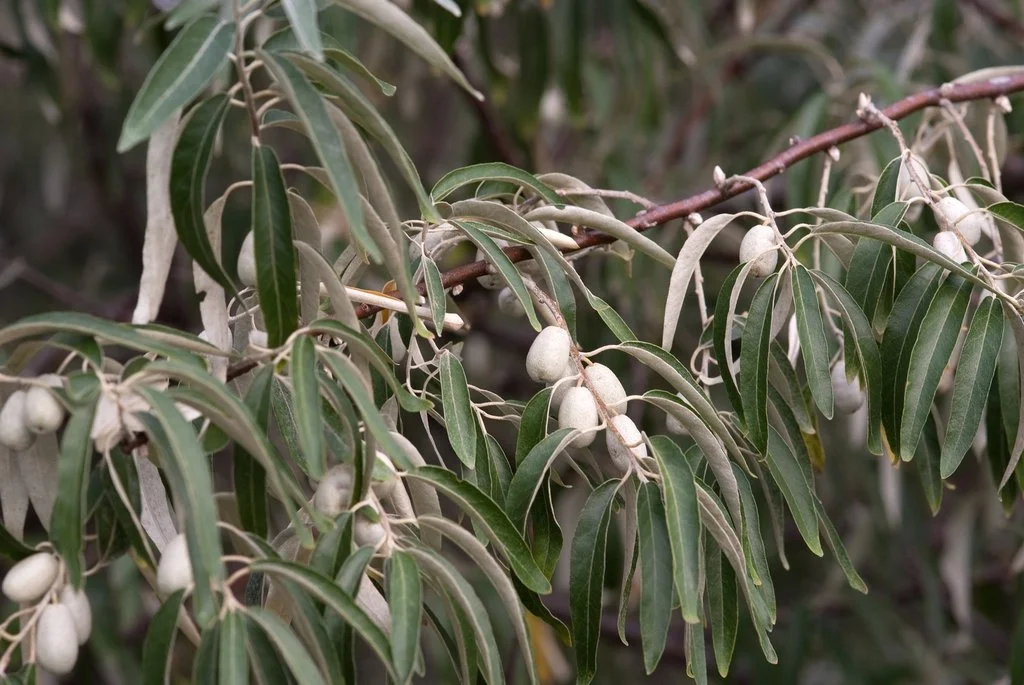
Shrub showing olive like fruit

Elaeagnus angustifolia immature fruit Dinnye CC BY-SA 4.0
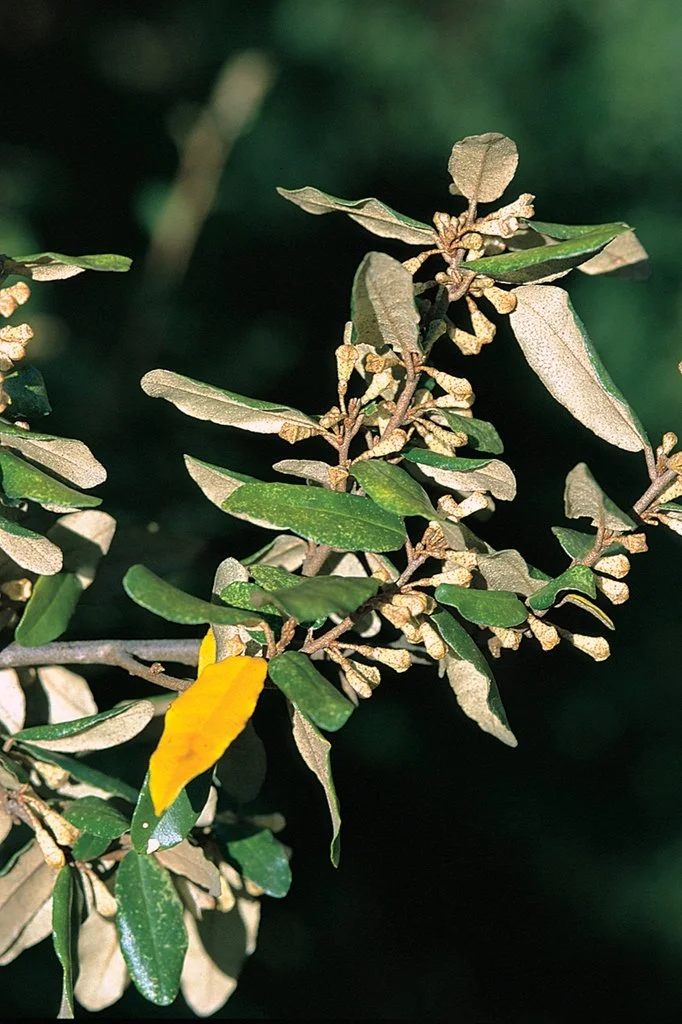
Shrub showing small white flowers

Elaeagnus flower James H. Miller CC BY 3.0

When Banning an Invasive Plant Is Bad

Now that the election is past, there is a shortage of contentious discussion, so it seems like a good time to mention a horticulture battle: native plants versus non-native plants. There are rabid supporters in both camps, both with rational arguments.

One of the reasons that this topic moved to the top of my blog priority list is the recent ban on the sale of Elaeagnus, a shrub whose common names include Silver Leaf, Thorny Olive, Silverthorn, Autumn Olive, and Russian Olive (and Ugly Agnes among its detractors). Beginning October 1, 2024, South Carolina banned the sale of Elaeagnus angustifolia, Elaeagnus pungens, and Elaeagnus umbellata. This makes it the second genus with sales banned in SC, after Bradford Pear.

I do not dispute the downsides of growing Autumn Olive in the garden. Birds eat the seeds and spread them into forests and woodlands, where they may displace native shrubs. They can fix nitrogen in poor soils and establish themselves as a monoculture, never a healthy situation. Left unrestrained, they can throw rampant growth and shade out native plants. All negatives, certainly. But in banning all these Elaeagnus, we are ignoring the research and development of non-seeding cultivars underway in a neighboring state. And we are turning a blind eye to Autumn Olive’s ability to stabilize steep slopes with poor soil, where few natives would survive. Demonizing the entire genus makes as much sense as banning ALL Butterfly Bush or Rose of Sharon, even though there are sterile or seedless cultivars available.

There are those who encourage the ban of Nandina. While Nandina berries are toxic to birds that gobble too many of them, there are few other heat- and drought-tolerant plants that will thrive in sun or shade, any soil texture or pH, with no added irrigation. Banning the sale of Nandina ignores the multitude of non-invasive or seedless cultivars: ‘Gulf Stream,’ ‘Flirt,’ ‘Fire Power,’ and ‘Harbour Dwarf,’ to name a few.

Not all natives are innocent. Trumpet Vine (Campsis), Goldenrod (Solidago ), Cattail (Typha latifolia), and Fishpole Bamboo (Phyllostachus aurea) spread like mad and can choke out other valuable plants. Some of our most beautiful plants are not native. I am not willing to remove my Camellias (both C. japonica and C. sasanqua), Bigleaf Mophead Hydrangeas, or Encore™ Azaleas. None of these are native to the United States.

Often, plants that are invasive in one part of the country are fine in another. I was surprised to find Castor Bean (Ricinus communis), Chaste Tree (Vitex agnus-castus), Pachysandra (Pachysandra terminalis), Mock Orange (Philadelphus coronarius), Creeping Jenny (Lysimachia nummularia), and Thunberg Spirea (Spiraea thunbergia) on the Invasive Plant Atlas of the MidSouth, published by the US Geological Survey. To download a complete list, click HERE. I have never experienced an out-of-control spread of any of these. In the case of Pachysandra, I had to plead with the plant to survive and spread.

To quote politicians’ jibber-jabber ad nauseum, “let’s work both sides of the aisle” to make wise choices for our specific areas. Beautiful gardens can contain a mixture of both natives and non-natives. Just make thoughtful selections. There are good choices and bad choices but no inherently evil plants (except for Chameleon Plant, Houttuynia cordata – straight from Hades).

The leaf underside of Elaeagnus pungens. Photo by Bri Weldon used under CC BY 2.0 license.