I was at a semi-social gathering last night when the subject of chiggers arose. Allow me to clarify: this was a meeting of Master Gardeners. Unlike many of the greater public, we are entertained by conversations concerning insects, weeds, and plant diseases the same way my dog-training friends talk about breeding lines and canine health issues, using words rarely heard in polite society. Anyway, someone made the comment, “Have your nail polish ready.” She said this in jest, but it reminded me that some people are uninformed about these nasty little pests.
Usually, the first thing someone will tell you about chiggers is that they burrow under your skin, and must be smothered to stop the intense itching and inflammation at the site of the bite. There are insects that burrow under the skin, but chiggers are not one of them. Instead, chiggers find an area where the skin is thin and tender and insert their piercing mouth parts into the pores of the skin. Instead of sucking blood like a tick, they inject a digestive enzyme that literally liquefies your skin cells and lymph, so they can suck up your juices. (Just as disgusting as it sounds.) It is this enzyme, injected into the skin, that causes the itchy reaction in most humans.
The enzyme fluid has a two-fold effect. It initially liquifies the victim’s cells, and then it hardens to form a straw-like feeding tube, called a stylostome, through which the chigger can continue to feed. This hardened stylostome may appear as a red dot in the center of the bite. The red dot leads people to believe that the chigger itself is still present. Hence, the age-old recommendation to paint over the dot with nail polish, allegedly to smother the pest.
Unlike mosquitos, with their sharp mouth probes, the mouth parts of chiggers are fairly weak. The chigger has to find a tender area to attach, and often needs something to push its legs against in order to force its mouthparts into the skin. This is why you seem to get bitten around the edges of socks, the elastic bands of underwear, waistbands, and cuffs. The tight clothing gives them something to push against while they attach.
Unlike ticks, chiggers don't embed very deeply, and are fairly easy to remove. Even a brisk shower is enough to dislodge them, which is why showering immediately after time spent outdoors in chigger-infested undergrowth or long grass can minimize their opportunity to inject you with their toxic juices. They can easily be brushed off but they are so tiny that they are rarely seen with the naked eye. A chigger measures 1/60th of an inch. That is 0.4233mm, for those of you who are metrically-inclined. Chiggers can attach to their host for up to three days.
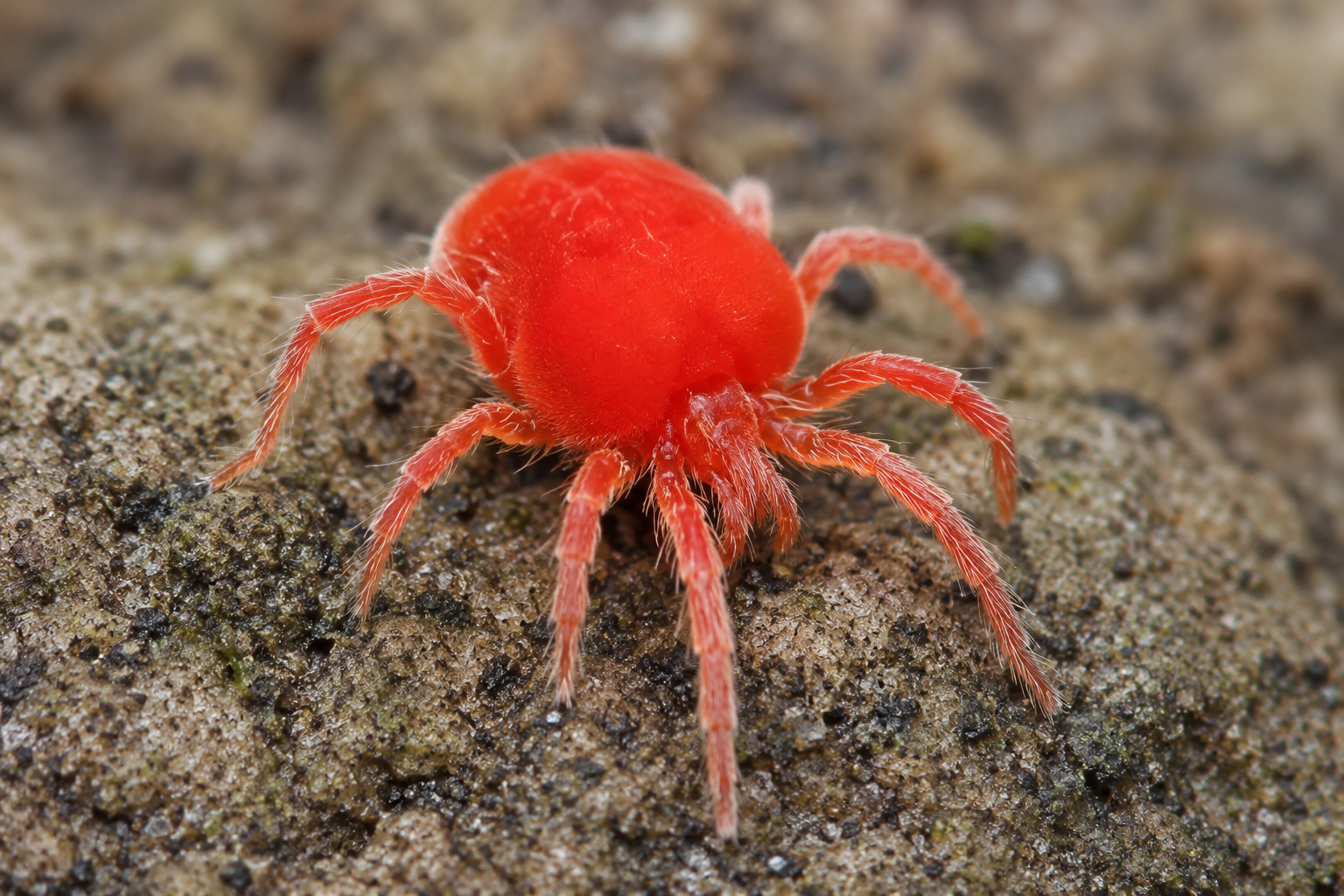
My home garden is edged by stacked stone walls. I frequently see little red insects skittering about on the stones, and I assumed those were chiggers. Not so! Those are red velvet mites, Trombidiidae. They are large enough to see easily, which makes them easy to distinguish from tiny chiggers, which are almost invisible without magnification. Red velvet mites are harmless to humans. They parasitize other insects. Don’t squash them with your fingers, though. They leave a bright red stain on fingers, siding, or stone that lasts a long time and cannot be removed by simple washing.
How to deal with the chigger issue:
The person who is chigger bitten will start to feel the itch three to four hours after the initial bite. The worst of the itching begins as late as 24 to 48 hours after the bite has occurred. You can use drug-store products to help relieve the itching, but prevention is better than treatment.
Insect repellants are effective. If you decide to use repellant, apply it to ankles, legs, waists, and sleeve areas, where chiggers are most likely to mount their invasion.
Wear protective clothing, like long pants tucked into boots. Tightly woven fabrics prevent them from gaining access to your skin.
Avoid heavy underbrush or tall grass. If you must walk through these areas, shower as soon as possible. My personal worst chigger attack came from wandering around an unmowed church cemetery as a child. The resulting itchy red rash resembled a case of measles.
Wash your clothes too. Chiggers can linger in clothing and drop off inside your house, or attack you the next time you wear those items.
So, nail polish has no positive impact when painted over those red dots on your skin. You are not suffocating the chigger, because it is not embedded in you. If you decide to use nail polish anyway, let me warn you that using nail polish remover when you have those little open places on your skin will get your attention, and not in a positive way.
If there is any bright side to the misery of chigger bites, it is that unlike ticks and mosquitos, chiggers are not known to carry or transmit any diseases.
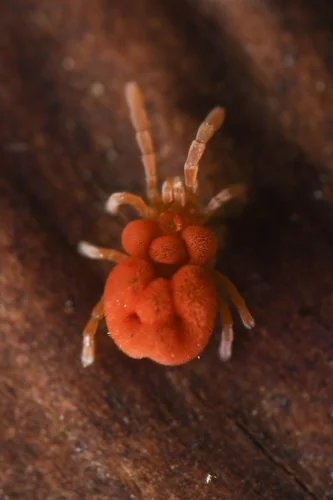
This image of a Chigger was taken by Trevor Van Loon and shared to iNaturalist under Creative Common license 4.0. Click on the image to go directly to the iNaturalist page.
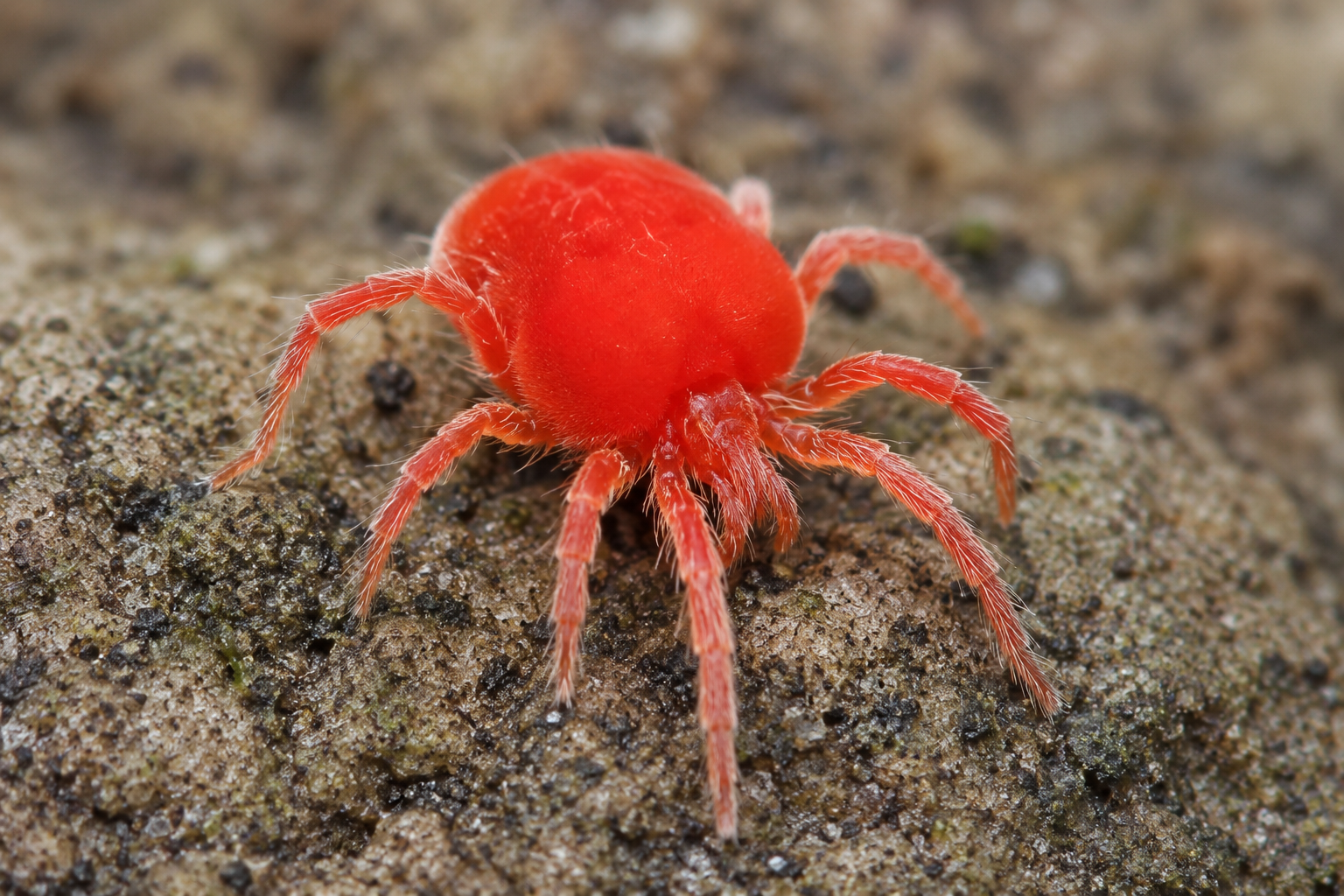
This is an AI generated image of a chigger. They are so tiny that it takes someone with patience and a superior camera lens to capture an image. Remember: Size is 1/60th of an inch.