Tender garden perennials that cannot survive winter temperatures in colder zones can still be grown as annuals. Such is the case with Centrantherum, also known as Lark Daisy. Last fall, I was part of a cleanup team at a local arboretum when I saw Centrantherum for the first time. It was covered in nickel-sized blue-lavender flowers and had pretty, deeply-toothed leaves. Best of all, the bruised foliage smelled like pineapple. In addition to Lark Daisy, other common names include Pineapple Thistle, Pineapple Weed, or Brazilian Bachelor's Button. Plants are native to South America.
As we pulled and discarded the plants as part of a bed cleanup, I took a cutting. Once home, I divided that cutting into three parts and attempted to propagate them. All three struck roots and grew into good-sized plants in my home greenhouse. They will go into the ground in my zone 8 garden next week, when freezing weather should be past.
My research reveals two species, C. punctatum and C. intermedium. Most sites say that the plants are winter hardy only in zones 10-12, but San Marcos Growers indicates they are root hardy to 25 degrees and top growth is hardy to about 30 degrees.
Mature plants may reach 18-inches tall and wide. They will spread by seeds in warm areas but are not considered invasive, although they are considered weeds in the warmest parts of Florida. My three specimens struggled with insect issues in the greenhouse, and had to be treated for whiteflies, mealy bugs, and spider mites. The plants prevailed, as you can see from the accompanying photograph. Since they are not winter-hardy in my area, I will save seeds from this season’s flowers to sow for following years. Starting from seeds seems to be an easier solution.
Centrantherum is easily grown in full sun, and has moderate water needs. It is resistant to damage from rabbits and deer. Butterflies visit the flowers. Plants have an extended bloom period.
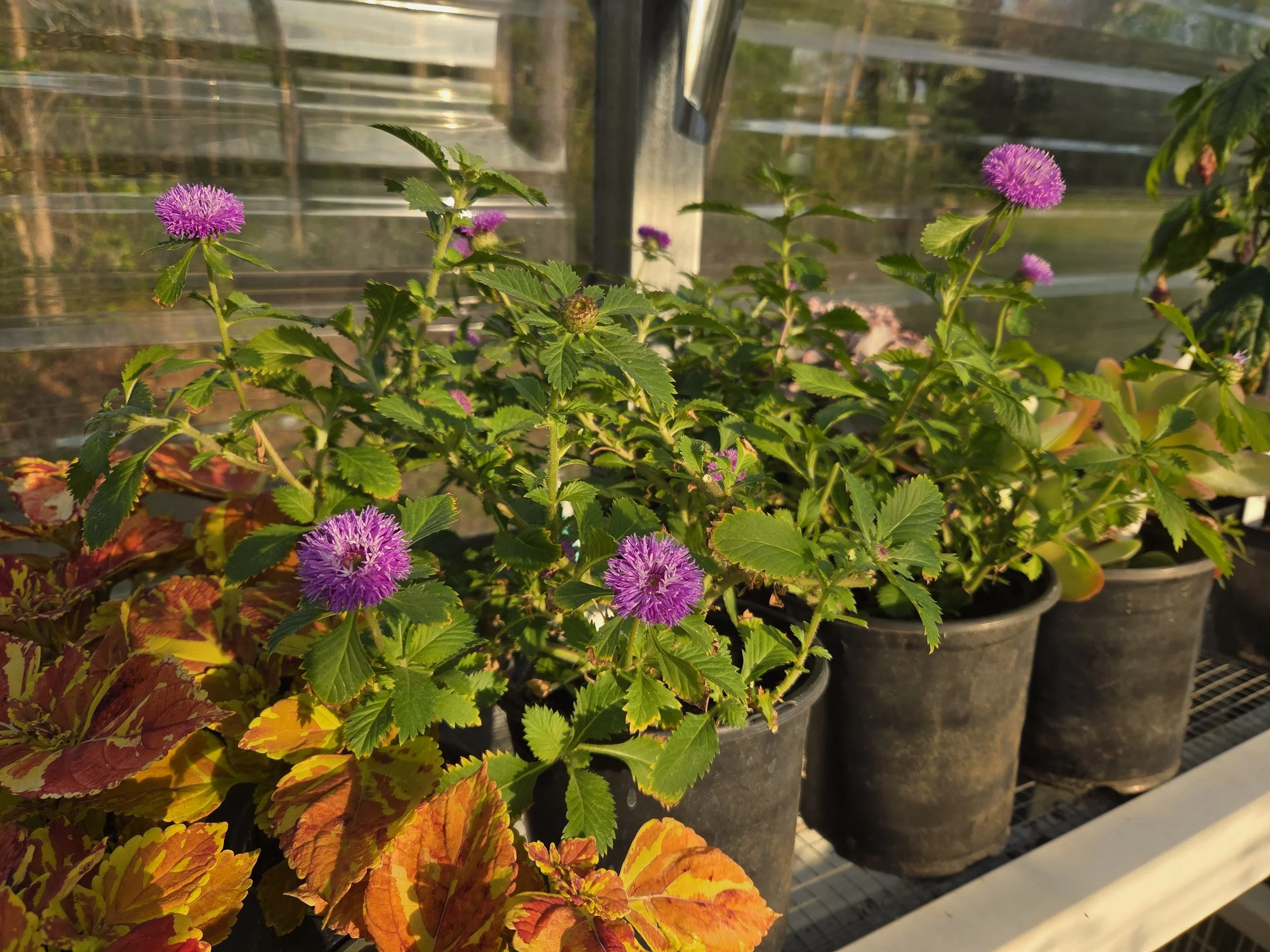
These three Centrantherum have grown from tiny cuttings into full gallon-size plants. They are being hardened off now, and will go into the ground next week.