Centrantherum

New to Me: Centrantherum, Lark Daisy

Tender garden perennials that cannot survive winter temperatures in colder zones can still be grown as annuals. Such is the case with Centrantherum, also known as Lark Daisy. Last fall, I was part of a cleanup team at a local arboretum when I saw Centrantherum for the first time. It was covered in nickel-sized blue-lavender flowers and had pretty, deeply-toothed leaves. Best of all, the bruised foliage smelled like pineapple. In addition to Lark Daisy, other common names include Pineapple Thistle, Pineapple Weed, or Brazilian Bachelor's Button. Plants are native to South America.

As we pulled and discarded the plants as part of a bed cleanup, I took a cutting. Once home, I divided that cutting into three parts and attempted to propagate them. All three struck roots and grew into good-sized plants in my home greenhouse. They will go into the ground in my zone 8 garden next week, when freezing weather should be past.

My research reveals two species, C. punctatum and C. intermedium. Most sites say that the plants are winter hardy only in zones 10-12, but San Marcos Growers indicates they are root hardy to 25 degrees and top growth is hardy to about 30 degrees.

Mature plants may reach 18-inches tall and wide. They will spread by seeds in warm areas but are not considered invasive, although they are considered weeds in the warmest parts of Florida. My three specimens struggled with insect issues in the greenhouse, and had to be treated for whiteflies, mealy bugs, and spider mites. The plants prevailed, as you can see from the accompanying photograph. Since they are not winter-hardy in my area, I will save seeds from this season’s flowers to sow for following years. Starting from seeds seems to be an easier solution.

Centrantherum is easily grown in full sun, and has moderate water needs. It is resistant to damage from rabbits and deer. Butterflies visit the flowers. Plants have an extended bloom period.
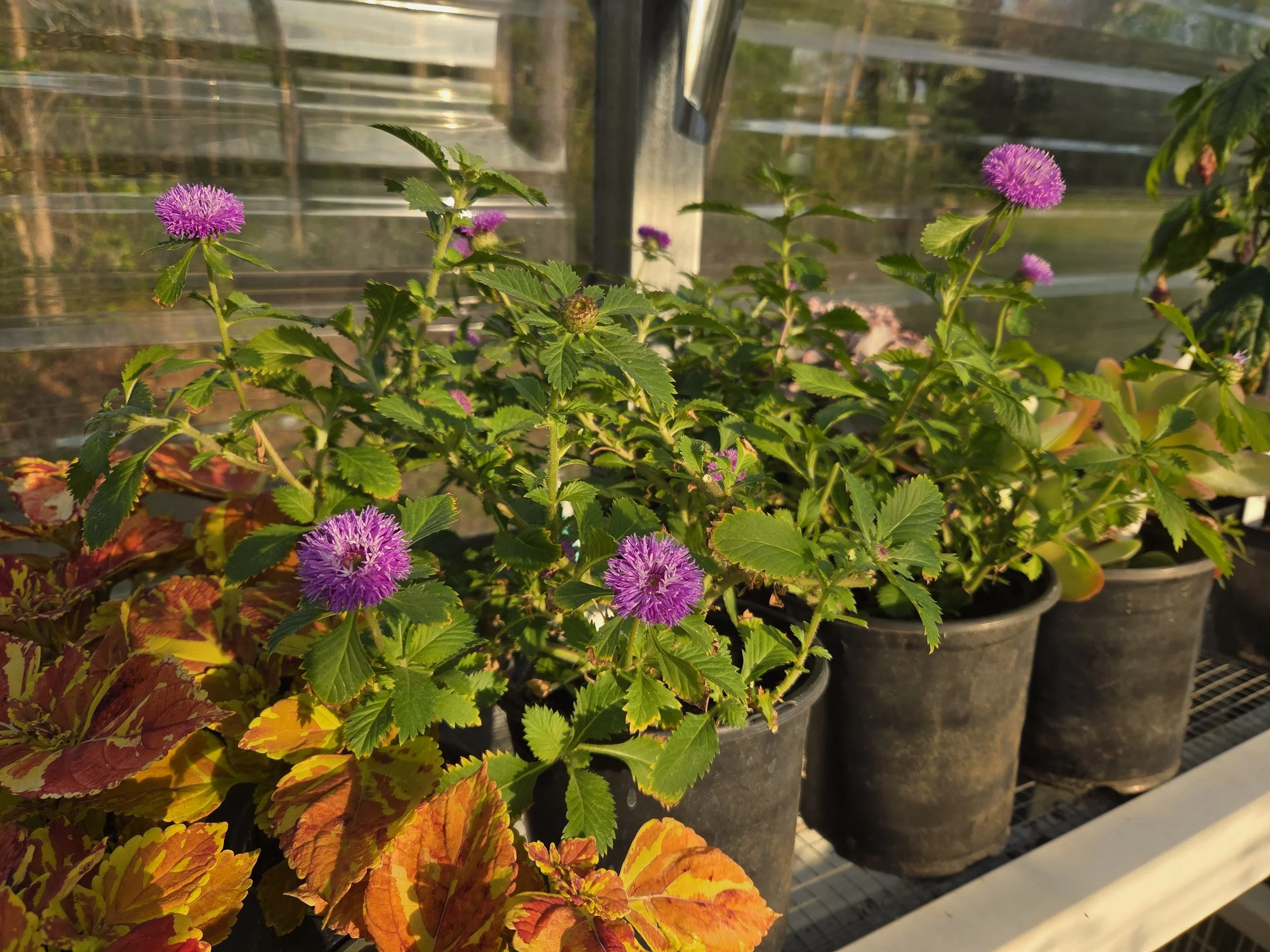
Lavender flower on plants in black pots

These three Centrantherum have grown from tiny cuttings into full gallon-size plants. They are being hardened off now, and will go into the ground next week.
Pre-Winter Propagation Chores

It is Thanksgiving week, and I am concentrating on hosting family and friends rather than researching cool plants. Instead of my normal format, I want to share a few photos of my pre-winter tasks. Other than a single cold snap in October, this year’s autumn has been unusually warm. This means that I had extended time to take a few cuttings for rooting in the greenhouse, as a head start on next gardening season.

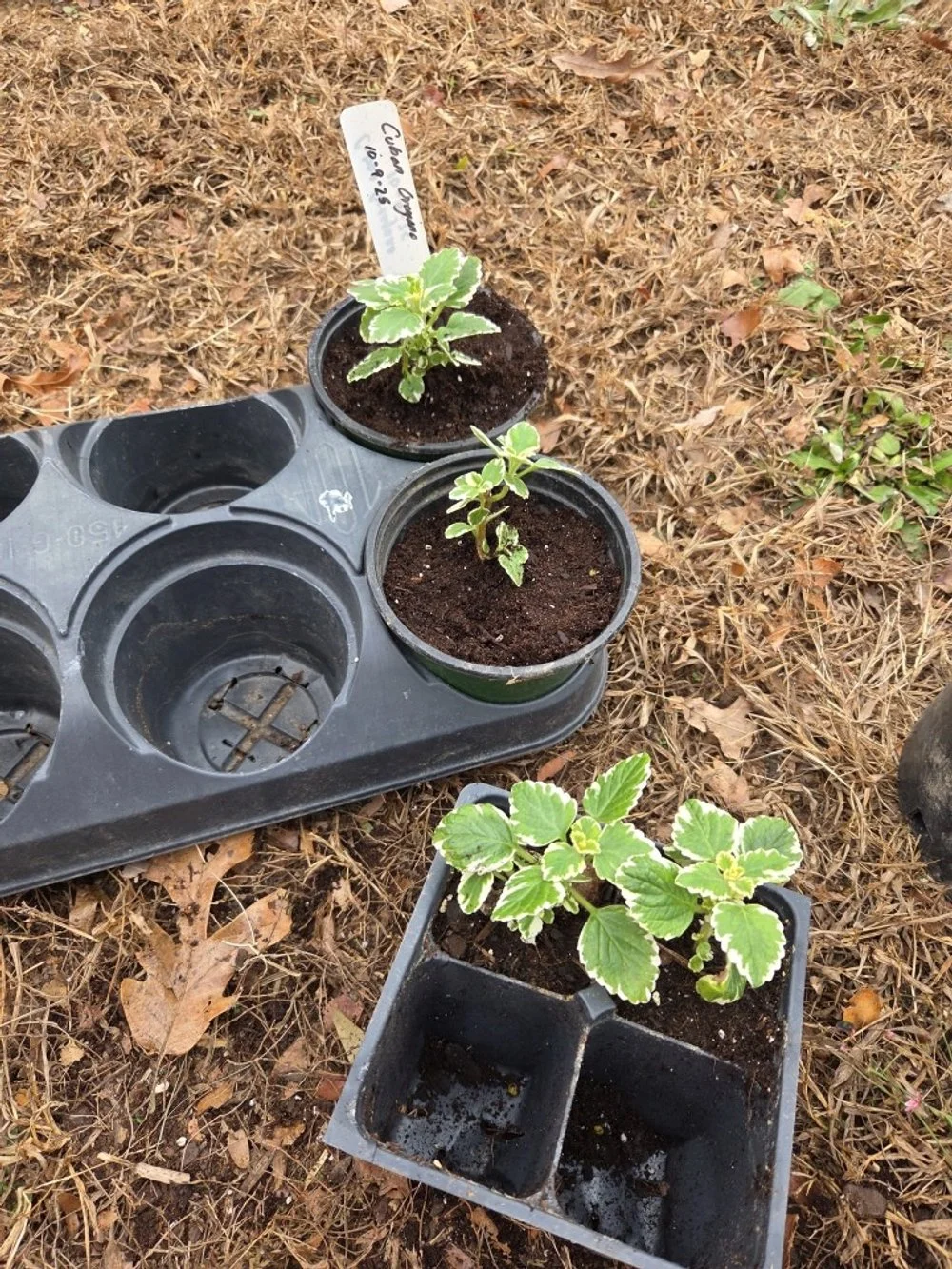
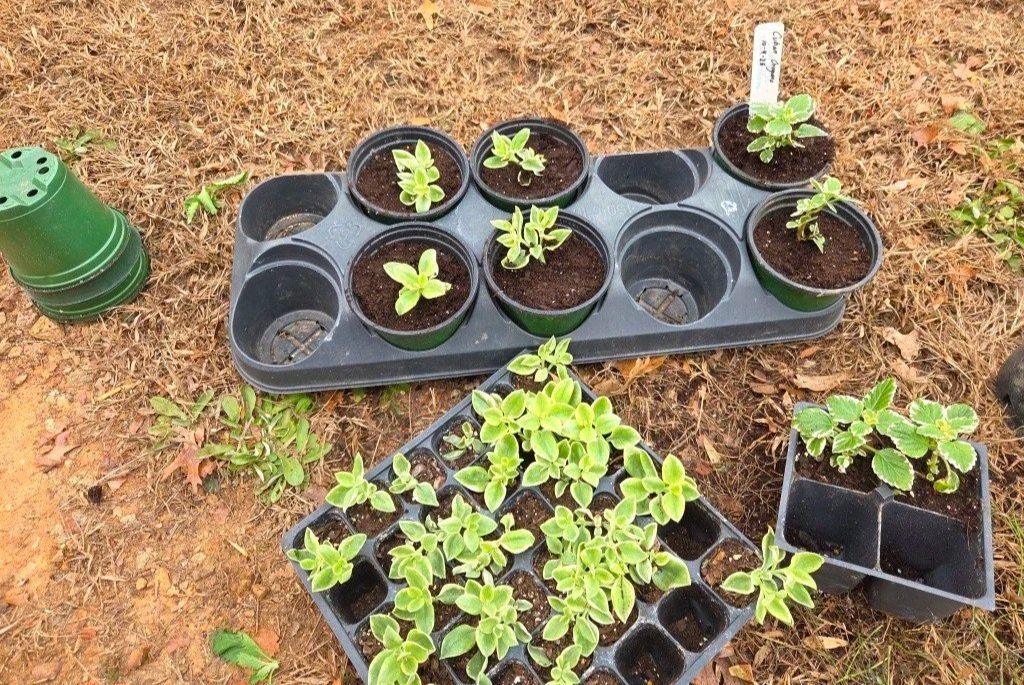
A green-and-white container combination seems fresh and cool in the hottest part of the summer. I like to combine Cuban Oregano with variegated ivy and Diamond Frost Euphorbia. The Cuban Oregano (Plectranthus variegata) shown here was a gift from my friend Ann in 2009. The plant is not cold-hardy, so I have overwintered a few cuttings every year since then. It is a wonderful memory of our friendship. I take more cuttings than I need as insurance against rooting failure, so I have extras to share. Six weeks ago, I started four branch tip cuttings to take advantage of apical dominance – plants like to grow from their tips -- in a recycled, sanitized four-pack. They rooted well, so graduated this week to four-inch containers.

Plants moving from small containers to medium containers

Cuban Oregano (Plectranthus variegata) is moving from a 4-pack to a 4-inch container.

I adore the succulent groundcover Mezoo. It has gone by several genus names, including Aptenia, Doreanthus, and Mesembryanthemum. I do not know which one of these is correct, so I rely on the common name in my labeling. Mezoo roots readily and grows fast, so I stuck my cuttings in two-inch plugs. Most have rooted and are ready to graduate to four-inch pots. In late February, they will need to move up again, to one-gallon containers.
About that labeling: the plant labels you see here are sections of an old window blind. A single damaged vinyl blind (cat owners, IYKYK) can be recycled into a lot of plant labels. The slats are flexible enough to cut to the preferred length with kitchen shears, and strong enough to last. They don’t rot or rust. For plants that will go into the ground without their labels, I use a Sharpie Extreme marker on the blind. The Extreme will withstand UV rays and frequent watering without fading. For transplants that will have their identifying label planted along with the plant itself, I use weather-resistant tape on a Brother P-Touch Label Maker. Some of these have lasted more than five years for me. Sadly, a few have outlived the plants they identified. 

Small green and white plants in plug trays and 4-inch pots

Lovely, heat-tolerant, succulent groundcover Mezoo is moving from plugs to 4-inch pots. It will share a tray with Cuban Oregano, since they both prefer drier conditions in the greenhouse.

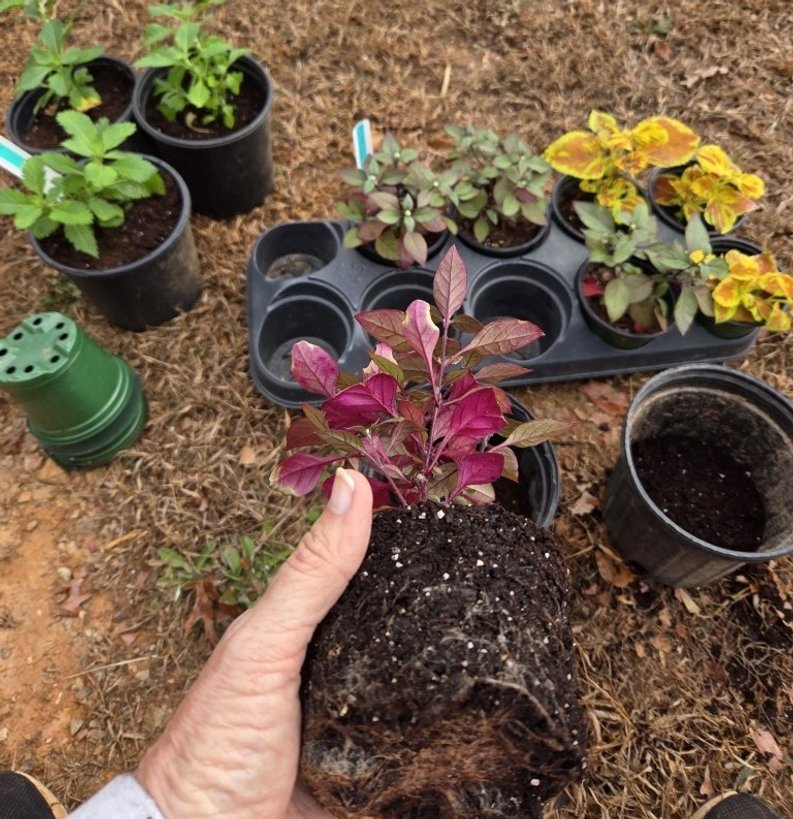
I took a few cuttings of favorite annuals, Alternanthera ‘Purple Prince’ and Coleus ‘Freckles.’ Here, you see that I have removed the Alternanthera from its four-inch container to confirm that it has enough roots to move up to a one-gallon size. I do not know the science behind it, but plants prefer to move into slightly larger containers. If a two-inch plug goes directly into a three-gallon container (I exaggerate, but you get the point), it will languish and fail. That same rooted two-inch plug will move successfully to a four-inch container. Once that four-inch container has roots showing around the bottom and sides, it can be bumped up to the next size, and then again once that pot shows roots around its outside perimeter. To ensure the good health of a plant, move it to the next larger size before it gets rootbound, meaning that the container is overfilled or choked with roots. Even though I am using round pots in these photos, I far prefer the square pots. There seems to be less root girdling with squares than with rounds. Rounds have the advantage of using less potting soil.  

Hand holding plant showing roots

Checking that the cutting has rooted well enough to move to the next size container.

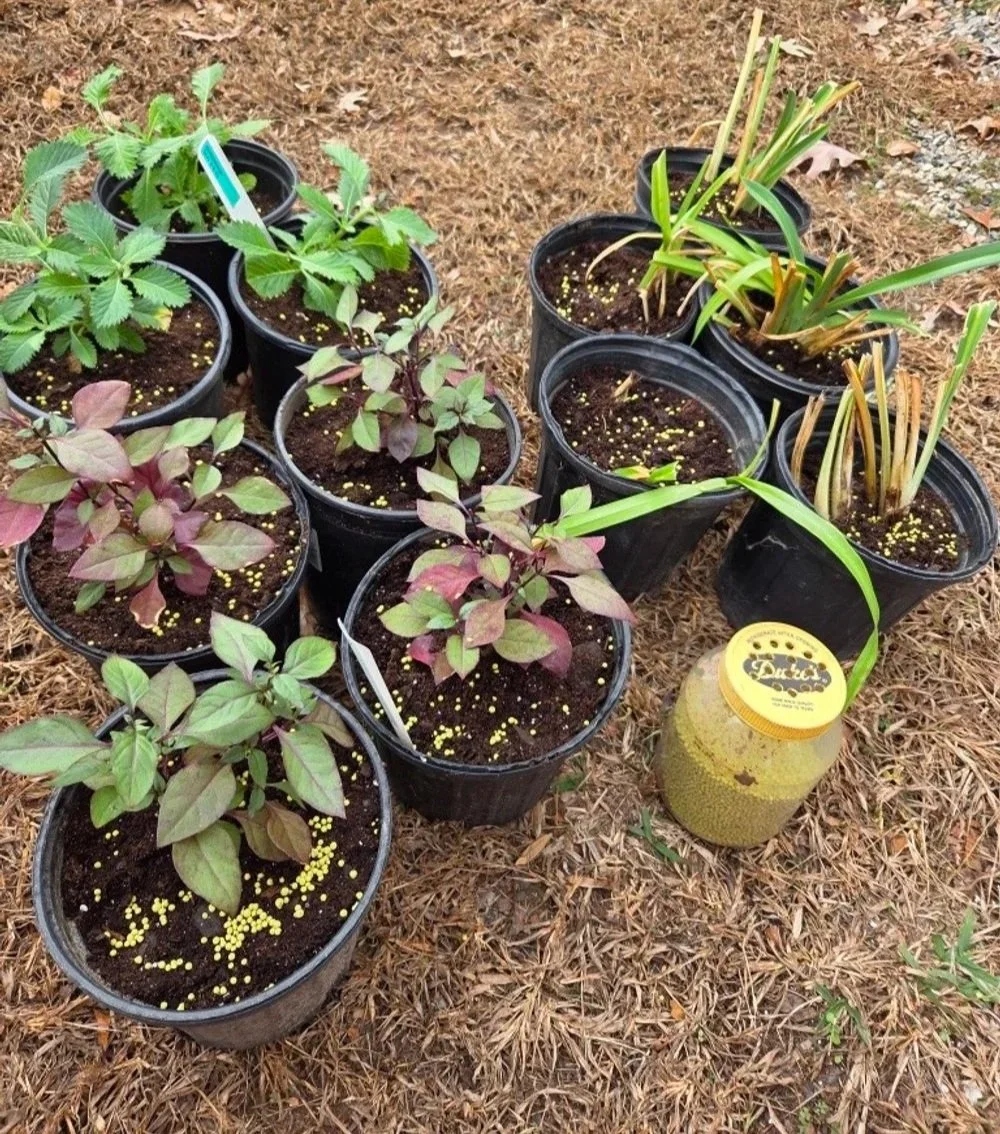
Here, I have moved the Alternanthera, the Coleus, and Centrantherum (“Lark Daisy”) to one gallon containers for the winter. And here is my final gardening tidbit for this blog: To apply the time-release fertilizer that will keep these plants well-fed until spring, I took an empty plastic one-quart container, washed it well, and used a small bit to drill a bunch of holes in the plastic lid. This works like a large salt-shaker to apply fertilizer (or any pelletized product) easily and evenly. I have multiple lids, with different diameter holes. Milorganite, for instance, is a small pellet that requires a smaller gauge hole for ideal distribution.

Plants in one gallon containers with fertilizer shaker

Alternanthera, Centrantherum, and a few Daylily divisions are potted up and ready to overwinter in the greenhouse. I pinched the growing tips and removed the flower buds to encourage stocky, well-branched specimens.

 Happy Thanksgiving to you and yours.