Tender perennial

New to Me: Centrantherum, Lark Daisy

Tender garden perennials that cannot survive winter temperatures in colder zones can still be grown as annuals. Such is the case with Centrantherum, also known as Lark Daisy. Last fall, I was part of a cleanup team at a local arboretum when I saw Centrantherum for the first time. It was covered in nickel-sized blue-lavender flowers and had pretty, deeply-toothed leaves. Best of all, the bruised foliage smelled like pineapple. In addition to Lark Daisy, other common names include Pineapple Thistle, Pineapple Weed, or Brazilian Bachelor's Button. Plants are native to South America.

As we pulled and discarded the plants as part of a bed cleanup, I took a cutting. Once home, I divided that cutting into three parts and attempted to propagate them. All three struck roots and grew into good-sized plants in my home greenhouse. They will go into the ground in my zone 8 garden next week, when freezing weather should be past.

My research reveals two species, C. punctatum and C. intermedium. Most sites say that the plants are winter hardy only in zones 10-12, but San Marcos Growers indicates they are root hardy to 25 degrees and top growth is hardy to about 30 degrees.

Mature plants may reach 18-inches tall and wide. They will spread by seeds in warm areas but are not considered invasive, although they are considered weeds in the warmest parts of Florida. My three specimens struggled with insect issues in the greenhouse, and had to be treated for whiteflies, mealy bugs, and spider mites. The plants prevailed, as you can see from the accompanying photograph. Since they are not winter-hardy in my area, I will save seeds from this season’s flowers to sow for following years. Starting from seeds seems to be an easier solution.

Centrantherum is easily grown in full sun, and has moderate water needs. It is resistant to damage from rabbits and deer. Butterflies visit the flowers. Plants have an extended bloom period.
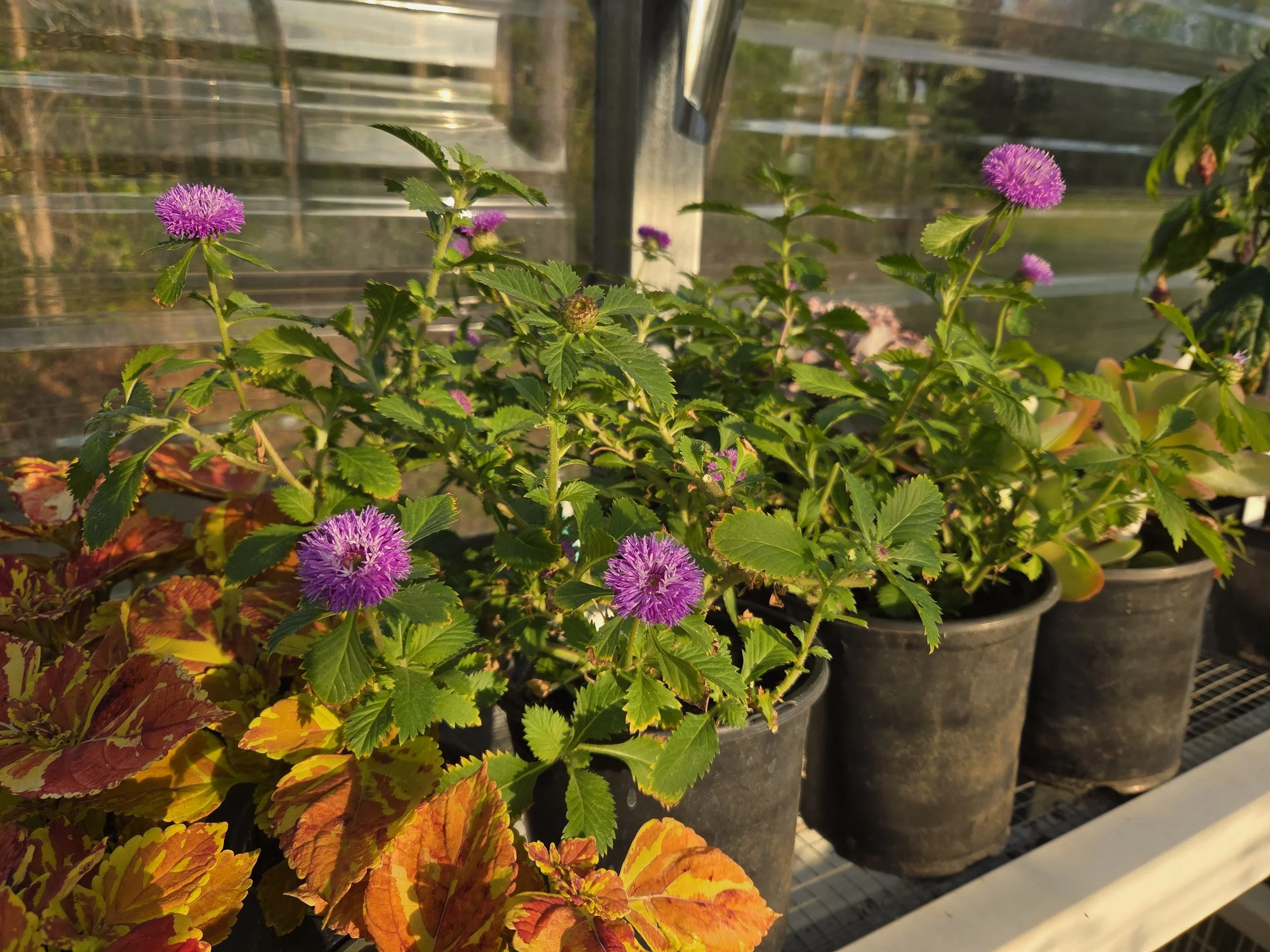
Lavender flower on plants in black pots

These three Centrantherum have grown from tiny cuttings into full gallon-size plants. They are being hardened off now, and will go into the ground next week.
Unusual Abutelon

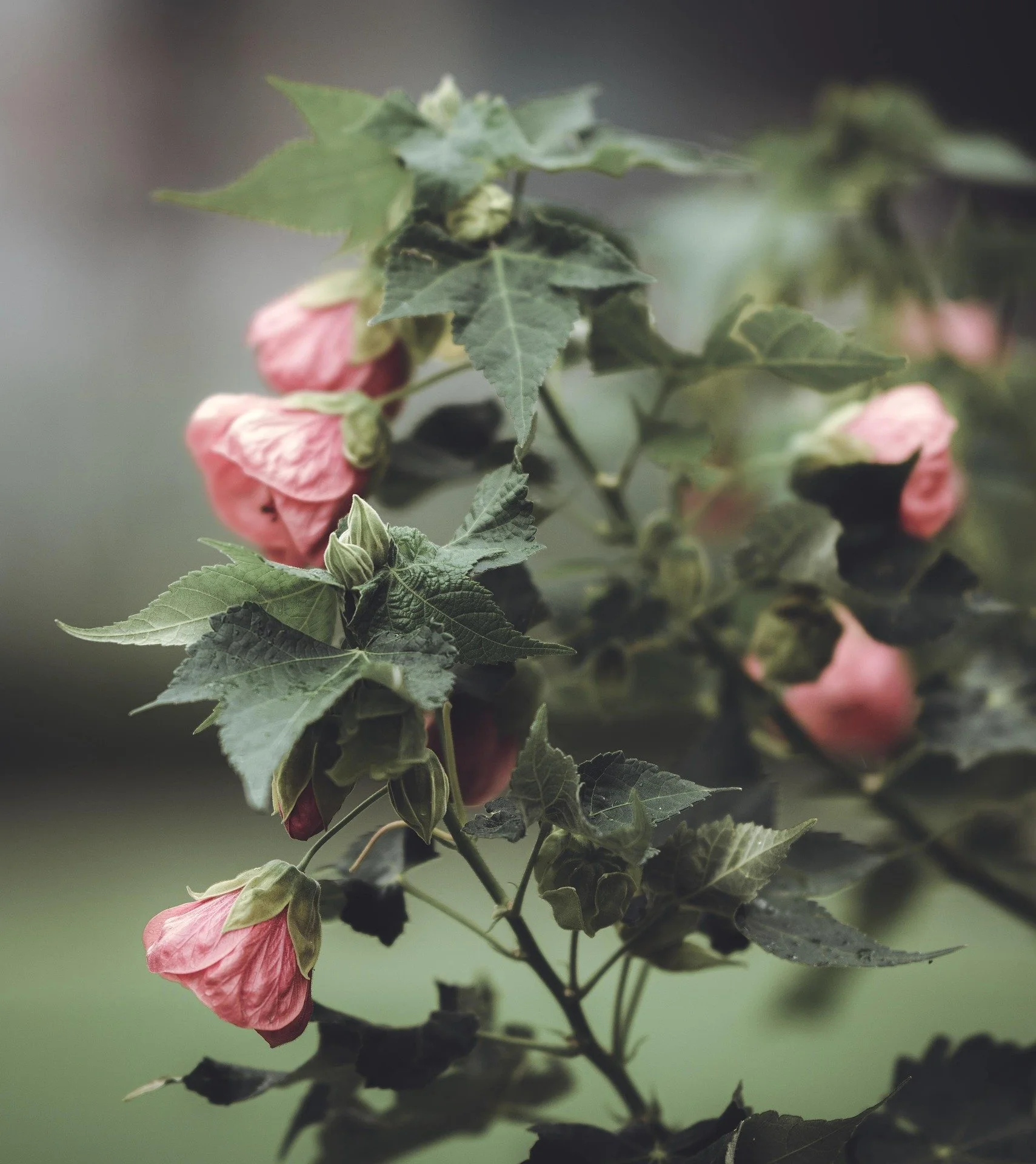
I love unusual flowers, but feel less attraction to tender plants that must be relocated to the greenhouse for overwintering. Recently, I was drawn to Abutelon (pronounced uh·BYOO·tuh·luhn), also known as Flowering Maple due to its leaf shape or as Chinese Lantern due to its flower shape. Abutelon is hardy in zones 9a to 10b, so this one would likely not make it through the cold months in my zone 8a garden. Yet, the uncommon flowers held a certain appeal. I took two cuttings for an attempt at propagation. If these strike roots, I will move them outdoors next spring and see if my affection lasts through a growing season.

I was surprised to learn that the mature size of Abutelon can be eight feet or more, with a width up to five feet. The stems are weak, allowing the plant to sprawl. Frequent branch tip reduction from pinching back will produce a compact plant with stronger stems. Abutelon prefers full sun to part shade, and a porous but moist soil. It is prone to root rot, and should have a well-draining soil paired with frequent irrigation. It is a heavy feeder, and needs regular applications of fertilizer to look its best.

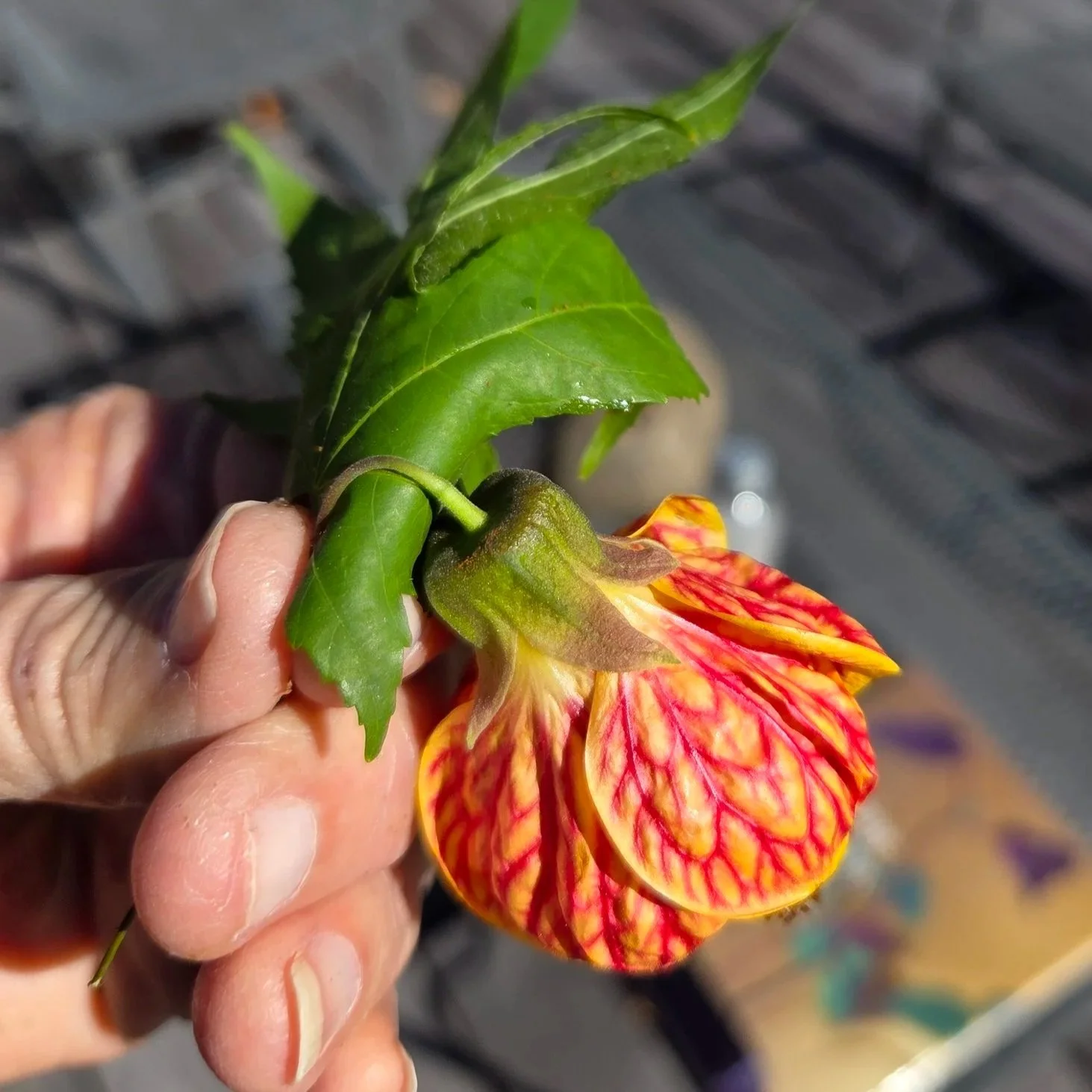
While the maple-like leaves are attractive and several variegated cultivars are available in nurseries, the unusual flowers of Abutelon are its main attraction. The bell-shaped blooms consist of five overlapping petals that fuse into a single column that terminates in a cluster (stigma) that protrudes outside the petals, resembling Hibiscus or Turk’s Turban. The flowers come in shades of pink, orange, red, or yellow, often with contrasting veins. An acquaintance remarked that the veined flowers look like bloodshot eyes, and now I cannot unsee that.

Plants grow fast and flower on new growth, from spring through fall. If you bring a potted specimen indoors for overwintering, keep it in a sunny window but away from heat sources. It prefers temperatures of 65-75 degrees. Keep an eye out for aphids, whiteflies, spider mites, and mealybugs.

Hand holding unusual yellow red bell flower

Check out the intricate veining of Abutelon, Flowering Maple.